


 Free Newsletter

Quandaries & Quagmires: ‘Dear Ethics Lawyer’ — A Resource for Ethics Training
Chuck Lundberg, Special to Minnesota Lawyer//May 26, 2026//

Depositphotos.com image
Quandaries & Quagmires: ‘Dear Ethics Lawyer’ — A Resource for Ethics Training
Chuck Lundberg, Special to Minnesota Lawyer//May 26, 2026//


 Listen to this article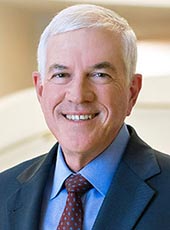
This month we interview Mark Hinderks, author of the “Dear Ethics Lawyer” column, an extraordinarily well constructed law firm teaching aid, part of The Legal Ethics Project of Stinson LLP. His Q & A column has been published bi-monthly for the past four years. It has just now become a blog. www.dearethicslawyer.com (See sidebar at the bottom of this story for the current Question and Answer.)
Mark is counsel and former managing partner to an AmLaw 200 firm; Fellow, American College of Trial Lawyers; and speaker/author on professional responsibility for decades. He leads Stinson LLP’s Legal Ethics & Professional Responsibility practice, offering advice and “second opinions” to lawyers and law firms, training, consulting and testifying expertise, and representation in malpractice litigation. (Minnesota lawyers of a certain age will remember the legendary local firm of Leonard, Street and Deinard, which merged with Stinson in 2014.)
Q: Mark, tell us more about the blog: How did it come to be? How might it be useful to our readers?
A: As I came off my tenure as managing partner of our firm, I wanted to find a new way to give back to the profession. Since 2000, I have been part of a group of lawyers and judges who produced and presented performance-based legal ethics CLEs each year, with all proceeds going to law-related charities and scholarships. We call it “Ethics for Good,” and at this writing it has raised nearly $1 Million. In developing that program, it became apparent to me that lawyers learn ethics best from short practical hypotheticals, whether in writing or performed by skit. I adapted this approach to create “Dear Ethics Lawyer.”
The concept is to present an interesting or difficult question of professional responsibility, with an answer, or at least factors to consider to get to an answer, in a short writing that can easily be read in just a few minutes.
I try to cover a wide variety of rules that appeal or apply to large and small firms, across various subjects of practice, as well as to in-house litigators or transactional lawyers.
Q: How long have you been writing the “Dear Ethics Counsel” column? And where do you get the ideas?
A: The first issue was published in early 2022. One key, as with any column or blog, is to be relentlessly faithful in delivering the content on the committed schedule. I am proud to say that I have not missed my twice-per-month schedule since then. One hundred four issues later, it’s still going strong. We now have about 6,500 subscribers by email for each issue.
Ideas for columns come from many sources. I frequently receive suggestions from readers. Comments to the Rules of Professional Conduct are fertile ground, as are ABA and state ethics opinions. Case law on disqualification, privilege issues, and disciplinary opinions also provide a variety of issues. Finally, cases that have come up in my own practice over the years are especially teachable (with names and facts changed to protect client confidentiality under Rule 1.6, of course).
Q: Since you have a national audience, how do you deal with the sticky situation where not all states have adopted the same rule language?
A: There are definitely a variety of different versions of many of the rules adopted by the various states and jurisdictions. I knew from the start that I had to find a way to set aside the variations, because doing 50-state research and writing on each column was a non-starter for both the planned format and the schedule.
The solution was to key all of the answers to the then-current ABA Model Rules of Professional Conduct, with a clear disclaimer that the reader should always check the specific version of the applicable rules in the relevant jurisdiction(s). In this way, the column provides a mainstream answer consistent with the Model Rules, and can be refined for particular jurisdictions with some confirming research.
Q: How can your columns and the blog be used in law firm in-house training?
The individual hypotheticals and answers can be readily used as the basis for in-firm legal ethics training, which should be a critical and regular part of every law firm’s management. This is the concept behind “The Legal Ethics Project.” The world — our world — will be better off with lawyers who have more accessible information about legal ethics issues and solutions.
Q: How can our readers follow your blog?
A: There are two ways to receive the information. All current and past issues are now organized by date and indexed by topic on a dedicated website www.dearethicslawyer.com. Subscribe there to receive each twice-monthly column by email. Or just send me an email to be added to the mailing list. ([email protected])
Chuck Lundberg is recognized nationally as a leader in the areas of legal ethics and malpractice. A former chair of the Minnesota Lawyers Board, he retired in 2015 after 35 years of practice with Bassford Remele. He now consults with and advises attorneys and law firms on the law of lawyering through Lundberg Legal Ethics. (www.lundberglegalethics.com).
From May 1, 2026, issue: Ethics of Witness Preparation
Dear Ethics Lawyer, I just took yet another deposition in which the otherwise successful, intelligent businessperson being deposed appeared to have the memory of an old Commodore 64—she said “I don’t know” or “I don’t remember” to just about every question. And for those few questions she answered, she rephrased absolutely everything. For example, I asked her if it was in the scope of her duties to review and approve contract terms such as the one at issue? She said, “I don’t know what you mean by review and approve, but if you are asking if I did sometimes read them, the answer is yes. But I don’t remember whether I did so in this instance.” She had obviously been coached by her counsel to within an inch of her life. And I’d bet money that when it comes to summary judgment briefing or trial, her memory will have been “refreshed” and then she will remember a version of the facts favorable to her employer. I’m thinking I’m playing out of the wrong playbook when it comes to witness preparation. Is there any ethical guidance on what’s in bounds and out of bounds?
Answer: I feel your pain. We’ve all dealt with that type of witness. Yes, there is some really good guidance on the rules of witness preparation in The Ethics of Witness Preparation, ABA Formal Opinion 508 (Aug. 5, 2023). It contains a bullet point list of 14 categories of witness preparation subjects or categories that are permissible, a list that is a useful part of any lawyers’ checklist for preparing a witness. Perhaps ironically, a part of this list is that it is alright to remind a witness that it is acceptable and advisable to say “I don’t know” or “I don’t remember: when that in fact is the truth of the matter, as it can avoid presenting testimony that is a false memory or a guess. The important thing is to always tie that and other types of preparation to the anchor point of presenting a truthful story, with an accompanying speech about the consequences of not doing so, ranging from perjury to being caught in an inconsistency to various unintended consequences and testimony that is not credible that can damage a case, e.g., a witness who should know or remember a variety of key facts who claims not to. The Opinion also contains good discussion about conduct that crosses the line, both before and during testimony.
Related Articles
Related Content





Top News
- Trump’s $100,000 H-1B visa fee is unlawful, judge rules
- Court of Appeals bars gun permit after felony plea
- Court of Appeals: Faribault data center review inadequate
- Milwaukee County gets outside attorneys to keep 180,000 absentee ballots secret
- Was ‘Egg Juror’ unfairly dismissed? Judge to unseal Murdaugh records
- U.S. Supreme Court poised to rule on gun laws and transgender athletes
- Perspectives: Two new cases here recall Miranda at 60








Expert Testimony
- Perspectives: Two new cases here recall Miranda at 60
- Perspectives: Election litigation starting early in Minnesota
- Quandaries & Quagmires: ‘Dear Ethics Lawyer’ — A Resource for Ethics Training
- Best at Work Insights: AI alone can’t improve your company


