


 Free Newsletter

Depositphotos.com image
Perspectives: High court cellphone case echoes one here
Marshall H. Tanick//May 18, 2026//


 Listen to this article
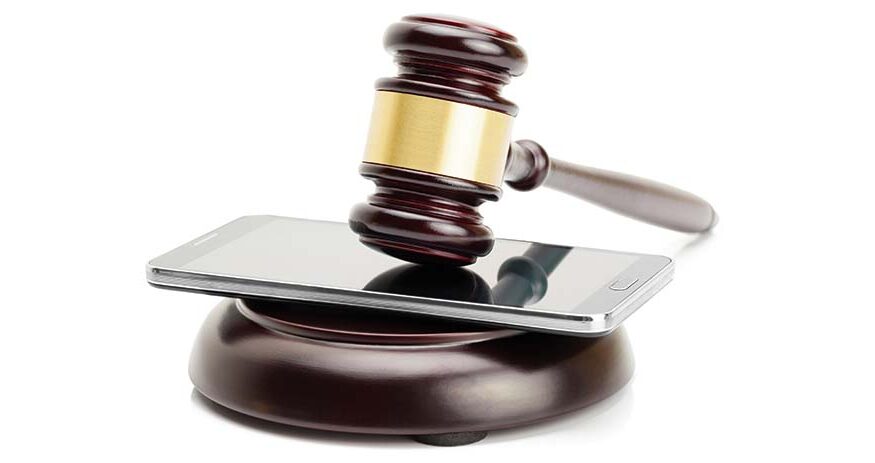
The U.S. Supreme Court, with its exquisite timing, is about to rule on a case involving the permissibility of law enforcement use of cellphone tracking to apprehend criminal suspects, an issue that was just resolved last month by the Minnesota Supreme Court.
The U.S. Supreme Court case, Chatrie v. United States No. 25-112, challenges a federal court conviction in Virginia of a man who robbed a credit union outside of Richmond and was identified, apprehended, and pleaded guilty due to a geofence search warrant that swept location data from cellphones near the facility for a half-hour before and after the heist.
The case parallels one decided in mid-April by the Minnesota Supreme Court, which ruled that this type of law enforcement technique is constitutionally impermissible.
The pendency of the U.S. Supreme Court case and the recency of its Minnesota counterpart warrant review regarding the two law enforcement search cases.
Lower litigation
In the Chatrie case, the results of the litigation in the two lower courts were adverse to the defendant, who was sentenced to nearly 12 years of imprisonment. The trial judge deemed the warrant improper because it lacked probable cause but allowed the evidence because it was submitted in “good faith.”
A divided 4th U.S. Circuit Court of Appeals affirmed, but on different grounds. 136 F.4th 100 (4th Cir.2025). It ruled that the robber lacked a “reasonable expectation of privacy” for the data that led to nabbing him. An en banc court divided equally at 7-7, leaving the verdict intact. See “Perspectives: Fit to be tied: Deadlocked decisions described” in the Nov. 10, 2025, edition of Minnesota Lawyer.
That deadlock preceded the Supreme Court granting certiorari and hearing the case at the end of last month.
“Cellphones tend to bring us more inside of our lives whereas movies offer a chance to escape, so they are two competing forces.”
Movie master Steven Spielberg (1946 – )
*****
“The most important impact on society and the world is the cellphone … one of the primary drives in productivity improvements.”
French Entrepreneur Fabrice Grinda (1974 – )
*****
“What did we do before we had cellphones and we just had to sit there and be vulnerable?”
Actress Carly Chaikin (1990 – )
Ideological Interaction
The Supreme Court oral argument was characterized by two occasions of ideological interaction.
Justice Neil Gorsuch, a staunch conservative, and Justice Sonia Sotomayor, the Court’s most liberal member, asked the most demanding questions of the government’s attorney regarding the implication for similar access to other electronic data, such as emails, photos, and documents.
Two of Gorsuch’s conservative colleagues, Justices Brett Kavanaugh and Samuel Alito, the most conservative jurist, fretted about restricting “police work,” with Kavanaugh asserting that the detective who served the warrant and the ensuing arrest “should be applauded.” Chief Justice John Roberts swerved between the sides, as is often his preference, expressing concern about deploying the technique to find out the identities of everyone at a particular church or political organization.
The outcome, which is in doubt, could have significant impact on use by millions of Americans of Google services known as “location services” that collect data every two minutes about where its users travel and when. Unlike conventional warrants that target identified suspects based on probable cause, geofence warrants operate by devising a virtual “fence” or perimeter around a particular geographical area where a crime has occurred and seeks Google data on every user whose device is in that area at the time, which the defendant’s attorney characterized as a “fishing expedition” with a “potential for abuse [that] is breathtaking.”
Cell cases
The Chatrie case is the latest in Supreme Court cellphone litigation.
In Riley v. California, 573 U.S. 373 (2014), the justices unanimously required police to obtain a warrant to search a cellphone seized during an arrest. In a decision written by the chief justice, the court ruled that cellphones are not just technological gadgets but “minicomputers” containing considerable amounts of personal and secretive information.
Four years later in Carpenter v. United States, 585 U.S. 296 (2018), the Court in a 5-4 decision held that the government generally needs a warrant based on probable cause to access historical cell site location information through wireless carriers because of the volume of personal details about cellphone users.
Minnesota matter
Afterwards, in Minnesota, a similar case was resolved in favor of a defendant in State v. Contreras-Sanchez, 2026 WL 1015919 (Minn. April 15, 2026), as recounted in this publication. See L. Brown, “Justices toss geofence warrant, remand man’s murder case,” in the April 20, 2025, edition of Minnesota Lawyer.
A man convicted of second-degree murder in Dakota County District Court challenged the geofence warrant directed to Google for cellphone data reflecting all phones in the area of a culvert in Castle Rock Township in Dakota County where a dead body was found. The warrant, limited to a prescribed time period before the body was found, led to detection of the suspect who had been fingered by an informant. The suspect confessed and then unsuccessfully sought to suppress his acknowledgment at trial, which resulted in his conviction by a Dakota County District Court jury.
Reversing the ruling of the Court of Appeals upholding the warrant in affirming the conviction, the state Supreme Court justices, in a decision written by Justice Sarah Hennesy, provided guidelines to law enforcement while overturning the conviction. Recognizing that cellphone users have “a reasonable expectation of privacy” in their location data stored by Google, the court held that geofencing warrants are not necessarily invalid under the Fourth Amendment but must not allow “unrestricted access to … data stored by Google.” The blunderbuss warrant in this case was defective because it ”failed to satisfy the particularity requirement” of the search and seizure clause of Article I, §10 of the state constitution. Because it was “insufficiently particular,” it gave “unchecked discretion” to law enforcement personnel that rendered it invalid. However, the court remanded the case for determination of upholding the conviction in two other grounds: the “good faith” of law enforcement personnel in connection with defective searches or the doctrine of “harmless error.”
The case drew a couple of dissenters, Justice Gordon Moore joined by Justice Ann McKeig, who would have had the court “wait for the Supreme Court’s guidance” in the pending Chatrie case.
The upshot of the case is that under Minnesota law, such geofence warrants are constitutionally permissible if they are based upon probable cause that may show evidence of a crime by an identifiable person within the geofence location, who then may subject to additional scrutiny.
Because it was decided under the state constitution, it rests on independent state grounds that would not necessarily be affected by whatever the U.S. Supreme Court rules in Chatrie.
One can visualize the internal debate within the court as the dissenters urged their colleagues to stay their hand until the U.S. Supreme Court rules in the Chatrie case, and the majority’s refusal to do so because the decision is based on independent state constitutional grounds so that the ruling in the federal case will not be dispositive of the Contreras-Sanchez matter.
The majority won out by a vote of 5-2 over the dissenters.
The upshot of the case is that under Minnesota law, such geofence warrants are constitutionally permissible if they are based upon probable cause that may show evidence of a crime by an identifiable person within the geofence location, who then may subject to additional scrutiny.
Because it was decided under the state constitution, it rests on independent state grounds that would not necessarily be affected by whatever the U.S. Supreme Court rules in Chatrie.
The Supreme Court ruling in the pending Chatrie case is expected before the justices adjourn for the season in late June, which will present an opportunity to join or depart from the ruling last month of the Minnesota Supreme Court in the Contreras-Sanchez case.
RELATED: More Perspectives columns
PERSPECTIVES POINTERS
Cellphone Data
Number of cellphones worldwide: 8.31 billion
Number of people in the world: 7.58 billion
Number of smartphones: 7.58 billion
Number of individual cellphone users: 5.7 billion
Number of cellphones in United States: Around 380 million
How many American adults own cellphones: 98%
How many Americans have smartphones: 91%
PERSPECTIVES POINTERS
Cellphone Data
Number of cellphones worldwide: 8.31 billion
Number of people in the world: 7.58 billion
Number of smartphones: 7.58 billion
Number of individual cellphone users: 5.7 billion
Number of cellphones in United States: Around 380 million
How many American adults own cellphones: 98%
How many Americans have smartphones: 91%
Marshall H. Tanick is an attorney with the law firm of Meyer, Njus, Tanick, Linder & Robbins, PA.
Related Articles
Related Content



Top News
- Six recommended for 4th District bench
- Minnesota charges ICE agent in shooting of immigrant
- Trump’s deal to drop suit against IRS creates $1.8B ‘Anti-Weaponization Fund’
- Michigan Supreme Court restricts ICE civil arrests at courthouses
- Judge grants accused CEO killer Mangione’s bid to suppress evidence
- Perspectives: High court cellphone case echoes one here
- Supreme Court lets abortion pill mail delivery continue







Expert Testimony
- Perspectives: High court cellphone case echoes one here
- Perspectives: Taxing issues: Court addresses property issues
- Perspectives: Daily’s 125th at ‘U’ recalls varied cases
- Commentary: Will SCOTUS rule on general warrants and 4th Amendment?


