


 Free Newsletter


Rioters storm the West Front of the U.S. Capitol on Jan. 6, 2021, in Washington.(AP File Photo: John Minchillo)
Perspectives: Compensation for January 6th rioters?
Marshall H. Tanick//January 6, 2025//


 Listen to this article
“Wrongful convictions happen every week in every state in the country.”
—Author/lawyer John Grisham (1955- )
*****
“The best way to avoid being falsely accused is to live a life that is above reproach.”
—Singer Roy Orbison (1936-1988)
*****
“Injustice anywhere is a threat to justice everywhere.”
—Martin Luther King, Jr., “Letter from Birmingham Jail” (April 16, 1963)
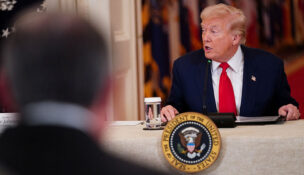
It was four years ago today, Jan. 6, 2021, that the attempted insurrection took place at the U.S. Capitol, later prompting a promise by President-elect Trump to pardon the rioters, whom he has repeatedly referred as “heroes,” “patriots,” and “political prisoners.”
But if he follows through with his oft-expressed promise to pardon them, the other shoe may fall: compensation for the insurrectionists.
Shakespeare’s Hamlet might start the New Year by pondering: To pardon or not to pardon, that is the question.
Affirmative answer

In answering that question affirmatively, a distinct possibility exists that some, many, most, or maybe even all of them could be seeking and receiving federal funds for their misbehavior on that fateful day a four years ago.
The pardon promise may, once fulfilled, lead to a form of exoneration for nearly 1,600 individuals who have been charged with various federal offenses, including about 1,250 who have been convicted by trials or guilty pleas, with over 650 receiving incarceration sentences of from a few days to as long as 22 years.
The prospective pardons are of interest and importance here in Minnesota, where approximately a dozen of the rioters reside, and a pair of the state’s four Republican members of the House of Representatives bought into the rioters’ requests and voted against certifying the 2020 election result.
The anticipated pardons, which are subject to the exclusive, unfettered discretion of the president under Article II, §2 of the Constitution, could be selective, based upon the particular facts of each case, or could be blanket exonerations extended to all of them. Either way, a lot of folks from Minnesota and elsewhere are going to be released from confinement in jails, prisons, and at their homes, while others not yet tried or convicted will have the cases against them dropped.
Compensation coming
But, wait, there’s more.
They may have compensation coming to them, too, from the government.
Under a federal law, 28 U.S.C §1495, individuals may be entitled to a minimum of $50,000 per year of incarceration if they can establish “grounds consistent with innocence,” which has been defined as “factual innocence” of the offense for which they were convicted. Generally, this must be based upon new evidence in a new trial or other legal procedure such as a dismissal or reversal of the verdict, including a pardon or different form of executive clemency.
The process is comparable to laws and other devices in 38 states and the District of Columbia, including Minnesota, that provide various forms of remuneration and other monetary and non-economic benefits for wrongfully convicted individuals.
Minnesota matter
The Minnesota version, known as the Minnesota Incarceration & Exoneration Remedies Act (MIERA), Minn. Stat. §611.368, provides up to $100,000 per year of improper imprisonment plus an additional maximum of $50,000 for additional expenses such as legal fees, medical charges, post-incarceration educational tuition, and other costs and lesser amounts per year for being wrongfully placed on parole, probation, or the state sex offender registry.
The statute establishes a multi-step process beginning with a district court determination that the prior conviction was pardoned or overturned, or the conviction was vacated or reversed, or a new trial ordered, coupled with evidence of factual innocence available at the time of conviction or developed later.
The process then shifts to the state Supreme Court, where the chief justice oversees a special three-member panel to determine an amount of compensation up to the statutory caps.
But the obstacles facing an exonerated compensation claimant are steep in satisfying the analogous “factual innocence” standard, as under the federal procedure. In a ruling last spring, Aery v. State, 7 N.W. 3rd 833 (Minn. Ct. App. May. 20, 2024), drawing upon prior Minnesota case law, the state Court of Appeals rejected a compensation claim for a Bemidji man whose drug possession conviction it had thrown out four years earlier because of an illegal arrest and search that yielded the suppressed contraband in State v. Aery, 2020 WL 713 4872 (Minn. App. Dec 7, 2020) (nonprecdential).
Because the conviction was overturned purely as a “legal consequence,” not “factual innocence,” the exonerated man could not go forward with a proceeding before the Supreme Court-designated special compensation panel.
The Aery appeal last year relied upon the decision of the state Supreme Court two years earlier in Kingbird v. State, 973 N.W. 2d 633 (Minn. 2022), holding that reversal of a conviction for unlawful possession of a firearm based upon the possession of a BB gun, which was not deemed contraband, did not constitute compensatory exoneration because the claimant did not establish “factual innocence,” which consists of “being not guilty of a crime … based on facts.” The legal interpretation of the statutory phrase did not fit within that category.
An identical outcome occurred last year in Back v. State, 992 NW 2d 363 (Minn. 2023), in which a woman whose conviction for culpable negligent manslaughter was reversed did not merit payment for exoneration because the overturning of the verdict was due to “an issue of legal significance” in defining the offense, without any “new evidence of factual innocence.”
Relieved & rewarded
For the January 6th Capitol rioters, a presidential pardon alone probably would not suffice for awarding compensation; it would need a recital of actual “innocence,” supported by some factual and legal recitals. That recitation could form the foundation for compensation, which must be determined by a subsequent proceeding in the U.S. Court of Claims, a federal tribunal in the nation’s capital that hears claims for monetary remedies against the government.
Ordinarily, the Justice Department is the adversary party contesting these claims. But, in these circumstances, the Trump Justice Department may very well acquiesce to the claims or be directed to concede by the White House.
If so, rioters relieved of criminal culpability might also find themselves rewarded with funds from federal coffers.
Perhaps business moguls Elon Musk and Vivek Ramaswamy, who have been tapped by the president-elect to lead his “Department of Government Efficiency,” should shelve any prospective exoneration pay-outs as part of their goal to cut $2 trillion in federal spending.
PERSPECTIVE POINTERS
Wrongful Conviction Figures
Estimated number of wrongful convictions: 4%-6%
National registry of exonerations: 153 (2023)
Racial disparity of exonerations: 61% Black (93/153)
Longest imprisonment before exoneration: Glynn Simmons, Oklahoma, 48 years (1975-2023)
Marshall H. Tanick is an attorney with the Twin Cities law firm of Meyer Njus Tanick, PA.
RELATED: More Perspectives columns
Related Content





Top News
- Best at Work Insights: Why employee growth matters more than salary
- Justices toss geofence warrant, remand man’s murder case
- Judge calls out Kenosha DA for missed deadlines in murder trial
- ICE agent charged with assault after gun incident on Highway 62
- Justice Department settles with IBM over alleged DEI practices
- Court of Appeals upholds pistol permit revocation
- Wisconsin Supreme Court rules Pabst is liable in steamfitter’s death






Expert Testimony
- Best at Work Insights: Why employee growth matters more than salary
- Legally Speaking: April showers don’t wait, neither do difficult conversations
- Perspectives: Seeking Stanley Cup, Wild recall hockey law here
- Quandaries & Quagmires: ABA Formal Opinion 520


