


 Free Newsletter

Capitol Retort: Choi walks; Freeman disqualified; Kelley ousted
Kevin Featherly//September 17, 2020//

Ramsey County Attorney John Choi is leaving the president’s Commission on Law Enforcement and the Administration of Justice. (File photo: Kevin Featherly)
Capitol Retort: Choi walks; Freeman disqualified; Kelley ousted
Kevin Featherly//September 17, 2020//


 Listen to this article
Question 1: Ramsey County Attorney John Choi has informed U.S. Attorney General Bill Barr that he is leaving the president’s Commission on Law Enforcement and the Administration of Justice. Choi said he fears that the group’s final report won’t reflect concerns of under-resourced communities and people of color who say they are being over-policed. Was he right to walk away?
Fritz Knaak, attorney, former state senator: It actually is something of a feather in his cap that he’s on that commission. It says a lot. But on the other hand, we’re in such a weird political situation now. My surmise on that is he’s probably so worried to be involved with anything having to do with the Trump administration in the next three months that he’s finding any excuse to walk away.
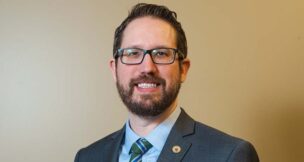
Erick Kaardal, populist government watchdog attorney: I think it’s unfortunate that, in law enforcement matters, it has become so polarized that Mr. Choi doesn’t feel he can participate.
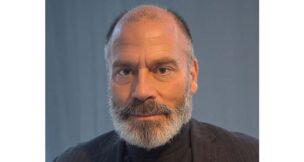
Floyd B. Olson, former senior assistant Hennepin County Attorney: I don’t think that you can have a commission dealing with policing without dealing with what the current issues are in policing. I think failure to do that means that the commission probably has the some other political purpose.
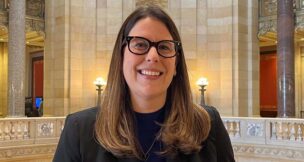
Ember Reichgott Junge, attorney, former DFL state senator: First of all, I’m glad that he was serving on that committee. He was a much needed voice. If the report doesn’t reflect what he believes is the work of the committee, I think he should walk away. So I respect his decision.
Question 2: A judge disqualified prosecutors from Mike Freeman’s office who were helping with the George Floyd murder trial. Judge Peter A. Cahill called Freeman’s attorneys “sloppy” for not having someone else present during an interview with the medical examiner. Freeman said nothing was done wrong. What do you make of Cahill’s decision?
Knaak: I thought it was shocking. Without having knowledge of all the details, that’s about all I can say. I just found it shocking.
Kaardal: I’d just say that Judge Cahill is known as an experienced judge in these matters and I trust him to make the right decision.
Olson: I have a lot of confidence in Mike Freeman. I don’t know whether using the word “sloppy” would be correct. Maybe Judge Cahill meant to say something else, but didn’t say it properly.
Reichgott Junge: Honestly, I’m baffled by it. I have talked to other prosecutors who have told me that they, too, have met with medical examiners without other people present and they didn’t believe that was a violation of anything. I am not a prosecutor, but I was just greatly surprised. Overall, I think we can benefit by the expertise of the Hennepin County Attorney’s Office as well as the Attorney General’s Office on a case so complex. So I hope that there will be a way that they can still participate. [Editor’s note: On Monday afternoon, Freeman’s office filed a motion asking Cahill to reconsider his decision.]
Question 3: Commerce Commissioner Steve Kelley is the second of Gov. Tim Walz’s Cabinet members to be fired by the Senate in a month, after eight years during which no commissioners failed to be confirmed. Did Kelley really lose his job because “he was not working out,” as Senate Majority Leader Paul Gazelka maintained? Or do you detect some other dynamic at play?
Knaak: Yes. No question. The fact is that when you’re the governor, you get to appoint commissioners who, as a general rule, do irritating things that are politically not to the liking of the minority. I think both sides recognize that. Kelley hit some nerves, to be sure, when he decided to basically sue the administration to challenge the Enbridge decision-making process. I noticed, for example, that there were two Northern Minnesota Democrats who voted to give him the heave-ho. That’s a sign, right there, of the underlying politics. I’m not terribly surprised. Part of the problem is that, even though he’s a former senator, familiarity breeds contempt. There’s certain amount of that going on. You’d think there would be deference, when in fact there is not.
Kaardal: You’d have to be sleeping in Minnesota if you haven’t seen how poorly our legislative branch works with the executive branch. Both sides have underperformed.
Olson: The other dynamic at play is that the Minnesota Senate, which has a majority of Republicans, is doing the same kind of foolishness that Republicans are doing on the national level. As I observe what’s happening in the Minnesota Senate, these are not Republicans who are trying to find solutions to problems. They’re simply trying to create obstacles. And they do that however they can—just like the like [GOP U.S. Senate Majority Leader] Mitch McConnell has been doing for all these years. If anybody doubts that, I would surely encourage all of the Republicans in the Senate to read to read Norman Ornstein’s book, “It’s Even Worse Than it Looks.” [Editor’s note: Minnesota native Ornstein, a resident scholar at the American Enterprise Institute and brother to Retorter David Ornstein, wrote that 2012 book of political analysis with co-author Thomas E. Mann of the Brookings Institution.]
Reichgott Junge: This is not about Commissioner Kelley. I served 18 years in the Senate and we rejected our share of commissioners. But this is different. In this case, a commissioner’s tenure was offered as a trade for a political or policy win. That is a tragic abuse of the Senate majority’s power. Why? Because next year, if you don’t agree with something in the tax bill, does that mean the revenue commissioner is at risk? Or is it a choice between a provision in the Human Services bill or the commissioner? This has long-term consequences that can destabilize the services that serve all of us. And it will deter people from serving in commissioner’s roles.
Related Content


Top News
- NFL loses Supreme Court bid in Brian Flores’ racial bias suit
- Walz names three new judges for 10th Judicial District
- Best at Work Insights: AI alone can’t improve your company
- Quandaries & Quagmires: ‘Dear Ethics Lawyer’ — A Resource for Ethics Training
- Perspectives: ‘Nuremberg’ movie has Minnesota legal links
- Licorice labeling suit against Minnesota firm revived
- Feeding Our Future leader gets 41 years for massive fraud scheme





Expert Testimony
- Quandaries & Quagmires: ‘Dear Ethics Lawyer’ — A Resource for Ethics Training
- Perspectives: ‘Nuremberg’ movie has Minnesota legal links
- Legally Speaking: The Mental Clutter Lawyers Carry
- Perspectives: High court cellphone case echoes one here


