


 Free Newsletter

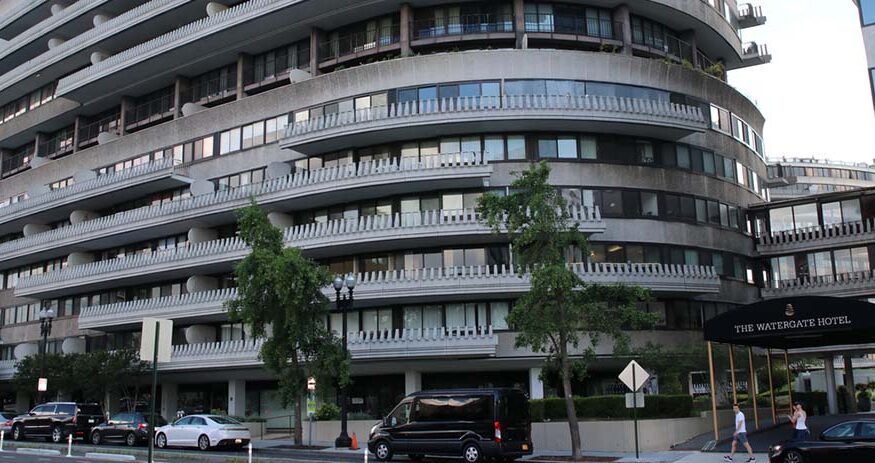
On the night of Friday, June 17, 1972, five burglars, aided by two lookouts, broke into the Democratic headquarters in the Watergate office complex along the Potomac in the nation’s capital. (Depositphotos.com image)
Perspectives: Key figure’s recent death recalls Watergate here
Marshall H. Tanick//June 15, 2026//


 Listen to this article
This week, Wednesday night June 17 to be precise, is the 54th anniversary of the break-in at the Watergate complex that housed the national headquarters of the Democratic Party and launched one of the biggest scandals in America, resulting in the resignation two years later of President Richard Nixon
Those events were recalled upon the death three months ago of a key figure in the Watergate imbroglio of corruption and criminality that had some roots here in Minnesota.
Other than Washington, D.C., where most of the events occurred starting in mid-June 1972, this area can be considered Ground Zero for Watergate.
The recent death of that central figures in Watergate law and lore provides an opportune occasion to look back at the scandal and how it was rooted in Minnesota soil.
Escalating events
The series of escalating events that led to the demise of the Nixon presidency began on the night of Friday, June 17, 1972, and into the wee hours the next morning, when a group of five burglars, aided by two lookouts, broke into the Democratic headquarters in the Watergate office complex along the Potomac in the nation’s capital. Their motives have been questioned for years, and it appears that they were seeking, on this third illegal entry, some “dirt” to be used in Nixon’s campaign for re-election, which was headed by the Committee to Re-Elect the President, known fittingly by the acronym CREEP. For those not of age at the time, or for schoolchildren and older students these days, the break-in and ensuing events take up a small segment of their textbook on modern American history. But the old-timers who lived through the scandal have varying and sometimes vivid recollections of it.
The recent event that brings it back to mind is the passing on March 9 of 99-year-old Alexander Butterfield, the White House aide who oversaw installation of the covert taping system whose revelation ultimately led to the president’s downfall. That disclosure occurred when Butterfield, then heading the Federal Aviation Administration, grudgingly but accurately described it to an astonished Senate investigation committee and the public in a highly watched televised proceeding.
The inculpatory remarks on those tapes corroborated the assertions of the president’s centrality in the series of events clumped together under the Watergate rubric, prompting his resignation on August 9, 1974, in the face of imminent impeachment.
But all that — from the break-in to the resignation and beyond — would not have occurred but for the role played by Minnesota men. (Women played sparse roles in the unfolding developments.)
“The political lesson of Watergate is this: Never again… allow an arrogant, elite guard… dictate the terms of a national election.”
President Gerald Ford (1913-2006)
*****
“I can see clearly now… that I was wrong in not acting more decisively and more forthrightly in dealing with Watergate.”
President Richard Nixon (1913-1994)
*****
“Even Napoleon had his Watergate.”
Baseball icon Yogi Berra (1925-2015)
Money men
The Twin Cities and suburbs were not only the source from which the Watergate tentacles extended, but in some respects, where they started and ended.
The legendary Washington Post journalists Bob Woodward and Carl Bernstein broke the scandal bit by bit over the course of several months. A crucial key early in their investigation that opened many doors was a trip to Miami that Bernstein made to check out a story about a $25,000 check from a wealthy Minnesota businessman, Kenneth Dahlberg, that ended up in a bank account controlled by one of the Watergate burglars living in that city, Bernard Barker, and used to finance the burglary. Dahlberg, who happened to be the Midwest finance chair for CREEP, apparently unwittingly financed the break-in with the check, which he sent to the CREEP before it was deposited in Barker’s bank account.
Aided by a woman bank teller (well, there was one), Bernstein’s discovery and disclosure of the Dahlberg donation is graphically depicted in the Academy Award-winning movie “All the President’s Men,” based on the best-selling Woodward-Bernstein book of the same title. The events also were recounted in a pair of cable television series a few years ago, including the Julia Roberts-Sean Penn vehicle “Gaslit” and another one derived from the sharp-eyed (and eared) recollections of John Dean, the White House counsel who was a linchpin in the cover-up of Watergate and then as a witness who redeemed himself by blowing the whistle on it.
Dahlberg, a Worthington native who died in 2012, was a decorated World War II hero who started a highly successful post-war company known as Miracle Ear, a pioneering hearing aid company that still operates in Minneapolis and elsewhere. Dahlberg’s company, now under different ownership, was located for a time in Golden Valley. That relationship is reflected in the street named Dahlberg Drive near the intersection of Highways 100 and 55.
The Dahlberg check began the unraveling of the mysteries of Watergate—some still unknown today. But the enterprising young Post reporters, both in their 20s at the time, ultimately found that CREEP’s other perfidy was attributable to many others of the president’s men.
Dahlberg also headed finances for Minnesota’s 3rd District U.S. Rep. Clark MacGregor, who represented most of the western part of Hennepin County.
After losing a race for the Senate from Minnesota in 1970 to former Vice President Hubert Humphrey, who was making a political comeback after a defeat by Nixon in the 1968 presidential race, MacGregor played a key role in the Watergate drama as head of CREEP.
He took over that hot spot in the summer of 1972, succeeding former Attorney General John Mitchell, who stepped down immediately after the Watergate burglary, for which he was later convicted and served prison time.
A 65-year-old Minneapolis-born lawyer, McGregor served as spokesman for the committee during the early days of Watergate. Many of his statements turned out to be misleading or false, and he lasted only about six months. But the western suburbanite landed on his feet, riding out a landslide re-election, avoiding criminal culpability, and becoming a Washington, D.C., insider until his death in 2003.
Another Minnesota money man involved in Watergate was Maurice Stans, a Shakopee native and secretary of commerce in the Nixon administration. Besides his Cabinet role, he was a chief money raiser for the Nixon team, which led him into trouble. He was tried for bribery, as was Treasury Secretary John Connelly, but both were acquitted.
Another key Watergate figure’s Minnesota’s ties came afterward. Charles Colson, was an old Nixon hand and White House “hatchet man” who helped coordinate the administration’s “Dirty Tricks.” Fifty years ago, after serving time for Watergate offenses, Colson established the Prison Fellowship, a rehabilitation and religious organization with a presence in St. Paul for convicted criminals.
Perspectives Problem: To whom did President Nixon submit his resignation?
Concluding cases
Having essentially started in Minnesota with Dahlberg’s funding of the burglary, the Watergate scandal and related litigation came to a conclusion here with a pair of lawsuits that brought down the curtain on the matter.
The Office of Special Counsel created to investigate and prosecute Watergate-related offenses brought two criminal charges in Minnesota against prominent figures in the business community.
In a criminal prosecution brought in federal court in Minneapolis, Dwayne Andreas, the head of the powerful grain company Archer Daniels Midland, was charged with campaign finance violations in connection with contributions made to CREEP. The mogul was acquitted in a non-jury trial by a federal judge brought in from Iowa due to conflicting interests of the federal judiciary here in U.S. v. Andreas, 371 F. Supp. 1089 (D. Minn. 1974). The case stemmed from illegal donations made to the CREEP campaign, which the visiting judge deemed not to be improper because they were made as loans that were repaid to the donors.
The case was one of a number of run-ins that Andreas and his Archer Daniels Midland Company had with the federal government prior to the executive’s death at 98 in 2016. One of them was a major antitrust and price-fixing case brought against the company and three of its executives, including the son of Andreas, Michael, as well as the whistleblower who disclosed the scheme. They were charged and convicted in Illinois, where the company was headquartered, of illegally setting prices and carving up markets for lysine animal feed additives, which yielded a sentence of two years imprisonment plus a $350,000 fine against the younger Andreas. U.S. v. Andreas, 24 F. supp.2d 835 (N. D. Ill.1998)
The Watergate counsel’s failure against the senior Andreas was emulated in in another financial criminal charge here in Minnesota against Maplewood-based 3M for allegedly improper campaign donations made by the company, not to CREEP but rather to the coffers of Humphrey, Nixon’s 1968 presidential adversary.
U.S. District Court Judge Donald Alsop in St. Paul dismissed the case because the company had previously entered into an arrangement with the government dismissing other charges, which were extended to encompass the indictment in U.S. v. 3M, 428 F. Supp. 2d (D. Minn. 1976).
Watergate also made its mark on legislation in Minnesota. It was one of the precipitants of the Minnesota Government Data Practices Act, Minn. Stat, s. 13.01, et. seq. The act started out as a modest measure to address the intersection of accountability of government actions with privacy rights of individuals and other entities, and has developed over the years into a massive quantification of government accessibility to and confidentiality of government records.
At the time of these cases and legislation, the events stemming from the mid-June 1972 break-in were winding down. But from Watergate’s inauspicious beginning, funded by the businessman from Golden Valley to its concluding finance-related litigation, Minneapolis and surrounding communities experienced close links to the scandal that shook the nation more than 50 years ago.
In a remark attributed to him, Soviet Union dictator Joseph Stalin observed that “the death of a million people is a statistic, the death of one man is a tragedy.” The case of the passing of Alexander Butterfield recalls the turmoil of Watergate, and the role that Minnesotans and this state played in that tragedy.
Answer: Secretary of State Henry Kissinger.
RELATED: More Perspectives columns
PERSPECTIVES POINTERS
Some other political scandals
Crédit Mobilier (1872): Railroad construction scam in Grant administration.
Teapot Dome (1921-23): Secret leasing of oil reserves in Warren G. Harding administration.
Monica Lewinsky affair (1998): President Clinton says he “didn’t have sex with that woman, Ms. Lewinsky.”
Abramoff & lobbyists (2006): Buying and selling influence in George W. Bush administration.
The Jeffrey Epstein “files” (2025- ): Still swirling in D.C. around President Trump and other elite men.
Marshall H. Tanick is an attorney with the Twin Cities law firm of Meyer, Njus, Tanick, Linder & Robbins.
Related Articles
Related Content






Top News
- How using AI can improve client communication
- Recent wage theft settlement highlights contractors’ risk
- Supreme Court limits gun ban for marijuana users
- Court of Appeals reinstates malpractice suit in child’s death
- Breaking the Ice: Children’s advocate adds immigration pro bono work
- 8th Circuit revives ADA vaccine accommodation lawsuit
- Judge denies Dugan’s bid to overturn jury verdict in ICE case







Expert Testimony
- How using AI can improve client communication
- Legally Speaking: What spring can teach us about active listening
- Perspectives: Key figure’s recent death recalls Watergate here
- Perspectives: Two new cases here recall Miranda at 60


