


 Free Newsletter

Trump refuses to back down as Supreme Court blocks major policies
Julian Mark, The Washington Post//August 11, 2026//
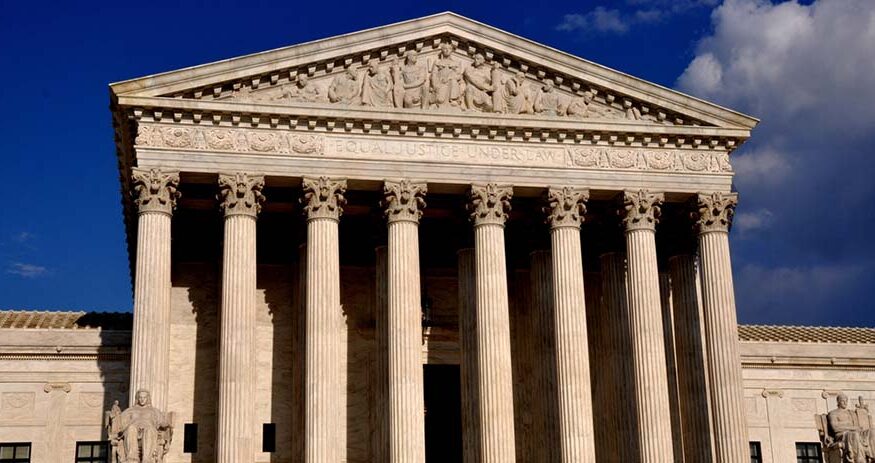
The U.S. Supreme Court building. (Depositphotos.com image)
Trump refuses to back down as Supreme Court blocks major policies
Julian Mark, The Washington Post//August 11, 2026//


In Brief
- Trump issues executive orders limiting birthright citizenship.
- Supreme Court ruled Fed Governor Lisa Cook deserved notice before firing.
- Trump renews threat to fire Fed Governor Lisa Cook with 21-day response.
- New tariffs imposed under Trade Act of 1974 after court rejection.
Over the past few weeks, President Donald Trump has made it clear that he will not take Supreme Court decisions as the final word on some of his most cherished priorities.
The president has introduced new tariffs, renewed efforts to fire Federal Reserve governor Lisa Cook and issued new executive orders to limit birthright citizenship. While experts said the moves do not signal outright defiance of the high court, they nonetheless push the limits of the rulings that Trump lost earlier this summer.
“Without question, President Trump is challenging the bounds of the court’s opinions,” particularly regarding Cook’s firing and birthright citizenship, said Richard Lazarus, a law professor at Harvard University.
The high court’s opinion affirming that nearly everyone born in the United States is a citizen does not allow Trump to create exceptions like some set out in his recent executive orders, Lazarus said. Those orders say children are ineligible for birthright citizenship if born to “alien enemies,” foreign terrorists, foreign lobbyists or people who fraudulently request tourist visas in order to give birth in the U.S.
In signing the orders, Trump referred to the Supreme Court decision on birthright citizenship, saying, “We’re ending it a different way.”
The Trump administration has always followed court orders, said White House spokeswoman Lauren Bis. “All actions taken by the president since the recent Supreme Court rulings are consistent with the holdings and analysis set forth by the court,” she said.
As for Cook, the justices ruled that she deserved notice and a chance to respond before being fired, and Trump’s latest move seeks to provide that. The White House sent a letter to Cook last week renewing the threat to fire her, giving her 21 days to respond and directing her to submit any response to the White House by Aug. 26.
“The Supreme Court’s ruling on the Cook case required notice and an opportunity for a hearing in considering whether the president should take certain adverse employment actions,” Bis added. “The president’s notice sent to Fed. Governor Cook offers exactly that within the precise structure enunciated by the Court.”
Still, Trump’s underlying rationale for dismissing Cook — that she engaged in mortgage fraud — remains unproved, and she has not been charged. While the renewed push to fire her does not “repudiate” the Supreme Court’s opinion, Lazarus said, it “certainly confronts it by challenging its limits.”
Trump is not the first president to look for ways around adverse Supreme Court rulings. Most recently, when President Joe Biden’s plan to forgive student loan debt was struck down by the Supreme Court, Biden within hours announced a separate plan to forgive the debt.
Two decades earlier, President George W. Bush wrestled with the court over procedures for detainees seeking freedom from the military prison at Guantánamo Bay, Cuba.
But such instances appear to be historical exceptions rather than the rule, said David Super, a professor at Georgetown Law.
“Most presidents treated Supreme Court rulings as dispositive of the issues involved rather than as technical documents to be evaded,” Super said.
That includes an earlier version of Trump. During his first term, the president was more willing to accept losses at the Supreme Court and move on, Super said. He cited rulings against Trump’s efforts to end the Deferred Action for Childhood Arrivals (DACA) program and to add a question on citizenship status to the 2020 Census.
“The second-term President Trump appears to have much less regard for the other branches of the federal government than the first-term one did,” Super said.
Similarly, the Trump administration last month imposed new tariffs on U.S. imports from 60 economies under an authority different from the one the Supreme Court rejected in February. The new duties, imposed under Section 301 of the Trade Act of 1974, purport to penalize countries that fail to curb imports produced by forced labor.
That does not directly go against the Supreme Court’s decision. But critics call the forced-labor rationale a pretext for reimposing the sweeping tariffs struck down by the court, and small businesses have sued to block them for that reason.
Some experts say Trump, far from challenging the Supreme Court, is working within the bounds of the justices’ rulings.
“The court ruled against Trump in these three big cases, and all of them sort of left openings to do something else — and in all three cases he did something else,” said Josh Blackman, a law professor at South Texas College of Law at Houston.
“Trump is more aggressive because he views rulings as political,” Blackman added. “He’s willing to push back, especially with conservative judges, three of whom he appointed.”
Still, Trump has added to the sense that he is challenging the court by using heated rhetoric against it.
After the court overturned his tariff regime in February, the president called the conservative justices who ruled against him “fools and lapdogs.” Last week, when Trump introduced his new birthright measure, he called the court’s decision “a bad decision, very unfair decision,” saying the “country suffers because of it.”
President Barack Obama criticized the court in his 2010 State of the Union address, though he did so in a more genteel manner. “With all due deference to the separation of powers,” Obama said in criticizing the Citizens United decision (which lifted limits on independent political expenditures by corporations and unions), the court has “reversed a century of law that I believe will open the floodgates for special interests.”
The Trump administration has also had a tense relationship with the federal judiciary more broadly.
A Washington Post analysis last year found that Trump and his appointees were accused of flouting the courts in more than a third of the 160-plus lawsuits against the administration in which a judge had issued a substantive ruling. The administration has also sparred with the judiciary over Trump’s picks to lead federal prosecutor’s offices.
But Mike Fragoso, a former chief counsel to Sen. Mitch McConnell (R-Kentucky), said Trump’s responses to the Supreme Court’s most recent decisions do not appear out of the norm.
Instead, particularly with regard to the new birthright order, Trump appears to be adopting the longtime conservative view that a Supreme Court decision binds the president only to the specific case at issue, not necessarily to its broader reasoning, he said.
Fragoso, now an attorney at Torridon Law, pointed to President Abraham Lincoln’s rejection of the Supreme Court’s logic in its infamous 1857 decision Dred Scott v. Sandford, which held that African Americans were not citizens.
“On birthright, it’s a question testing the limits of what the Supreme Court said” while not being inconsistent with the opinion, Fragoso said, adding that Trump’s actions could be described as “Lincolnian.”
Related Articles
Related Content


Top News
- Trump refuses to back down as Supreme Court blocks major policies
- Michigan judicial misconduct report details private discipline in 2025
- Wisconsin judge accused of misconduct says he did no wrong
- Trump’s birth tourism orders face legal hurdles after Supreme Court ruling
- Crime reporter was picked for jury duty and left with more than he expected








Expert Testimony
- Perspectives: Courses, links lawsuits proliferate in Minnesota
- Perspectives: Taylor-Travis marriage recalls prenup laws here
- Quandaries & Quagmires: Fast-Tracking Temporary Lawyer Suspensions
- Perspectives: ‘Slam’ suits: Recalling wrestling cases as WWE arrives
Legal Tech
- The billable hour is not dead, but AI is chipping away at its prevalence
- NYC Bar provides roadmap for navigating AI privilege issues
- Litify launches AI tool to automate personal injury demand preparation
Legal Tech Directory
Minn Law connects 640K legal professionals with leading technology and service providers nationwide.
.png)


