


 Free Newsletter

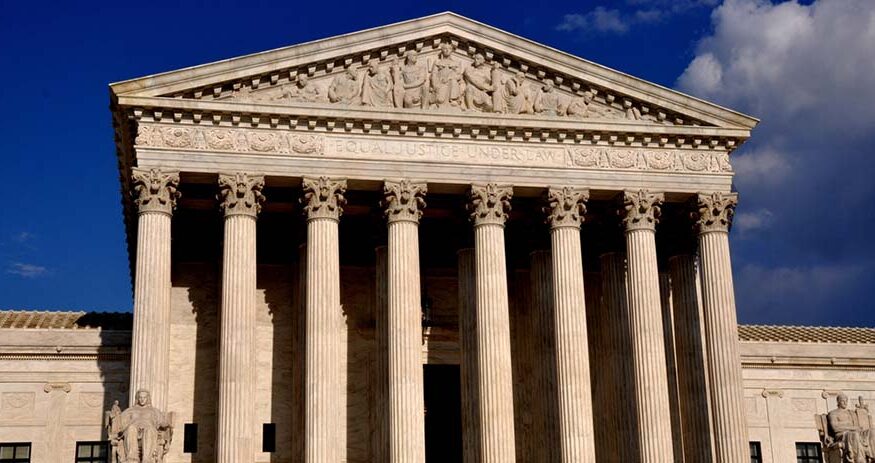
The U.S. Supreme Court building. (Depositphotos.com image)
Court: Rastafarian can’t sue prison officials over forcibly shaved head
Reuters//June 23, 2026//


In Brief
- Supreme Court upholds dismissal of Rastafarian‘s lawsuit.
- Case involves Religious Land Use and Institutionalized Persons Act.
- Damon Landor’s hair shaved despite religious objections.
- 5th U.S. Circuit Court of Appeals ruling cited.
WASHINGTON — The U.S. Supreme Court refused on Tuesday to let a Rastafarian man sue state prison officials in Louisiana after guards held him down and shaved him bald in violation of his religious beliefs in a case brought under a federal law protecting incarcerated people from religious discrimination.
The court in a 6-3 ruling powered by its conservative justices upheld a lower court’s decision to dismiss Damon Landor’s lawsuit because it found the statute at issue did not permit him to sue the individual prison officials and guards for monetary damages. Landor’s religion requires him to let his hair grow.
The court’s three liberal justices dissented from the ruling.
The law, called the Religious Land Use and Institutionalized Persons Act of 2000, prohibits religious discrimination by state and local governments in land-use regulations and also protects the religious rights of people confined to institutions such as prisons and jails.
The Trump administration backed Landor, urging the Supreme Court to revive the case.
The Supreme Court, which has a 6-3 conservative majority, had expanded the rights of religious people and institutions in a series of rulings in recent years. It heard arguments in the case in November.
Landor grew his hair over a span of 20 years into long locks that reached his knees. In 2020, near the end of a five-month prison sentence for drug possession, Landor was transferred to the Raymond Laborde Correctional Center in Cottonport, Louisiana.
There, Landor reminded officials that the New Orleans-based 5th U.S. Circuit Court of Appeals had ruled in a 2017 case that Louisiana’s policy of cutting the hair of Rastafarians violated the 2000 law. Landor even handed over a copy of that ruling, but a guard threw it in the trash, according to court documents.
Landor was then handcuffed to a chair, held down and shaved.
Landor, who lives in Slidell, Louisiana, sued, but a federal judge threw out his case. In 2023, the 5th Circuit upheld that decision, concluding that the law at issue does not allow individual officials to be personally held liable for money damages.
Without a damages remedy, the law would provide no deterrent against abuse by officials, Landor’s lawyers told the Supreme Court.
Landor’s lawyers have called the statute similar to a 1993 law called the Religious Freedom Restoration Act that prohibits religious infringement by the federal government.
In 2020, the Supreme Court allowed for monetary damages claims under the Religious Freedom Restoration Act in a case involving a bid by three Muslim U.S. citizens to sue FBI agents who they accused of placing the men on the government’s “no-fly list” for refusing to become informants.
Related Articles
Related Content





Legal Tech
- How ransomware tactics against law firms are changing
- How large language models are leveling the personal injury playing field
- Attorney Share, Lawmatics integrate to automate law firm referrals
Top News
- Prosecutors struggle to turn voter fraud claims into charges
- Best At Work Insights: We tore out the workforce backup generator
- Citing jury instruction, justices order new sex-abuse trial
- Judicial Branch announces $4 million in courthouse security grants
- 8th Circuit upholds school district in student suicide suit








Expert Testimony
- Best At Work Insights: We tore out the workforce backup generator
- Legally Speaking: How communication failures turn disputes into lawsuits
- Perspectives: Umpire’s death recalls case law in Minnesota
- Perspectives: It’s not ‘football’ here, but soccer cases abound


