


 Free Newsletter

South Carolina lawyer Murdaugh’s murder conviction overturned
USA TODAY Network via Reuters Connect//May 13, 2026//
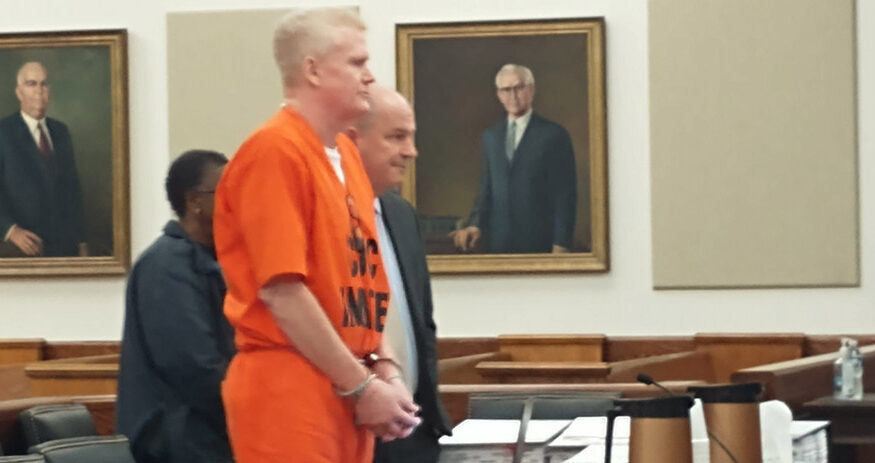
Alex Murdaugh stands before Judge Clifton Newman on Nov 20, 2023. (Photo: USA TODAY Network via Reuters Connect.)
South Carolina lawyer Murdaugh’s murder conviction overturned
USA TODAY Network via Reuters Connect//May 13, 2026//


In Brief
- South Carolina Supreme Court overturned Alex Murdaugh’s 2023 murder convictions and ordered a new trial.
- Court found former clerk Becky Hill improperly influenced jurors during the six-week murder trial.
- Justices ruled the state failed to overcome the presumption of prejudice under the Remmer standard.
- Court also criticized the extensive admission of financial-crime evidence as unfairly prejudicial.
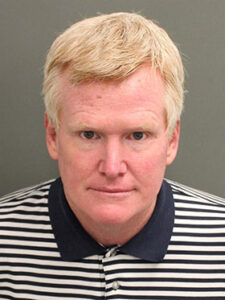
The South Carolina Supreme Court overturned Alex Murdaugh’s 2023 murder convictions and ordered a new trial on Wednesday, May 13, citing improper jury communication and tampering by former Colleton County Clerk of Court Becky Hill, among other legal issues.
After hearing oral arguments on Feb. 11 in the high-profile, double-murder conviction appeal of disgraced former lawyer Richard Alexander “Alex” Murdaugh, convicted in 2023 of murdering his wife Maggie and adult son Paul at their Colleton County home in June 2021, the S.C. Supreme Court on May 13 reversed the denial of Murdaugh’s motion for a new trial by an appeals court and remanded the case back to the S.C. Circuit Court system for a new trial.
In its 29-page ruling, the high court’s position is summarized clearly in its “per curiam,” or unanimous introductory summary:
“… Both the State and Murdaugh’s defense skillfully presented their cases to the jury as the trial court deftly presided over this complicated and high-profile matter. However, their efforts were in vain because Colleton County Clerk of Court Rebecca Hill placed her fingers on the scales of justice, thereby denying Murdaugh his right to a fair trial by an impartial jury.”
Citing the constitutional right to a fair trial by an impartial jury “untainted by external forces,” and noting the length and expense of the first, six-week trial, the court’s ruling added. “Although we are aware of the time, money, and effort expended for this lengthy trial, we have no choice but to reverse the denial of Murdaugh’s motion for a new trial due to Hill’s improper external influences on the jury and remand for a new trial.”
During deliberations, the high court considered a massive amount of documentation, including the recent appellate briefs and replies, the entire court transcript from Murdaugh’s six-week, double-murder trial in 2023, the transcript of the previous appeal hearing held before Justice Jean H. Toal, and the indictments and guilty plea documents pertaining to former clerk Hill.
The high court did not consider Murdaugh’s guilt or innocence, as would occur in a lower court criminal trial, but ruled only on matters of law and procedure.
The South Carolina Supreme Court is currently composed of Chief Justice John W. Kittredge and Justices John Cannon Few, George C. James Jr., D. Garrison Hill, and Letitia H. Verdin, who were all present for the Feb. 11 hearing.
Murdaugh’s attorneys respond to Supreme Court ruling
Around noon on Wednesday, Murdaugh attorneys Richard Harpootlian and Jim Griffin issued the following statement on the ruling:
“The Supreme Court’s decision today affirms that the rule of law remains strong in South Carolina. The Court found that Becky Hill’s conduct during the trial attacked Alex Murdaugh’s credibility and his defense. The Court rightly described her conduct as ‘breathtaking,’ ‘disgraceful,’ and ‘unprecedented in South Carolina.’
“We respect the decision that made clear that the retrial must look very different from the first. The initial jury heard more than 12 hours of testimony about Alex’s financial crimes. The Court held that this evidence went far beyond what was necessary and gave rise to unfair prejudice. On retrial, that will not be permitted. Alex has said from day one that he did not kill his wife and son. We look forward to a new trial conducted consistent with the Constitution and the guidance this Court has provided.”
Attorney General Alan Wilson to retry Murdaugh murders
Less than two hours after the Supreme Court’s ruling was announced, S.C. Attorney General Alan Wilson released the following statement following the court’s decision:
“While we respectfully disagree with the Court’s decision, my Office will aggressively seek to retry Alex Murdaugh for the murders of Maggie and Paul as soon as possible. Let me be clear—this decision does not mean Murdaugh will be released. He will remain in prison for his financial crimes. No one is above the law and, as always, we will continue to fight for justice.”
Murdaugh is currently serving a 27-year sentence for the financial crime convictions that the Attorney General’s Office secured. Murdaugh has also pleaded guilty to federal fraud charges.
What did Clerk Becky Hill do to warrant a new trial?
On Oct. 27, 2023, Murdaugh filed a motion for a new trial, with attached affidavits from several jurors, claiming Hill tampered with the jury by “advising it not to believe Murdaugh’s testimony and other defense evidence, pressuring it to reach a quick guilty verdict; and misrepresenting information to the trial court in an attempt to have the court remove a juror she believed to favor the defense,” cited the court.
Supreme Court Chief Justice Beatty then appointed former Chief Justice Toal to preside over this motion in a post-trial appellate hearing held Jan. 26 and Jan. 29, 2024, after which Toal denied Murdaugh’s motion for a new trial.
After reviewing the trial exhibits and transcript, and testimony from the appeals hearing, the high court disagreed with Toal and noted that one juror testified that, as Murdaugh prepared to take the stand in his defense, Hill said “Watch his body language,” and another juror testified that Hill instructed her “to watch his actions” and to “watch him closely.”
This juror, identified as Juror Z, added that Hill’s statements influenced her in finding Murdaugh guilty and “it felt like she made it seem like he was already guilty,” as cited in the court’s ruling.
Juror Z also testified that, upon jury deliberations, Hill told the jury, “This shouldn’t take us long,” and added, “I had questions about Mr. Murdaugh’s guilt but voted guilty because I felt pressured by the other jurors.”
The court also considered that another juror, who was dismissed before deliberations, claimed that, before Murdaugh testified, Hill told the jurors not to be “fooled by” the evidence Murdaugh’s attorneys presented.
That juror also claimed that “Hill asked her whether she and the other jurors were inclined to vote guilty or not and told her that everything Murdaugh said had been lies,” the court’s ruling cited.
The court also noted another juror testified that, as Murdaugh’s team began to present its defense, Hill said, “They’re going to say things that will try to confuse you. Don’t let them confuse you or convince you or throw you off.”
Finally, the court’s ruling noted that during the appeal hearing, Hill denied the allegations, was found not credible, and later charged with perjury. The court also noted that Hill appeared motivated to secure a guilty verdict to help sell a book she co-authored, which was later unpublished due to plagiarism allegations.
Admission of financial crimes also an issue for Supreme Court
At the time of his trial, Murdaugh was also facing more than 100 counts of financial crimes related to a multi-million-dollar, decade-long crime spree as a practicing attorney.
In presenting its case, the State argued that Murdaugh murdered his family to distract and cover up his financial crimes, a motive strongly disputed by the defense.
During the murder trial, Judge Clifton Newman allowed several days of testimony from eight witnesses, including victims who were portrayed as “vulnerable,” and numerous exhibits of evidence related to these crimes, which Murdaugh’s defense team strongly objected to as inadmissible “bad character” exhibits and noted in Murdaugh’s appeal.
In its ruling, the Supreme Court agreed with the trial judge’s decision to allow evidence of financial crimes to be entered into the murder trial, but added, “we unanimously hold the trial court allowed the State to go far too long and far too deep into aspects of Murdaugh’s financial crimes that were not probative of the State’s theory of motive, which gave rise to considerable danger of unfair prejudice, and therefore should have been excluded.”
“Because we order a new trial on this basis (jury tampering), it is not necessary that we review every evidentiary issue Murdaugh raises on appeal from his conviction. However, we address the admissibility of Murdaugh’s financial crimes to offer guidance on this thorny issue to the trial court on remand.”
After the trial, Murdaugh pled guilty to the financial crimes in both state and federal court and was sentenced to a concurrent 27 years in state prison and 40 years in federal prison.
Supreme Court decision relies heavily on Remmer standard
In his appeal, Murdaugh’s team cited Remmer v. United States, 347 U.S. 227 (1954) (Remmer I), which contends that “prejudice should be presumed from Hill’s comments to the jury and that the presumption is irrebuttable.”
While the State argued that Hill’s comments were “foolish and fleeting,” but had no real impact on the verdict, the high court cited Remmer, as well as several other state and federal precedents, and stated: “We agree with Murdaugh. Prejudice is presumed from Hill’s comments, and while this presumption is rebuttable, the State failed to overcome this presumption.”
In the ruling’s conclusion, the S.C. Supreme Court called Hill’s jury interference “shocking” and stated:
“As the Fourth Circuit declared, the Remmer presumption is [alive and well]… It serves to protect the right to a fair trial by an impartial jury for all defendants. Here, Hill, the Colleton County Clerk of Court, egregiously attacked Murdaugh’s credibility and his defense, thus triggering the presumption of prejudice, which the State was unable to rebut… “
What comes next in the Alex Murdaugh case?
It is now in the hands of the S.C. Circuit Court system to schedule the case for a second trial and determine a fair venue. That announcement has not been made.
How did we get here, and why did Murdaugh appeal?
Murdaugh, a former Hampton attorney also convicted of multiple fraud-related crimes worth millions of dollars, was convicted in March 2023 for the June 2021 murders of his wife, Maggie, and younger son, Paul, before Circuit Judge Clifton Newman in Walterboro.
Following the jury trial conviction, Newman sentenced Murdaugh to two consecutive life sentences, but the disbarred lawyer, who admitted the fraud but denied the killings, almost immediately appealed his case to the Supreme Court over allegations of jury tampering and other legal grounds to be argued before the high court.
During the Feb. 11 Supreme Court session, it was clear that the majority of the high court justices had serious questions about the 2023 trial and conviction of Murdaugh, as well as the ruling from a lower court appeal hearing held in early 2024.
During a roughly three-hour session in the historic S.C. Supreme Court Building in Columbia, the Supreme Court justices asked pointed questions and made strong statements about several key issues, namely the admission of large amounts of financial crime evidence in a murder trial and alleged jury tampering by a court official.
Murdaugh’s attorneys argued he didn’t get a fair trial
During the Feb. 11 session, Murdaugh attorney Richard Harpootlian, stating that the 6th Amendment that protects the right to a fair trial is perhaps the most important amendment of the Constitution, criticized the actions of former Colleton County Clerk of Court Becky Hill, who is accused of jury tampering, and who published a book that the public later learned was plagiarized, adding that he has never seen a factual pattern like this: a court clerk setting out to influence a case for financial gain.
Harpootlian stated that Hill made comments to jurors, including “Don’t be fooled” by Murdaugh’s arguments, “Don’t let them confuse you,” and “Watch his actions,” while Murdaugh was preparing to testify, adding “The clerk of court tells anyone who would listen that ‘I need a guilty verdict’.”
Murdaugh was initially denied a new trial during a January 2024 appeal hearing before the specially appointed former Justice Jean Toal.
During Harpootlian’s remarks, justices asked repeatedly about statements made by jurors or dismissed jurors whose testimony was not included by the lower appeals court on the record: “Can we consider the ‘egg juror’s’ testimony? What was her (Toal’s) rationale for not allowing the ‘egg juror’ to testify?”
“The egg juror” refers to Myra Crosby, a juror who was dismissed abruptly on the last day of the internationally televised trial due to allegedly not following the judge’s instructions outside the courtroom, but caught the public’s attention when she asked to take home a dozen eggs that she had brought with her to the jury room.
Crosby and Juror Z had either expressed doubts about Murdaugh’s guilt or testified that Hill’s comments had influenced them.
During the 2024 appeal hearing, Toal considered only the testimony of 11 deliberating jurors who were deemed credible and discounted testimony that she deemed inconsistent or not credible. Eleven jurors said they either didn’t hear Hill’s comments or that the comments did not influence their verdict.
“The (appeals) court didn’t seem to believe Juror Z, but her comments led us to believe that Hill’s comments had an effect,” said Justice Verdin later in the hearing.
Chief Justice Kittredge later stated that the trial court found only portions of Juror Z’s testimony credible and asked, “How can we reconcile that?” before citing a prior S.C. Supreme Court ruling that emphasized, “A party is entitled to 12 jurors.”
When questioned about which legal standards the appeal was based on, state or federal, Harpootlian stated that Hill’s actions were “more than enough” to meet several standards.
Harpootlian cited a historic case, the treason trial of former U.S. Vice President Aaron Burr in 1807, adding that even such a “terrible person” as Burr was entitled to a fair trial.
State defended its case against Murdaugh
Creighton Waters, lead prosecutor with the S.C. Attorney General’s Office, stated that Hill’s comments to jurors were “limited in scope” and “non egregious,” refuting several of them: When Hill said “today is going to be an epic day” on the day Murdaugh testified, that that was simply a true statement, and her instructions to the jury to “watch his body language,” was a neutral statement.
Waters added that Toal ruled Hill’s comments were not prejudicial to the jury or the outcome of the case, and that the testimony of Crosby and Juror Z was ruled ambivalent.
Waters also reinforced the idea that the two jurors’ claims against Hill were “all over the place” and inconsistent, which is why Toal considered only the testimony of the 11 deliberating jurors who “told the truth” that Hill did not influence them.
“Is this court only limited to those 11 jurors?” asked Verdin, “or can we consider Juror Z and the Egg Juror?”
“What do we do about the order (from Toal) that doesn’t even mention that Juror Z did in fact testify that Hill said, ‘Don’t let the defense fool you’?” asked Chief Justice Kittredge, who added that, when Hill’s comments are taken together, in context, they “take on a very nefarious message.”
Waters countered that Hill’s comments were made in the middle of a long trial, not near the end before deliberations, and should be considered “non-fatal,” adding that the judge gave the jury firm instructions to consider only the evidence and testimony in reaching their verdict.
“I do think that time matters in this case,” added Waters. “The timing is important.”
“How do we create a standard based on a lengthy trial versus a one-day trial, when the constitutional right is the same?” asked Kittredge.
Kittredge also noted that some jurors’ statements about Hill’s comments were almost identical to those of other witnesses, including another court official, adding, “Explain to me, how do we pass go?” on this.
During Toal’s hearing, she ruled that Hill was not a credible witness, and Chief Justice Kittredge addressed this by saying, “If Becky Hill is not credible, is it because she is a liar?”
Kittredge later called Hill a “rogue clerk of court” and told Waters, “Even you acknowledge that her actions and comments were improper.”
Waters said that while Hill’s comments were improper, they were “neutral on their face,” adding that “Neither Justice Toal, nor the State, relies on Becky Hill,” and that “We rely on the 11 jurors.”
Murdaugh’s attorneys presented arguments about the murder trial itself
Murdaugh’s attorney, Jim Griffin, argued the appeal from the actual murder trial itself. Griffin said that his oral arguments before the court would hinge on five key areas:
- Did the trial court err by allowing unfairly prejudicial evidence of financial crimes committed by Murdaugh to be presented for six days during the murder trial, purportedly as evidence of motive?
- Did the trial court err by allowing the State to impeach Murdaugh with his post-Miranda silence? Murdaugh originally said before the trial that he was never at the crime scene, but later admitted on the witness stand that he was after being presented with cell phone video evidence.
- Did the trial court err by allowing a witness qualified as an expert in extracting data from cell phones to testify about an experiment he conducted during the trial in which he sat alone in his office over a weekend throwing a phone on the floor to see if the screen would come on, when he collected no data regarding the results of the experiment, admitted he had no expertise regarding that aspect of the phone’s operation, and admitted the results he reported from memory were not statistically significant?
- Did the trial court err by allowing the State to distract from its failure to recover a murder weapon by allowing a State firearms examiner to offer an expert opinion based on a discredited toolmark methodology?
- Did the trial court err by allowing the admission of multiple firearms into evidence that were not connected to the murders, as well as a raincoat coated with gunshot residue that was not connected to the defendant?
“The evidence in this case did not conclusively prove the defendant’s guilt,” argued Griffin, adding that there were no eyewitnesses and little blood or DNA evidence. “This was not an overwhelming evidence case; this was a close case.”
When Griffin argued the point about a non-expert conducting a “non-scientific test” on a cell phone, the justices asked if that piece of evidence even “made a difference.” Instead, the justices spent more time questioning the financial crime evidence used to argue for Murdaugh’s motive.
Justice James enquired about the possibility that Murdaugh’s victims, his family members, were going to come forward about Murdaugh’s fraud.
“Was there any evidence that Maggie was getting wind of the financial misdeeds?” asked James. “Was there any evidence that Paul, who was described as a ‘detective,’ was getting wind of the financial misdeeds, as opposed to him hoarding pills?”
Griffin replied that there was not.
When asked what the purpose of the State introducing weapons into evidence that weren’t actually murder weapons was, Griffin responded, “To prejudice Alex. We did object to them going into evidence.”
The State defended its murder conviction of Murdaugh
Waters also argued the State’s case in the murder trial, stating in advance that his arguments would hinge on four basic elements: Murdaugh had motive, means, and opportunity, and committed acts of a guilty conscience.
Earlier in the hearing, Justice Few had made note of the fact that this was a circumstantial evidence-heavy case and there were no eyewitnesses and no real DNA evidence in the case, stating, “You had to piece together a whole bunch of stuff… most of those six weeks was piecing together a bunch of little pieces of evidence that he did do it.”
Most of the time was spent on questions and answers related to the financial fraud evidence being admitted in great detail as a motive for murder.
During the murder trial, the State had argued that Murdaugh murdered his family to distract from his fraud, and a 2019 fatal boat crash involving his son that had become “an anchor around his neck,” said James, who added, “I am struggling to find a logical connection.”
“The granular detail and the expansiveness of everything under the sun that was allowed is arguably problematic,” stated Kittredge, who asked why the trial court had to hear about a disabled victim, Brian Harriott, during his brother Tony Satterfield’s testimony. (Both victims were sons of Murdaugh’s housekeeper, whom he admitted he defrauded during a wrongful death insurance scheme.)
Kittredge stated that including testimony about Harriott’s disability made Murdaugh look like a “despicable human being” and not just a thief, asking, “How does that relate to motive?”
“That’s the very evil that (S.C. Rule) 404B was designed to prevent,” he added.
Waters responded by stating that “Satterfield was a factor in the gathering (financial) storm” that led Murdaugh to murder.
“What did the fact that the young man was disabled have to do with anything?” drilled down Justice James.
Justice Few commented that the State could have condensed its theory of motive to just an hour or two, adding that the theory of motive was “debatable” and “not an easy connection.”
“You can’t truly understand the boiling point if you don’t understand the slow burn leading up to it,” countered Waters.
Related Articles
Related Content






Top News
- Who is liable when AI goes rogue? Lawyers see new risks
- Trump says he’ll bring ballroom fight to Supreme Court after lower court halts work
- Trump tries new tack against birthright citizenship after Supreme Court snub
- Justices void contractor’s lien, deny legal fees in construction suit
- Judicial Branch announces death of OLPR’S Humiston







Expert Testimony
- Perspectives: Taylor-Travis marriage recalls prenup laws here
- Quandaries & Quagmires: Fast-Tracking Temporary Lawyer Suspensions
- Perspectives: ‘Slam’ suits: Recalling wrestling cases as WWE arrives
- Best At Work Insights: We tore out the workforce backup generator
Legal Tech
- Criminal defense lawyers have duty to use AI, paper argues
- AI is reshaping family law practice, but attorneys worry about DIY research
- Massachusetts court rejects work product protection for AI documents by girlfriend


