


 Free Newsletter


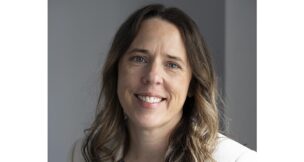
Donald R. McNeil
Breaking the Ice: Attorney runs for professional, personal aims
Todd Nelson//April 2, 2025//


On his college track team, Don McNeil ran for sport. As managing partner at Heley, Duncan & Melander, his mid-day runs with colleagues build camaraderie.
As a father of two adult children with severe disabilities, whom he and his wife care for at home, he has further motivation to keep running.
“Anyone in a similar situation knows that we must live for as long as possible to take care of our children,” McNeil said. “Running when I was younger was for the competition; now it is for longevity.”
The McNeils’ oldest has Williams syndrome, and their youngest, non-verbal, severe autism. Their third child, a son, is a neurosurgical resident in Boston.
A business litigator and mediator, McNeil described himself and other attorneys at their Bloomington-based firm as “large firm refugees.” He appreciates the “friendly, low-key environment” and flexibility to attend doctors’ appointments or engage in advocacy efforts that he and his wife take part in on behalf of people with disabilities.
Last year, a complaint that McNeil and another attorney filed reportedly led to a $7.3. million arbitration judgment against an insurance company. Arbitrators found the company liable for mismanagement of $26 million in lottery winnings a Minnesota couple used to fund a charitable foundation that supports research into a rare genetic disorder that claimed their granddaughter’s life.
Name: Donald R. McNeil
Title: Managing partner, Heley, Duncan & Melander
Education: B.A., philosophy, Gustavus Adolphus College; J.D., Mitchell Hamline School of Law
Q: Best way to start a conversation with you?
A: Tell me that you are a member of “the Club” — someone that is the parent of a child with disabilities. We have an immediate affinity and connection. We have an extraordinary life and make quick friends with anyone that has a similar experience.
Q: Why law school?
A: Back then, the attraction was for a position of prestige that attorneys have in our community. Over time, I continue to practice law because attorneys have the flexibility in private practice to champion any cause that makes life better for all of us. For me, my practice often includes representing the elderly and disabled in financial matters. Attorneys also often hire me as a mediator for disputes involving those unique areas of the law because I live that life.
Q: What are you reading?
A: I just finished “A Moveable Feast” by Ernest Hemingway. My wife and I will be in Paris soon for our wedding anniversary, and as he wrote, “If you are lucky enough to have lived in Paris as a young man, then wherever you go for the rest of your life, it stays with you, for Paris is a moveable feast.”
Q: Pet peeve?
A: Elected officials that offer opinions about issues affecting the disability community without asking for input first.
Q: Best part of your work?
A: The clients.
Q: Most challenging?
A: The clients.
Q: Favorite activity away from work?
A: Going for a walk in the woods with my son with autism and the dog. Our son likes the solitude and quietness of the trails, and the dog likes to chase a stick. I like the peacefulness of the woods.
Q: Where would you take someone visiting your hometown?
A: Chankaska, a winery just outside of the intended state capital of St. Peter. I’m sure to find a high school friend or extended family on every visit.
Q: Legal figure you admire?
A: Justice Mary Jeanne Coyne of the Minnesota Supreme Court. She was brilliant and wise and persevered. I served as her clerk and witnessed her at work. She was one of a few women in her law school class and had a successful career as an appellate lawyer at Meagher Geer. She never wanted to acknowledge it when she was alive, but she was a remarkable trailblazer.
Q: Misconception about your work?
A: That the court room is anything like the movies.
Q: Favorite book, movie or TV show about lawyers?
A: “To Kill a Mockingbird,” by Harper Lee. I grew up in southwest Virginia, and the world Ms. Lee described of small-town life in the southern part of our country is familiar.
Related Articles
Related Content






Legal Tech
- How ransomware tactics against law firms are changing
- How large language models are leveling the personal injury playing field
- Attorney Share, Lawmatics integrate to automate law firm referrals
Top News
- Prosecutors struggle to turn voter fraud claims into charges
- Best At Work Insights: We tore out the workforce backup generator
- Citing jury instruction, justices order new sex-abuse trial
- Judicial Branch announces $4 million in courthouse security grants
- 8th Circuit upholds school district in student suicide suit







Expert Testimony
- Best At Work Insights: We tore out the workforce backup generator
- Legally Speaking: How communication failures turn disputes into lawsuits
- Perspectives: Umpire’s death recalls case law in Minnesota
- Perspectives: It’s not ‘football’ here, but soccer cases abound


