


 Free Newsletter

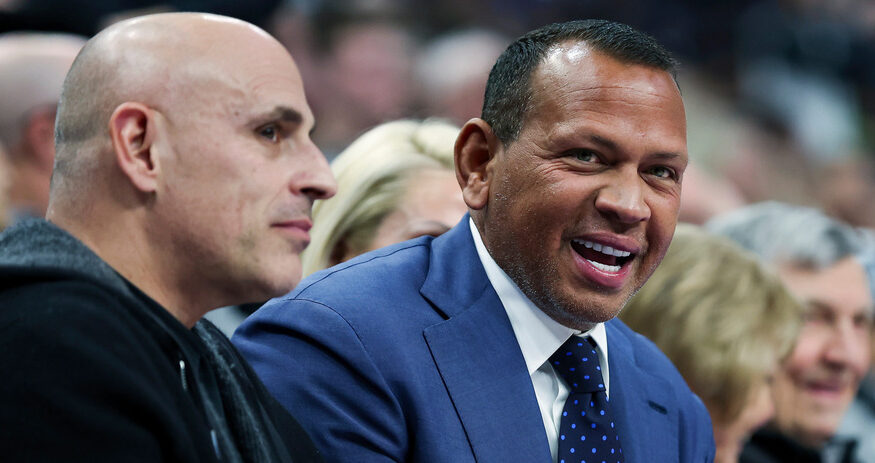
Minnesota Timberwolves minority-interest owners Alex Rodriguez, right, and Marc Lore watch during the first half of an NBA basketball game between Timberwolves and Los Angeles Lakers on Saturday, Dec. 30, 2023, in Minneapolis.(AP Photo: Matt Krohn)
Perspectives: Timberwolves turmoil recalls past cases
Marshall H. Tanick//April 18, 2024//


 Listen to this article
“I treat it like every day is my last day with a basketball.”
Basketball all-time scoring leader LeBron James
“The game of basketball has been everything to me … the site of the most intense pain and the most intense feelings of joy and satisfaction.”
Basketball icon Michael Jordan
“We can have no progress without change, whether in basketball or anything else in life.”
Legendary UCLA Basketball Coach John Wooden
The turmoil tied to ownership of the Minnesota Timberwolves basketball team comes at inopportune time as the team heads into the postseason playoffs this weekend following its best regular season in decades.
The tussle to run the club recalls the business and legal maneuvers that saved the team from relocating 30 years ago this year as well as some machinations concerning transactions involving three of the state’s other major professional sports franchises.
The current contretemps revolves around the prospective sale of the controlling interest in the 35-year-old basketball team to a partnership composed of former baseball star Alex Rodriguez and businessman Marc Lore, who acquired a minority interest in the club in 2022 from owner Glen Taylor, who also owns the Star Tribune newspaper. That interim relationship was part of a $1.5 billion deal that was to climax last week with transfer of an additional portion, giving them 80% ownership.
But, as the club experiences nearly unprecedented success on the hard court, heading into postseason play following its season-long contention for the lead in its Western Division, the ownership arrangement seemed headed to the courtroom, a forum that the organization has familiarity with from a prior legal ownership legal dustup three decades ago.
The ownership controversy, like most others of its ilk, involves money. The Rodriguez-Lore group apparently does not have or is unwilling to ante up enough of it to make the final payment to seal the deal, according to Taylor, who the aspiring purchasers claim has “seller’s remorse” and is trying to welch on the deal.
The buyers’ financial inability to complete the transaction has a semblance of reality. Shortly before the scheduled closing of the transaction right before Easter, they brought in a new unrelated investment group as a participant in the ownership team, a sign that their finances may be faltering prior to Taylor declaring that the transaction shot clock had expired and the deal was dead due to the buyers’ failure to meet the payment deadline shortly before April 1. No fooling, declared Taylor, the deal is moribund.
Nothing to see here, assured the putative buyers — just a matter of completing some routine paperwork required by the National Basketball Association (NBA), which has been reticent on the matter.
But Lore has not. While he and Rodriguez wait in the on-deck circle, to mix a baseball metaphor, he has threatened a lawsuit to compel Taylor to consummate the transaction. But the 52 year-old New York-based businessman noted that he has never sued or been sued before, a remarkable litigation virginity for a business wheeler-dealer in today’s litigious environment.
Orleans overture

The tumult recalls how the Timberwolves, then in their infancy, almost moved out of the state in 1994 in another ownership squabble.
The team’s original owners during its six years existence, local business buddies Marvin Wolfson and Harvey Ratner, known with varying degrees of affection and disdain as Marv & Harv, sought to bail out in response to an overture by a group known as Top Rank, headed by boxing promoter Bob Arum based in New Orleans. That city had recently lost its NBA franchise, the Jazz, to Utah, where it has been modestly successful on the court and at the box office with that ill- fitting sobriquet for that tranquil town.
But a funny thing happened on the way to the Big Easy; the prospective transfer was halted by an injunction issued by Judge James Rosenbaum in a federal court lawsuit in Minneapolis amid dueling lawsuits in U.S. District Court here and a competing case in Louisiana state court seeking to proceed with the proposed $152.5 million transaction down there.
Judge Rosenbaum, acting at the behest of the NBA, halted the Louisiana lawsuit in parish (county) court in the Bayou, and the 8th Circuit Court of Appeals later affirmed in NBA v. Top Rank of Louisiana Inc., 56 F.3d 866 (8th Cir. 1995). The appellate court upheld Judge Rosenbaum’s ruling despite the Anti- Injunction Act, 28 U. S. C. § 2283, which generally prohibits Federal courts from stopping state court proceedings. But the appellate court relied upon the “re-litigation” exception, one of three to the law’s bar, to avoid further litigation on issues in Louisiana that Judge Rosenbaum had already addressed and resolved in the Minnesota case.
Meanwhile, the league refused to approve the pending transaction due to concerns about the buyer’s finances, much like the current Rodriguez/Lore-Taylor dispute.
With the legal stare-down at an impasse, Taylor, a former Republican state senator and extremely wealthy Mankato business mogul, stepped up to the plate, to mix yet another metaphor. He purchased the team from Marv & Harv in order to keep it here by paying $94 million for the club, now valued at some $2.5 billion (remarkably, the second-lowest in the league). That’s nearly a 30-times increase, a tidy sum if someone can come up with the money to convert it from paper profit to cash register reality, a fisc that the Lore group so far seems to be lacking.
Three teams
A trio of the area’s other major professional athletic clubs have gone through their own versions of onerous ownership angst over the years.
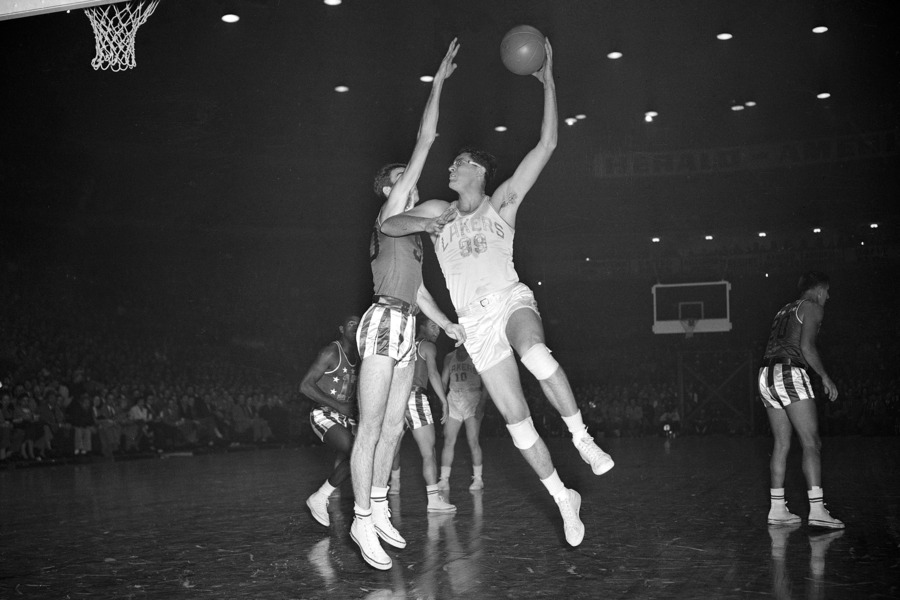
The Timberwolves’ NBA predecessors, the five-time post-World War II NBA championship dynasty Minneapolis Lakers, left town for greener and greater greenbacks in Los Angeles in 1960 after new ownership here tried unsuccessfully for a few years to overcome box office struggles due to inadequate facilities and later sold out to interests in that city, who have turned it into a cash cow, along with a glittering star-studded cast of fans and players.
The transfer of the team to L.A. was preceded by a lawsuit by a minority shareholder who prevailed in seeking access to the team’s financial records in Minneapolis in a case in Hennepin County District Court, which withstood review a year after the team had departed by the state Supreme Court on grounds that it was an unappealable interlocutory ruling in Skutt v. Minneapolis Basketball Partnership, 261 Minn. 574, 110 N. W. 545 (Minn. 1962). The lawsuit, while successful, did not thwart the move of the team to Southern California, where it has accumulated a dozen more titles.
Another winter-centric Minnesota team, the hockey North Stars, was relocated in 1993 by its disgruntled Canadian owner, Norm Green, to that hockey paradise of Dallas, Texas, appropriately rechristened as the Dallas Stars, and captured a National Hockey League’s Stanley Cup championship trophy six years later (a feat that for some 26 years had eluded its northern predecessor). The Stars here were replaced in 2000 by the expansion Wild, a year after the expatriate Dallas team won the championship, and continues struggling for a NHL title.
The football Vikings have also experienced their share of ownership fracases, including the failed effort by thriller author Tom Clancy in 1998 to buy the club from a local consortium for $600 million. That deal fell apart when it was revealed, after Clancy announced the prospective purchase, that he was missing one essential feature: a signed contract.
In stepped Texas car dealer Red McCombs to buy the club and operate it for seven years constantly agitating for a new facility, which finally got built after he sold out to another non-Minnesota group, the current owners, the New Jersey-based Wilf brothers, for $246 million, a fourfold increase.
But before then, ownership of the Vikings was destabilized by litigation between local ownership groups. In Winter v. Skoglund, 494 N.W.2d 786 (Minn. 1987), the Supreme Court addressed an ownership fracas between the original purchasers of the franchise in 1961 and their families, who had developed a “profound alienation” as the team’s value escalated from the original $1 million acquisition price. It affirmed a lower court ruling, by a narrow 4-3 margin, that a pair of right-of-first-refusal arrangements allowing purchase of the ownership interest of one of the original half-dozen by others were “voidable” because the signatories were “mutually mistaken” as to the terms.
A decade later, another potential ownership dispute arose but failed to advance when the team’s head coach, Denny Green, threatened to sue two of the then-existing team owners for refusing to consummate a sale of shares that he claimed had been promised to him. The dispute fizzled out and Green remained as coach for a few more years until his departure in a befuddling resignation/firing flap.
Then there’s the baseball Twins, whose season is just getting started under the continued ownership of the Pohlad family, which bought the team in the midst of a threatened departure in the mid-1980s due to declining attendance when owned by the Griffith family. The team’s two World Series titles in 1987 and 1991 preceded a bungled effort to sell the club and move it to North Carolina in the new millennium. That suspect maneuver was followed by the prospective demise of the team as part of Major League Baseball’s planned “contraction” to eliminate it and one other club for financial reasons, a prospect squelched by a another court injunction issued in 2022 by the late Hennepin County District Court judge Harry Crump, which was affirmed by the Court of Appeals, a resolution leading to construction of its new Target Field home in 2010, in Metropolitan Sports Facilities Commission v. Minnesota Twins Partnership, 638 N.W.2d 14 (Minn. App. 2022), rev denied (Minn. Feb. 4, 2002). Unlike the Timberwolves litigation in the mid-1990s, in which the league was adverse to team ownership trying to relocate, in the “contraction” case, the league sided with the Twins in seeking to discontinue operations. But in both cases, the local teams survived, a pair of illustrations of the time-honored tenet of “home field” (or court) advantage: the sports franchise litigant with closest ties to the courthouse almost invariably wins.
So, the Rodriguez-Lore v. Taylor brouhaha at Target Center, while unsettling, fits into the Minnesota professional sports ownership legal lore. At least no one has sought to relocate the University of Minnesota Gopher athletic teams.
How the Timberwolves tussle over ownership will play out remains to be seen. So, too, does the remainder of the club’s season and upcoming postseason play. If it succeeds in its drive for its first NBA title, the championship hardware, known as the Larry O’ Brien trophy for the former league commissioner and old John F. Kennedy New Frontier politico, may have to be divided in half between the two contending ownership groups. That would be a real form of Solomonic justice.
PERSPECTIVES POINTERS
Average values of pro teams
- NFL Football:$5.1 billion
- NBA Basketball: $4.9 billion
- MLB Baseball: $4.8 billion
- MLB Hockey: $1.3 billion
- MSL Soccer: $678 million
Marshall H. Tanick is an attorney with the Twin Cities law firm of Meyer Njus Tanick, P.A.
RELATED: More Perspectives columns
Related Content





Top News
- Feeding Our Future leader gets 41 years for massive fraud scheme
- DOJ brings on record new class of immigration judges
- Justices reject convict’s appeal to vacate felony murder conviction
- Immigration judge grants bond to Wisconsin woman in ICE custody
- Why Minnesota Lawyer is proud to endorse Best Places to Work in Law Firms
- Court’s uneven approach to election-map rulings boosts Republicans
- Court rejects horse breeder’s legal malpractice appeal








Expert Testimony
- Legally Speaking: The Mental Clutter Lawyers Carry
- Perspectives: High court cellphone case echoes one here
- Perspectives: Taxing issues: Court addresses property issues
- Perspectives: Daily’s 125th at ‘U’ recalls varied cases


