


 Free Newsletter


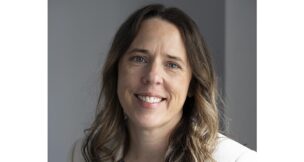
From left: Dave Senjem, Erin Koegel, Liz Olson, Andrew Carlson
In the Hopper: Recent floor action in House and Senate
Kevin Featherly//March 31, 2021//


After a slow start to House floor activity early in the 2021 legislative session, action picked up last week. Meanwhile, the Senate kept chugging along. Here’s a quick rundown on some of the more pertinent bills that passed off each floor in recent days.
Senate floor
Senate File 304 (Chief author, Sen. Dave Senjem, R-Rochester) started out as “Matthew’s Law” and was prompted by the death of a young father, Matthew Klaus. He died of a heroin overdose in 2019, while working as a confidential informant and making narcotics buys for Rochester police.
His parents, John and Denise Klaus, began a push to change the law so that statewide law enforcement agencies would have to adopt a model policy, developed by the Peace Officer Standards and Training (POST) Board, to better protect drug-addicted confidential informants.
“Confidential informants are an important part of our law enforcement structure,” Senjem told fellow senators. “We need them. But we need to take care of them as we use them. That’s what this bill attempts to do.”
His bill passed the Senate 66-0 on March 25. It was then sent over to the House, where its companion bill from Rep. Duane Quam, R-Byron, has yet to be acted on.
House File 652 (Rep. Erin Koegel. DFL-Spring Lake Park) is the Senate-adopted, House version of legislation from Sen. Mark Koran, R-North Branch. It prohibits life insurers from denying people coverage because they have taken out prescriptions for “opioid antagonists”—antidote drugs like Naloxone.
The legislation was recommended by Gov. Tim Walz’s Opioid Epidemic Response Advisory Council.
Koegel told a House committee earlier this year that the council learned during a field hearing on the White Earth Reservation that some tribal members were denied life insurance because they procured Naloxone prescriptions to prevent addicted family members from overdosing on opioids.
The Senate adopted the bill by a 66-0 vote on March 25; the House approved it 128-4 on March 18. It was sent to the governor, who signed the bill into law on March 26. Its provisions go into effect on Aug. 1.
House Floor
House File 7 (Rep. Liz Olson, DFL-Duluth) is a DFL-priority earned sick and safe time bill, meant to cover some 932,000 Minnesota workers who don’t have access to that workplace benefit.
“In many circumstances, it is still legal for workers to be fired for needing to take paid time off to care for themselves or a loved one,” Olson told House members on March 25.
The bill requires all employees working for a single employer at least 80 hours a year to earn sick and safe time to care for themselves or their loved ones—though independent contractors are excluded. Workers would accrue one hour for every 30 hours worked, up to 48 per year. They could bank as many as 80 hours of unused time.
The bill specifies that the time off could be used by the worker to seek medical or mental health treatment for themselves or families. They could also use it to deal with domestic abuse, sexual assault, stalking or school or business closures due to weather, public emergencies or quarantines.
It also allows workers to file civil actions to recover damages for violations, or receive injunctive and other equitable relief, along with costs and fees. The Department of Labor and Industry commissioner could seek civil penalties of up to $10,000 per violation for each employee
The bill appropriates $3.85 million in FY2022-23 to DLI, both for enforcement and for community education and outreach grants.
It went down like a lead balloon before House Republicans, when it was brought to a floor vote on March 25. Rep. Dave Baker, R-Willmar, said it’s the wrong thing to do when so many businesses have yet to reopen from the pandemic. “It’s not the right time to do a mandate on business in Minnesota,” he said.
The Olson bill passed 69-63 off the House floor on March 25. Its companion from Sen. Sandy Pappas, DFL-St. Paul, is sitting in the Senate Labor and Industry committee, awaiting a hearing.
House File 39 (Rep. Andrew Carlson, DFL-Bloomington) is a bill aimed at the hospitality industry, which has sustained serious economic loss because of the pandemic.
The Carlson bill, which passed by a 70-61 March 25 House floor vote, requires hotels, large event centers like stadiums, building and maintenance service companies and airports to offer workers, laid off because of the pandemic, their jobs back.
The bill calls on the DLI commissioner to enforce its provision by investigating complaints and seeking appropriate damages. Those could include orders for reinstatement and restoration of pay and benefits, Carlson said. The bill also allows laid off workers to bring lawsuits in District Court, if its requirements are violated.
“This commonsense legislation will help stabilize an important part of the Minnesota economy as businesses and workers alike recover from COVID-19,” Carlson said.
The companion bill from Sen. Bobby Joe Champion, DFL-Minneapolis, awaits a hearing in Senate Labor and Industry.
House File 820 (Koegel) is an open meetings bill. It provides that local elected officials can choose to attend remote hearings more than three times during a calendar year, either because of the pandemic or because of military service.
In 2020, Koegel said, the legislature passed legislation that allowed local elected officials to attend remote hearings if they at risk themselves or their immediate family members are at elevated risk from COVID-19. But they could only do it up to three times during the year.
The legislature didn’t count on the pandemic lasting so long, Koegel said. Some local elected leaders exhausted their special remote-meeting exemption after just one month of scheduled hearings. That forced some of those concerned about safety to keep participating remotely, but in locations accessible to the general public—sitting with laptops on street curbs or inside cars in public parking lots, for instance.
The bill, if passed would remove the remote-attendance restrictions through July 31, 2021, retroactive to the beginning of this year. It passed the House by a 124-7 vote on March 25.
Its companion, Senate File 852 (Sen. John Jasinski, R-Faribault), passed out of Senate Local Government on Feb. 16 and was sent to the Senate floor. It has not yet been taken up there.
Related Content


Legal Tech
- AI in practice: How new technology is affecting litigation practice
- Experts foresee legal malpractice risk for those who eschew AI
- Legal Decoder launches AI-powered billing analytics interface
Top News
- 1st Circuit blocks Trump’s mail-in voting order in 23 states including Minnesota
- Perspectives: ‘Slam’ suits: Recalling wrestling cases as WWE arrives
- Solicitor General Kramer leaves post to join Dorsey & Whitney
- Prosecutors struggle to turn voter fraud claims into charges
- Best At Work Insights: We tore out the workforce backup generator







Expert Testimony
- Perspectives: ‘Slam’ suits: Recalling wrestling cases as WWE arrives
- Best At Work Insights: We tore out the workforce backup generator
- Legally Speaking: How communication failures turn disputes into lawsuits
- Perspectives: Umpire’s death recalls case law in Minnesota


