


 Free Newsletter

Bench, bar react to Hanson departing from high court
Barbara L. Jones//October 15, 2007//


 Listen to this article
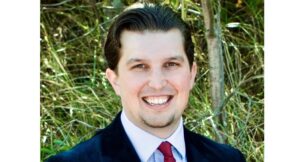
Justice Sam Hanson
Members of the legal community reacted with sadness last week to the generally unexpected news that Justice Sam Hanson will leave the Supreme Court at the end of this year.
Hanson will return to his former law firm, Briggs and Morgan in Minneapolis, where he practiced for 34 years until Governor Jesse Ventura appointed him to the Court of Appeals in 2000. Hanson was elevated to the Supreme Court in 2002.
“My service on the court has undoubtedly been the highlight of my legal career,” said Hanson in announcing his retirement from the court. “I have been privileged to participate in the resolution of important cases with six marvelous colleagues, who never fail to enrich the discussion with thoughtful and varied perspectives.”
Hanson went on to express enormous respect for all the state’s judiciary and gratitude for the various administrative initiatives on which he was able to work.
“I return to private practice with a renewed sense of appreciation for the importance of the rule of law in the progress and well-being of our society,” the respected jurist said.
Hanson, 68, would reach mandatory retirement age in August 2009.
Hanson received his B.A. from St. Olaf College, and attained his LL.B. (cum laude) from William Mitchell College of Law. He was a law clerk for Judge Douglas K. Amdahl, then on the Hennepin County District Court, in 1964-65, and for Justice Robert S. Sheran on the Minnesota Supreme Court in 1965-66.
Minnesota Supreme Court Chief Justice Russell Anderson praised Hanson for making a significant and lasting contribution to the administration of justice and to the people of Minnesota.
“We will miss him on the Supreme Court; we are grateful for his years of dedicated service and for the opportunity we were given to serve with such an outstanding jurist. We wish him all happiness and success as he now retires from the court,” the chief justice said.
At press time, no process for replacing Hanson had been announced. The governor is not required to use the Commission on Judicial Selection for appellate positions. In the past Pawlenty has generally – though not always – created ad hoc committees to vet candidates for appellate decisions.
’A great colleague’
Contacted by Minnesota Lawyer last week, former Supreme Court Justice James Gilbert said of Hanson: “Sam was a great colleague. He was such a nice person to work with. He will be missed. He brought a depth of wisdom and understanding about business law to the court. The state should be pleased with his five years of service on the Supreme Court. … The governor has some big shoes to fill.”
Former Supreme Court Chief Justice Kathleen A. Blatz said Hanson has a “great intellect and love of justice,” and that she felt privileged to have had the opportunity to serve with him.
Minneapolis appellate attorney Charles Lundberg told Minnesota Lawyer that Hanson has done a “tremendous job” on the court.
“I was surprised to hear that he was stepping down,” Lundberg said. “While it used to be exceedingly rare for a Supreme Court justice to go back to private practice before retirement age, perhaps this is becoming more acceptable: Justice Gilbert did it a few years ago and now Justice Hanson is. There is something to be said for the concept of a ‘citizen justice,’ where a lawyer decides to serve the people of Minnesota in this important role for several years and then return to private life.”
Minnesota State Bar Association President Brian Melendez pointed out that Hanson “has enjoyed a long and distinguished career in the judicial system,” starting 46 years ago as a clerk in U.S. District Court and as a law librarian for the 8th U.S. Circuit Court of Appeals.
’A valuable presence’
William Mitchell College of Law Professor Peter Knapp, a veteran court watcher, said Hanson’s “presence was valuable, especially on a court that has had a fair amount of turnover in recent years. Some of his majority opinions were bold; some of his dissents and concurrences were even bolder. I hope he will be replaced by someone with a similar breadth of experience, especially his experience on the Court of Appeals.”
Minneapolis appellate attorney Mary Vasaly called Hanson a “terrific” judge. “He’s such a gracious person and devoted to public service. He’s a wonderful role model.”
Briggs and Morgan attorney Eric Magnuson, chair of the Minnesota Commission on Judicial Selection, agreed. “He’s a wonderful human being. I am so tickled to have an opportunity to practice with him, it almost makes up for not having him on the court,” Magnuson said.
Briggs and Morgan President Alan Maclin echoed Magnuson’s sentiment. “We’re thrilled to have Justice Hanson rejoin Briggs and Morgan. He was one of the most respected litigators in the state while in private practice and I’m sure we’ll be able to benefit from his experience on the bench when he’s back with the firm in January,” Maclin told Minnesota Lawyer.
Minneapolis attorney George Soule, former head of the Commission on Judicial Selection put it this way: “Minnesota got seven great years from Sam Hanson. He has been a bright star in the appellate courts.”
Soule favors an open appointment process to choose a successor. “I think that’s good for the state. I hope the governor considers a wide array of lawyers, including persons of color,” Soule said.
Court of Appeals Chief Judge Edward Toussaint Jr. called Hanson a very collegial colleague. “He was always willing to discuss issues in a way that we could reach an agreement. He’s very thoughtful about how a decision will affect the practice of law in Minnesota,” the chief judge said.
******
A sampling from Hanson’s majority opinions
“Where a district court erroneously sustains a Batson objection to a peremptory challenge and refuses to dismiss the stricken venire member, the error undermines the basic ‘structural integrity of the criminal tribunal itself, and is not amenable to harmless-error review.’”
— Angus v. State, 2005
“Although the tax court is described as a ‘court,’ it is an administrative agency within the executive branch. … As such, its decisions have little, if any, precedential effect.”
— Kmart Corp. v. County of Stearns, 2006
“Although we recognize the salutary purpose of the 2003 [statutory] amendment — to direct the limited public defender resources to the cases that will likely present the greatest need — we nevertheless conclude that the 2003 amendment deprives some defendants of meaningful access to one review of a criminal conviction, in violation of their right to the assistance of counsel under Article I, section 6 of the Minnesota Constitution. We hold that a defendant’s right to the assistance of counsel under Article I, section 6 of the Minnesota Constitution extends to one review of a cr
iminal conviction, whether by direct appeal or a first review by postconviction proceeding.”
— Deegan v. State, 2006
“[W]e hold that the repose provision of section 541.051, subd. 1(a), bars a contribution and indemnity claim that has not accrued (i.e., where the principal claim has not been paid) and has not been brought within the 10 years from the completion of the construction.”
— Weston, et. al. v. McWilliams, 2006
“[A]n [expert] affidavit is not sufficient to satisfy the 180-day requirement if the deficiencies are so great that it provides no significant information. Any other interpretation would render the 180-day requirement meaningless.”
— Brown-Wilbert et al. v. Copeland Buhl & Co., P.L.L.P., 2007
“Because the leaving-the-scene statute does not describe any mens rea standard, we decline to imply an intent to base criminal liability on a reason to know.”
— State v. Al-Naseer, 2007
“We conclude that the policy considerations underlying the tort of negligent credentialing outweigh the policy considerations reflected in the peer review statute because the latter policy considerations are adequately addressed by the preclusion of access to the confidential peer review materials. We therefore hold that a claim of negligent credentialing does exist in Minnesota, and is not precluded by Minnesota’s peer review statute.”
— Larson et al. v. Wasemiller, et al., 2007
Related Content






Top News
- Judge invalidates Trump policies targeting immigrants from 39 countries
- Minnesota Tax Court names Beverly Luther Quast chief judge
- Courts may deliver anti-vaccine movement’s biggest win
- Fredrikson goes all-out to support Special Olympics
- Court backs generic drugmaker in ‘skinny label’ patent case
- Justices back FCC in clash with wireless carriers over fines
- Lawsuit alleges Pentagon censorship of Stars and Stripes newspaper







Expert Testimony
- Perspectives: Election litigation starting early in Minnesota
- Quandaries & Quagmires: ‘Dear Ethics Lawyer’ — A Resource for Ethics Training
- Best at Work Insights: AI alone can’t improve your company
- Perspectives: ‘Nuremberg’ movie has Minnesota legal links


