


 Free Newsletter

Wood Foster: A class-action lawyer in a class of his own
Alice Sherren Broomer//January 15, 2001//


 Listen to this article
Minneapolis attorney Wood R. Foster, Jr. readily acknowledges that the year 2000 was “a great year” for him. Foster — whose term as president of the Minnesota State Bar Association (MSBA) ended last June — presided over the MSBA at a crucial time in its history. With the state court system celebrating its 150th anniversary last year, Foster spearheaded the bar’s effort to publish “For the Record” — a work chronicling the state’s colorful legal history. It was also during Foster’s presidency that the debate on the future of multidisciplinary practices (MDPs) culminated both in Minnesota and across the country.
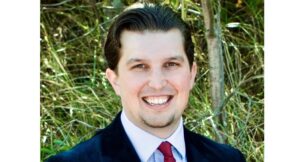
Wood Foster
Born: Minneapolis, 1943
Education: Amherst College, B.A., cum laude, 1965; University of Michigan, J.D., cum laude, 1968
Bar Admission:1968, Minnesota
Professional Experience: partner, Siegel, Brill, Gruepner, Duffy & Foster P.A.
Bar Activities: Founder and director, Minnesota Advocates for Human Rights (president, 1994; Executive Committee, 1992-96); Hennepin County Bar Association (president, 1992-93); Executive Committee, 1990-94; Governing Council, 1973-74, 1989-93; board member: Legal Advice Clinics, Ltd., 1968-79; chair, Judicial Evaluation Committee, 1990-92); Minnesota State Bar Association (Board of Governors, 1995-96; president, 1999-2000); American Bar Association; National Conference of Bar Presidents; Minnesota Trial Lawyers Association
Family: wife Jane Severns, three biological children and two stepchildren ranging in age from 14 to 35
“I felt that I got out and showed the flag more than many bar presidents,” says Foster. “I did several trips around the state to talk to groups of lawyers that don’t normally get to talk to the bar president about bar issues that bother them. I felt that there was a lot of good dialogue, and a lot of good ideas carried back to the staff.”
Foster — who works at the Minneapolis law firm of Siegel, Brill, Greupner, Duffy & Foster P.A. — has concentrated his practice on representing plaintiffs in class action.
Foster is particularly proud of the amount and quality of information that the state bar was able to disseminate to its members on the MDP controversy. (For the uninitiated, the MDP debate involves the question of whether lawyer ethics rules should be amended to allow attorneys to partner with nonlawyer professionals, such as accountants. Under current rules, such arrangements are banned.)
“I felt I gave the issue of multidisciplinary practice a very thorough airing,” says Foster. “I think lawyers in Minnesota felt that they were really well advised on the issue. Anyone who wanted to understand it could do so. We put out a tremendous amount of information for them.”
Following a recommendation of its task force on the issue, MSBA delegates voted in June to recognize a limited form of MDP. However, the following month ABA delegates at the ABA’s annual convention in New York City voted against amending its model rules to recognize MDPs. While the ABA delegates’ action forecloses any possibility that there will be any national consensus on MDPs any time soon, the issue is still alive in Minnesota, according to state bar representatives.
Foster believes the issue of MDP-and what it truly means to practice law — will remain a topic of conversation in the bench and bar for some time.
“Historically states have been very, very slow to move toward common ground,” he explains. “We have the ABA model rules, but every state puts its own [spin] on those. We end up with a patchwork of different rules that are quite different from state to state, even though [each state is] patterned on the federal rules.”
Foster, whose practice includes handling class actions, regularly tries cases in many states and would like to see an end to what he described as “feather bedding.”
“I tried this case against another Minnesota lawyer in Providence, R.I., and each of us had a Rhode Island lawyer sitting at the table doing absolutely nothing else but sitting and watching the trial,” he notes. “That doesn’t make much sense. … Those kinds of rules feel very outdated to me. At the same time I’m concerned that state bar associations will move very slowly toward unification.”
Technology developments
During his bar presidency, Foster worked hard to keep Minnesota abreast of advances in technology. The MSBA Web site grew from about 100 pages to 1,400 pages during Foster’s bar presidency.
“I feel as though we moved the ball ahead very vigorously on the technology front,” he proudly observes. “There are some wonderful things happening at the technology level at the MSBA including a lot of assistance for small practitioners.”
While Foster welcomes advances in technology and appreciates the way technology has made certain aspects of lawyering simpler, he also recognizes that the Internet could affect the profession negatively as well.
“We will see more and more efforts to develop ways of practicing law over the Web that can duplicate fairly well what lawyers do — especially in areas like commercial leases, wills and trusts, and family law,” Foster predicts. “People can get a lot of information for themselves on the Web. I think that lawyers need to be on their toes. [They need to become] more efficient and more able to convince people that what they are providing is unique, solid judgment that you cannot get from a machine. I just really believe that times are going to change. … It’s a question of how long it takes for all this to shake out.”
Class action attorney
Foster says he pursued a career in law because he saw it as “the best career option that would not close off other opportunities.” He has gained acclaim for his successful representation of plaintiffs in class action lawsuits, and credits advances in technology with making his job easier.
“Class actions were very rare things as recently as the 1970s because difficulties in the communication of mammoth discovery and speed of transmission of information made it more difficult,” recalls Foster. “Complex litigation in general really started taking off after the advent of the efficient Xerox machine, the fax, and a variety of other technological advances. It made complex litigation much more possible.”
Foster, who first became involved in class action lawsuits in the early 1970s and has focused his practice on class action lawsuits since 1990, has sued health care insurers in Minnesota, Iowa, Oklahoma, Wisconsin, Massachusetts, Rhode Island and several other states. According to Foster, the majority of his cases settle — often for amounts that are “well into the seven figures and sometimes in the eight figures.”
Foster settled a group of 48 cases against Iowa Blue Cross last year. Foster represented a number of Iowa cities, counties and school districts that challenged the way the health insure
r reported its expenditures to self-insured government entities.
“Blue Cross was reporting that they had spent a certain amount of money on a particular individual’s surgeon bill, and therefore the entity should pay them that amount plus their monthly fee, when in fact Blue Cross had discount agreements with all the doctors,” Foster explains. “That all added up to quite a lot of money,” said Foster, who described the $15 million settlement as “remarkable.”
Jordan Lewis, a shareholder at Foster’s firm, describes Foster as a “peer, teacher, and friend.”
“I have a unique and very special relationship with Wood,” says Lewis, who works out of the firm’s Milwaukee office. “I owe a great deal to him — maybe everything, professionally. If you can’t work with and for Wood Foster, you can’t work for anybody. He’s a consummate pro — a terrific and successful lawyer. And he’s invested a great deal of energy to improving the profession.”
Lawyer perceptions
Even though Foster is extremely busy with his own practice, he always finds time to work toward the advancement of the profession. One issue he likes to deal with is debunking the negative perceptions some members of the general public have about lawyers.
Foster believes negative stereotypes of lawyers are not likely to go away any time soon.
“You can never get away from the general impression held by a large number of people that a lawyer has to be somehow a bad person to represent someone who is obviously guilty of a crime,” he observes. “That debate will be with us for a long time. I do not think that there is anything that the organized bar can or should be doing to promote lawyer image other than doing everything it can to make sure that the lawyers in a particular jurisdiction are practicing as well as they can and as ethically as they can. That to me means spending a lot of time and money on increasing the quality of legal education, of continuing legal education, of mentoring, of ethical and disciplinary enforcement, and working on issues of professionalism so that lawyers aren’t sniping at one another. It is a huge mistake in my opinion for lawyers to think they can throw money at the problem and buy image. People have no idea how expensive that is. The way to public respect is to conduct yourself in a way that generates public respect overall.”
Foster believes that while dishonest lawyers are rare, one such lawyer can do a lot of harm to the public’s image of the legal profession.
“The sad thing is that one really bad apple can do so much damage to the profession,” he notes. “We can all be doing a very good job and then along comes a David Moskal and that’s in the newspaper every day for weeks.” [Moskal is currently jailed for pilfering more than $2 million from his clients, and his former firm, Schwebel Goetz & Sieben, is continuing to battle lawsuits stemming from Moskal’s fraud.]
According to Foster, the desire for more money has created an enormous tension in the profession.
“I find myself very much a victim of that tension,” he observes. “I’ve had some big successes lately, and like anyone else, I enjoy the money and the attention that that entails. But it does have a way of making you focus on the bottom line rather than the professional roots from which we draw our uniqueness. That’s a troubling thing. Lawyers have to work harder. More hours are expected of associates. Huge hourly rates are being charged — rates that lawyers themselves would hate to pay. … In all of that the roots of the profession do tend to get lost.”
Foster worries that the emphasis on billable hours may have a negative impact on the amount of community service performed by lawyers.
Foster himself has remained very active in the community. In addition to his many bar-related activities, Foster has done a lot of volunteer work in the human rights arena. In 1982, Foster was involved in founding what would become the Minnesota Advocates for Human Rights.
“Wood has been a wonderful volunteer in the field of human rights for quite a long time and he certainly deserves credit for that work,” says University of Minnesota School of Law Professor David Weissbrodt, who has worked with Foster for a number of years on human rights issues.
Future plans
In the upcoming years, Foster plans to continue representing plaintiffs in class action lawsuits and working to advance the profession.
“I happen to, at the age of 57, be in a place where I love what I’m doing,” he says. “I have no thoughts at all about slowing down or retiring.”
In the coming years, Foster will continue his involvement as a leader within the profession. He was elected at last September’s Board of Directors meeting as the MSBA appointee to the state Lawyers Professional Responsibility Board.
“I enjoy being a lawyer,” says Foster. “I am blessed with a practice that allows me to wear the white hat most of the time. My practice allows me to engage in real legal debate and to see how the law is practiced in a wide variety of jurisdictions. And my practice allows me time to devote to the profession itself. I’m blessed in that regard. I don’t know how I could ask any more.”
Related Content






Top News
- Court affirms award to child bride in property sale case
- Supreme Court strikes down Hawaii handgun limits
- Supreme Court lets Trump end temporary protections for Haitian, Syrian migrants
- Supreme Court scales back Roundup cancer lawsuits
- Supreme Court sides with Trump in asylum-processing case
- Breaking the Ice: Litigator balances law career and Team USA bandy
- Ramsey County affirms six murder convictions linked to former medical examiner







Expert Testimony
- Quandaries & Quagmires: Rules amended for pro bono lawyers, prosecutors
- Perspectives: NIL flaws cause concerns here after five years
- How using AI can improve client communication
- Legally Speaking: What spring can teach us about active listening


