


 Free Newsletter

Milwaukee judges banning AI glasses in court as privacy concerns grow
USA TODAY Network via Reuters Connect//July 13, 2026//
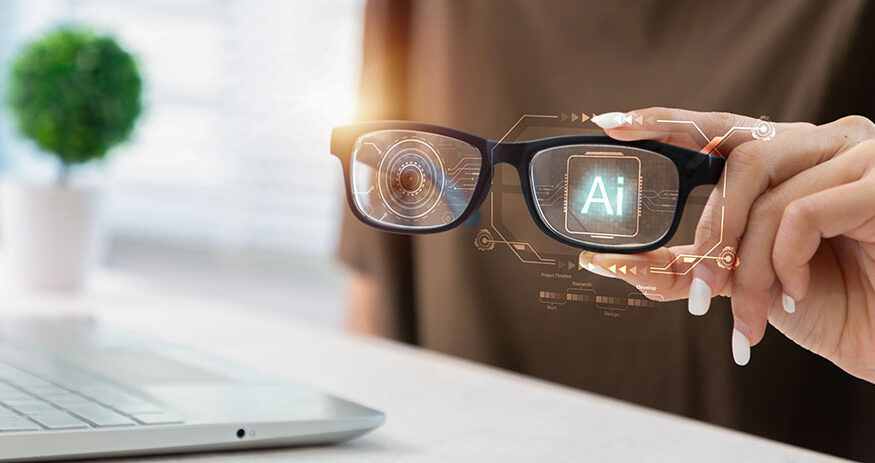
Deposit Photos image
Milwaukee judges banning AI glasses in court as privacy concerns grow
USA TODAY Network via Reuters Connect//July 13, 2026//


In Brief
- Milwaukee County prohibits ai glasses without judge authorization.
- Chief Judge Carl Ashley enforces recording device restrictions.
- Wisconsin western district bans Meta and Google Glass in court.
- New York and Philadelphia courts also ban smart glasses.
Back in February, a California judge interrupted a landmark trial over the impact of social media on children to issue a sharp warning for a newer device: AI glasses.
“If your glasses are recording, you must take them off,” Judge Carolyn B. Kuhl said, according to the Los Angeles Times. “It is the order of this court that there must be no facial recognition of the jury. If you have done that, you must delete it. This is very serious.”
The person on the stand was tech giant Mark Zuckerberg − the inventor of Meta’s Ray Ban glasses, one of the most popular versions of AI glasses on the market.
Far from the standard frames and lenses, these glasses have built in cameras, microphones and speakers for recording along with AI features for navigation, voice commands and phone calls.
Since smart glasses began gaining mainstream use, people are recording everything from reckless driving and police encounters to conversations on the street.
The glasses do not have facial recognition capabilities but are able to record up to 3-minute-long videos, prompting the California judge’s concern that the video captured by the glasses could later be run through facial recognition software, according to media outlets.
So don’t be surprised if you’re asked to remove the pricey accessory before walking into a courtroom.
In Milwaukee County, AI glasses or any glasses with cameras are not allowed as recording devices in court unless a judge issues authorization, Chief Judge Carl Ashley told the Milwaukee Journal Sentinel.
State and local rules strictly prohibit any form of photography or recording in court without a judge’s permission. Glasses with recording capabilities are no exception, Ashley said.
“AI glasses are simply another vehicle that people have at their disposal [to record],” Ashley said.
Wisconsin is split between two federal district courts, the eastern district that includes Milwaukee and the western district.
The western district has specifically prohibited Meta glasses, Google Glass and any other eyeglasses, prescription or non-prescription, that have recording capability in all of its courtrooms.
The eastern district, like Milwaukee County courtrooms, does not have a separate, specific policy that bans AI glasses. The eastern district, like Milwaukee County, also leaves it up to the discretion of individual judges to restrict recording devices, including AI or “smart” glasses, in their courtroom.
To that end, many Milwaukee County judges have put up signs in their galleries, specifically banning the use AI glasses or other glasses with cameras for recording.
All 47 Milwaukee Circuit Court Judges, 25 court commissioners and the sheriff’s department are aware of smart glasses, Ashley said.
According to state law, anyone who attempts to record using glasses without a judge’s permission could be held in contempt or removed from the courtroom. The same rules apply for any other recording device, including phones and cameras, Ashley said.
Ashley didn’t specify one incident that prompted the inclusion of AI glasses in the court’s recording rules, but he did say his staff started to recognize that people were wearing the glasses in court.
“Technology is always changing,” Ashley said. “There is concern, and we want to put people on notice. We need to do our due diligence to protect the process and the individuals who are involved.”
Judges are issuing similar measures in state and local courtrooms across the country, citing security and privacy concerns of lawyers, jurors and witnesses.
On July 20, New York will become the first state to ban smart glasses across its over 1,200 state courtrooms, according to a July 1 memo from the New York State Unified Court System. The ban will apply to any eyewear or headwear containing a camera.
In Philadelphia, the court banned all smart glasses on March 30 in the city’s courtrooms. Anyone who attempts to bring any eyeglasses with audio and/or video recording capabilities into court is subject to arrest.
Related Articles
Related Content






Top News
- Milwaukee judges banning AI glasses in court as privacy concerns grow
- Minnesota joins suit to block Paramount-Warner Bros. deal
- Perspectives: It’s not ‘football’ here, but soccer cases abound
- Scratch ticket win sends divorce to R.I. high court
- Trump’s go-to attorneys take unusual steps for a sitting president
- Ex-Mayo director alleges retaliation over AI clash
- Up & Coming Attorneys, Unsung Legal Heroes announced








Expert Testimony
- Perspectives: It’s not ‘football’ here, but soccer cases abound
- AI prompts used by experts may be discoverable
- Perspectives: 250th anniversary recalls Declaration decisions
- Perspectives: ‘Pentagon Papers’ case at 55 not far from Near


