


 Free Newsletter


Deposit Photos image
U.S. Supreme Court allows state tort claims vs. freight brokers
Laura Brown//May 20, 2026//


 Listen to this article
In Brief
- The U.S. Supreme Court ruled the federal law does not block state negligence claims against freight brokers.
- The case involved Eden Prairie-based freight broker C.H. Robinson and a catastrophic Illinois truck crash.
- Plaintiff Shawn Montgomery alleged C.H. Robinson negligently hired a carrier with a conditional safety rating.
- The decision resolves a circuit split and could expand state tort liability for freight brokers nationwide.
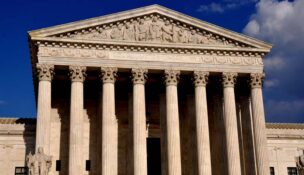
The U.S. Supreme Court recently ruled that federal regulation of the trucking industry does not bar state tort claims. Its ruling arises from a lawsuit involving a Minnesota freight broker.
Shawn Montgomery was traveling on Interstate 70 in Illinois when he had to pull over because of a mechanical issue. Yosni Varela-Mojena was driving a tractor-trailer full of plastic pots for his employer, Caribe Transport II. Varela-Mojena veered and rear-ended Montgomery. Montgomery was severely injured, ultimately becoming permanently disfigured and requiring leg amputation.
The shipment was arranged by C.H. Robinson Worldwide Inc., an Eden Prairie-based freight broker, arranging transportation between motor carriers.
Montgomery sued several parties in federal district court, including C.H. Robinson. Montgomery argued that C.H. Robinson was negligent in contracting with Caribe II. Specifically, Montgomery claimed that Caribe II had a “conditional” safety rating from federal regulators, due to deficiencies in crash rates and driver qualification.
C.H. Robinson moved to dismiss. The company claimed that the suit was blocked by the Federal Aviation Administration Authorization Act of 1994 (FAAAA). The FAAAA deregulates trucking by preempting state laws that relate to the price, route, or service of motor carriers or brokers in transporting property. C.H. Robinson claimed that negligent-hiring claims fall within this preemption, and so they would be barred.
The district court and the 7th U.S. Circuit Court of Appeals found in favor of C.H. Robinson. The courts found that Varela-Mojena and Caribe II were Robinson’s independent contractors, not agents. However, there was a circuit split, as the 6th and 9th Circuits had found that the FAAAA did not bar state negligence suits.
In an unanimous ruling, the U.S. Supreme Court found that the preemption provision does not preempt state safety authority over motor vehicles. The “safety regulatory authority of a State with respect to motor vehicles” is addressed under the preemption provision. Writing for the court, Amy Coney Barrett interpreted “with respect to” to mean “concerns” or “regards,” and noted that the FAAAA defines a motor vehicle broadly to include vehicles like tractors and trailers used on highways for transportation.
“Requiring C.H. Robinson to exercise ordinary care in selecting a carrier therefore “concerns” motor vehicles — most obviously, the trucks that will transport the goods,” Justice Barrett wrote. “So Montgomery’s negligent-hiring claim falls within the FAAAA’s safety exception, which saves it from preemption.”
The upshot of the decision is that C.H. Robinson and brokers can be liable for state tort negligence claims. However, Montgomery will still need to prove his case.
“Importantly, the Court’s decision today should not be read to mean that brokers will routeinely be subject to state tort liability in the wake of truck accidents,” wrote Justice Brett Kavanaugh in a concurrence. “As even plaintiff’s counsel stressed, brokers should be able to successfully defend against state tort suits if the brokers have acted reasonably and arranged transportation with reputable trucking companies.”
The Transportation Intermediaries Association, which is an organization of third-party logistics professionals, says that it is “deeply disappointed” by the ruling.
“While brokers are fully committed to safety and to working with federally licensed motor carriers in good standing, the decision imposes an impossible task on brokers — effectively asking them to evaluate the safety of a given motor carrier despite having been deemed safe to operate on public roads by the federal government,” the organization said in a statement. “This is like asking travel agents to evaluate the safety of a given airline despite the fact that the airline has been licensed to fly by the federal government.”
Kavanaugh wrote, “[T]he brokers rightly caution against naiveté. In the real world, as the brokers forcefully respond, state tort law can be unpredictable, and the costs to brokers of litigation and insurance may be significant even when brokers prevail in lawsuits.”
Related Articles
Related Content




Top News
- Justices say police need a warrant to obtain Google location data
- Esteemed Senior U.S. District Judge David S. Doty dies at 96
- Supreme Court rejects Trump’s bid to fire Fed’s Cook
- Supreme Court affirms Trump’s firing of FTC member, overturns 1935 precedent
- Supreme Court declines to hear Trump’s appeal in E. Jean Carroll defamation case
- Supreme Court endorses grace periods for mail-in ballots
- Perspectives: ‘Pentagon Papers’ case at 55 not far from Near







Expert Testimony
- Perspectives: ‘Pentagon Papers’ case at 55 not far from Near
- Best at Work Insights: Workplace growth beats burnout and boreout
- Quandaries & Quagmires: Rules amended for pro bono lawyers, prosecutors
- Perspectives: NIL flaws cause concerns here after five years


