


 Free Newsletter

2024 omnibus bill faces new lawsuit claiming it violates single-subject rule
Laura Brown//March 27, 2026//
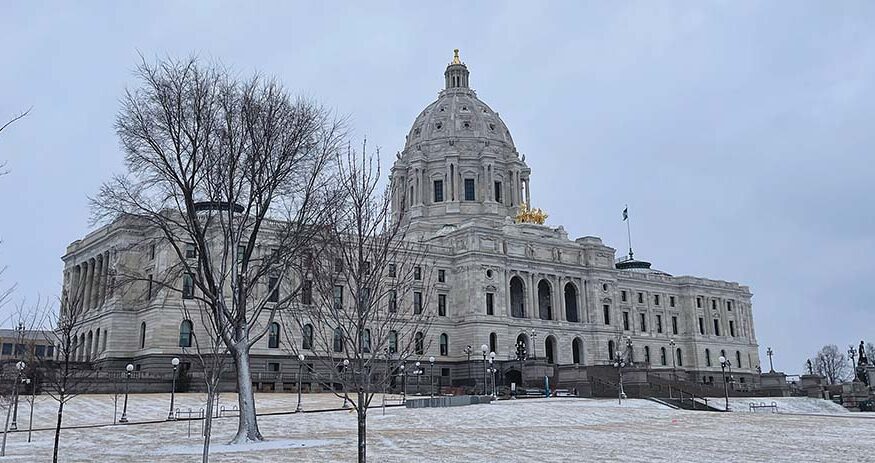
The Minnesota Capitol stands in St. Paul on Feb. 18, 2026. (Staff photo: Dan Netter)
2024 omnibus bill faces new lawsuit claiming it violates single-subject rule
Laura Brown//March 27, 2026//


 Listen to this article
In Brief
- Upper Midwest Law Center filed a constitutional challenge to Minnesota’s 1,400‑page 2024 omnibus bill.
- Lawsuit alleges violations of Minnesota’s Single Subject Clause.
- Business groups challenge paid leave, sick time, and worker classification provisions.
- Case follows prior ruling striking down a binary trigger ban from the same omnibus law.
The Upper Midwest Law Center has announced a lawsuit claiming that Minnesota’s 2024 Omnibus Bill violates the state Constitution. It argues that the 1,400-page law breaks the Single Subject Clause by combining unrelated policies.
In 2024, the Minnesota Legislature passed CCR-HF5247 (Chapter 127), the “2024 Omnibus Bill.” It was a 73-article measure spanning a variety of topics.
This isn’t the first time the Upper Midwest Law Center has argued that the legislation violated Minnesota’s constitutional Single Subject Clause, which requires that legislative acts be limited to one main subject. In the case Minnesota Gun Owners Caucus v. Walz, plaintiffs argued in 2025 against a ban on binary triggers in Article 36 of the omnibus legislation, which classifies those triggers as “trigger activators” and makes their possession a felony. The ban on binary triggers in guns was struck down in Ramsey County District Court. Just days ago, the Minnesota Court of Appeals heard oral arguments in the case.
In the latest lawsuit, the Minnesota Private Business Council, on behalf of its affected members, is seeking to invalidate specific portions of the 2024 Omnibus Bill that impact their interests. Articles 10, 11, and 73 of the 2024 Omnibus Bill imposed paid-leave, sick-and-safe-time, and worker classification requirements on most Minnesota businesses with employees or independent contractors, as well as those involved in construction or improvement services. Because many Business Council members fall into these categories, they are governed by each of these articles. The lawsuit specifically challenges Article 10 on worker classification, Article 11 on earned sick and safe time requirements, and Article 73 on paid leave mandates for private employers.
“Minnesota cannot continue down a path where major policy changes are bundled together and imposed on employers without clear accountability,” said Jim Schultz, president of the Minnesota Private Business Council. ”Job creators deserve a fair process and policies that are considered on their merits. That is what this case seeks to restore.”
They argue that these provisions should be invalidated because, similarly, the 2024 Omnibus Bill does not have a single subject. “When the Legislature and governor violate that requirement and enact a gargantuan law covering a vast array of subjects, the result is that Minnesota businesses are drowned in red tape, jobs and growth are squeezed out of our economy, government waste explodes, and costs and taxes spiral ever upward—all without the full and fair consideration by the people’s representatives that the Constitution promises,” plaintiffs argue in the lawsuit, which was filed March 23 in Ramsey County District Court. “This case arises from just such a catastrophic violation.”
“This is exactly the kind of law the constitution was designed to prevent,” said Nicholas Nelson, senior appellate counsel at the Upper Midwest Law Center. “When lawmakers bundle unrelated policies into one massive bill, it deprives both legislators and the public of meaningful review. The constitution requires transparency and accountability—and this process failed on both fronts.”
The plaintiffs seek a judgment declaring the 2024 Omnibus Bill entirely unconstitutional and enjoining its enforcement, or alternatively, a judgment invalidating Articles 10, 11, and 73 and prohibiting their enforcement. They also request taxable costs and disbursements, equitable costs under Minn. Stat. §555.10, attorney fees under the Minnesota Equal Access to Justice Act, and any other relief the Court deems just and proper.
“Minnesotans may disagree about whether each of the thousand rules in this unconstitutional bill is a good idea. But our constitution requires the Legislature to give them up-or-down votes one subject at a time,” Nelson said. “That didn’t happen here.”
Related Articles
Related Content






Top News
- DOJ hires ‘deportation judges’ with less training, experience
- High court justices turn children’s books into big paydays
- Perspectives: Law Day: Notable Supreme Court quotes
- Wisconsin judge allows use of ex-Trump attorney’s statements in fake elector case
- Court of Appeals rejects increased sentence after case remanded
- Commentary: What can we learn from a secret act of judicial tyranny?
- Supreme Court approval dips amid tariff ruling divide








Expert Testimony
- Perspectives: Law Day: Notable Supreme Court quotes
- Commentary: What can we learn from a secret act of judicial tyranny?
- Perspectives: Actor’s death recalls key defamation case here
- Best at Work Insights: Why employee growth matters more than salary


