


 Free Newsletter

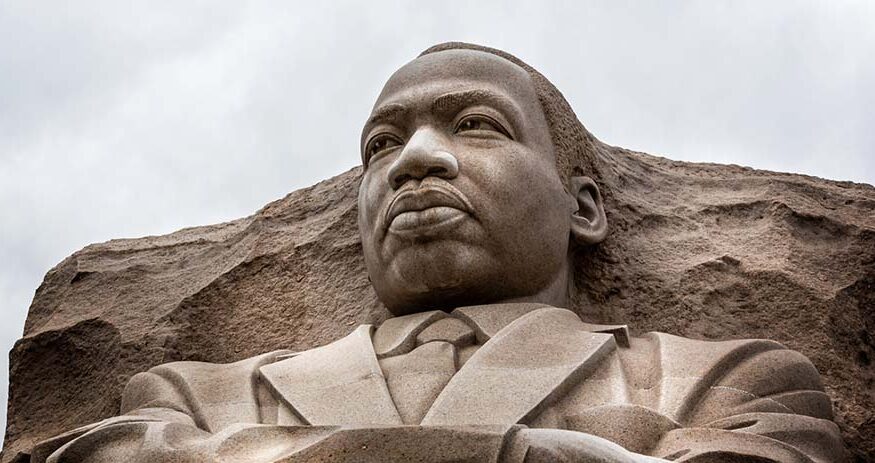
The Martin Luther King Jr. memorial in Washington, D.C. (Depositphotos.com image)
Perspectives: MLK Day at 40 recalls racial cases here
Marshall H. Tanick//January 19, 2026//


 Listen to this article
Enacted in 1983, over the initial objection by President Ronald Reagan, Martin Luther King Day has been celebrated on the third Monday of January each year since it officially went into effect three years later.
The ruby anniversary this Monday, Jan.19, falls four days after the actual birthday, Jan. 15, of the great civil rights leader. King was assassinated at age 39 in Memphis, Tennessee, in April 1968, by James Earl Ray, who confessed and later recanted despite a mountain of inculpatory evidence.
MLK Day this year also falls on the 70th anniversary of his leadership in civil rights protest activities in Birmingham, Alabama, the site of some of the most momentous struggles of that era, including the first of his multiple arrests in January, 1956, for peaceful civil disobedience.
Over the years, Minnesota has had its share of federal and state appellate cases relating to MLK’s life, legacy, and death. The 40th anniversary of MLK Day provides an opportune occasion to review some of them.
Idealism issues
The idealism inspired by Dr. King underlay a lawsuit by prisoners in Nebraska who were forbidden from wearing a honorific medallion containing a picture of King and the inscription “I have a dream” in Rowland v. Jones, 452 F.2d 10005 (8th Cir. 1987).
While it is inappropriate to allow some medals to be worn by prisoners and not others “contingent upon their meeting an official standard of religious orthodoxy,” the prison authorities properly exercised their discretion in deciding that the “jewelry might be dangerous,” and there was “no discrimination in the application of this policy.”

The principle of nonviolent civil disobedience espoused by Dr. King was rejected as a defense by a pair of Vietnam War protesters who were apprehended after entering a Selective Service office at night and taking draft registration cards in U.S. v. Kroncke, 459 F.2d 697 (8th Cir. 1972).
Upholding a decision of the U.S. District Court in Minnesota, the 8th Circuit affirmed their conviction for interfering with the administration of the military draft, rejecting a claim of moral justification based upon the philosophy of Dr. King and other advocates of nonviolent civil disobedience because the tenet requires that one “accept the penalty for his action” and that “society cannot tolerate the means they chose to register their opposition to the war.”
A fracas at a St. Paul high school after students viewed a film about Dr. King resulted in imposition of liability upon the school for negligent supervision in Raleigh v. Indep. Sch. Dist. No. 625, 275 N.W.2d 572 (Minn. 1978).
Following the showing of a documentary about Dr. King’s civil rights activities, a white girl’s wrist was slashed by a Black female student. The Minnesota Supreme Court upheld a determination by a Ramsey County District Court jury that the school district was negligent in failing to properly supervise the event. Although the case was “extremely close,” the evidence showed that the school was “aware of the racial tension,” coupled with a “lack of supervision and organization of the students viewing the film.”
“Martin Luther King, Jr., is remembered as our prince of peace, of civil rights. We owe him something major that will keep his memory alive.”
Actor Morgan Freeman (1939 – _)
* * * * * * * * * *
“In my opinion, Dr. Martin Luther King is the most notorious liar in the country … I hold him in contempt.”
FBI Director J. Edgar Hoover (1895 – 1972)
* * * * * * * * * *
“A lot of people are waiting for Martin Luther King … to come back – but [he’s] gone. We are it. It is up to us. It is up to you.”
Civil Rights Activist Marian Wright Edelman (1939 – _)
* * * * * * * * * *
“I went to Memphis to deliver a rifle to the man called Raoul. On the night of the shooting of Martin Luther King. I had left the rifle with Raoul.”
James Earl Ray (19328 – 1998)
Holiday hassles
A pair of employment law rulings in the 8th Circuit concerned hassles over the King holiday.
In Ross v. Kansas City Power & Light Co., 293 F.3d 1041 (8th Cir. 2002), a Black employee sued for racial harassment, failure to promote and retaliation based upon statements in the workplace from co-workers that were racially based, including whether the employee planned to take the day off on the King holiday.
The 8th Circuit upheld dismissal of the harassment and retaliation claims because the comment about the holiday and other racial remarks “were not objectively offensive” to warrant a harassment claim. However, the court upheld the trial court’s determination that the employer was liable for failure to promote and the post-trial reduction of punitive damages from $1.5 million to $320,000.
A claim of racial harassment in Minnesota regarding the King holiday survived summary judgment in Callicutt v. The Pepsi Bottling Group, Inc., 2002 WL 992757 (D. Minn. 2002).
U.S. District Court Judge Donovan Frank held that a Black man could pursue a hostile-environment case based upon several incidents, including discovery on the company bulletin board on King Day of a donut stuck on a bulletin board that was decorated like a Black man with paper clips for pigtails. Although it constituted a “close case,” the King Day donut and other “multiple instances” of racism, were sufficiently “severe and pervasive” to be actionable.
Counting commemoration
As an official holiday, the King commemoration does not count for determining litigation time periods.
In Jasnoch v. Schwab Company, 495 N.W.2d 204 (Minn. 1993), the Supreme Court ruled that an employee was entitled to temporary and partial workers’ compensation benefits for King Day and Presidents Day, which were day-off holidays at his workplace. Nonpayment of benefits for such holidays that an employee does not work and is not paid is inappropriate because it would “frustrate” the legislative purpose “to reduce litigation of workers’ compensation claims.”
In Lee v. Hunt, 642 N.W.2d 257 (Minn. 2002), the 10-day period for a post-trial motion to offset collateral benefits in a no-fault insurance case ended on a Sunday, which does not count in the 10-day period under Rule 6 of the Rules of Civil Procedure. Since the following day, King Day, is a “legal holiday,” it also does not count. Thus, a motion served and filed the next day, 12 days after the judgment, “was timely.”
Not including King Day in a child visitation schedule did not warrant overturning the visitation arrangement ordered by an Otter Tail County District Court judge in Schroeder v. Schroeder, 1998 WL 404850 (Minn. Ct. App. 1998) (unpublished).
The Court of Appeals refused to disturb the trial court judge’s scheduling protocol because the trial court judge “is in a far better position” in establishing the visitation schedule.
In Baldwin v. City of Mankato, 1993 WL 515817 (Minn. Ct. App. 1993) (unpublished), the Court of Appeals reversed a ruling by a Blue Earth County District Court judge dismissing a lawsuit for failure to comply with a discovery order.
The claimant “did attempt to comply with the deadline,” but had trouble retaining counsel because his bank “was not open on the Martin Luther King holiday,” two days before the discovery due date, which apparently prevented him from getting funds to hire an attorney with the reprieve.
The suppression by a Murray County District Court judge of incriminating statements made by a defendant charged with criminal sexual conduct was upheld by the Court of Appeals in State v. Schmidt, 2004 WL 2984564 (Minn. Ct. App. 2004)(unpublished).
The defendant made an “unequivocal request” for counsel on Jan. 18, a Sunday, but was not able to obtain counsel that day or the next day, the King holiday. The following day, he made inculpatory statements after he had been unable to obtain counsel in the interim. Since he did not make a “valid waiver” of counsel, it was inappropriate to question him without counsel because he was unable on Sunday and the ensuing King holiday weekend to obtain a lawyer.
Ray rulings
In Ray v. U.S. Department of Justice, 658 F.2d 608 (8th Cir. 1981), James Earl Ray sued the Department of Justice and a government investigator for defamation.
Affirming a ruling of the trial court judge, the 8th U.S. Circuit Court of Appeals upheld dismissal of the lawsuit. Ray’s request for declaratory relief against the Justice Department was denied because many of the individuals that he complained about were not Justice Department employees and the documents upon which he claimed they relied on were innocuous. There was no way “Ray would benefit from any sort of declaratory relief.”
The defamation claim against the investigator stemmed from letters that Ray had written to his younger brother, Jerry, which were taken from the brother’s hotel room. But the admitted assassin could not challenge the taking of the letters because he “did not retain a legitimate expectation of privacy” in the documents and “lacked standing” to contest seizure from his brother’s hotel room.
Ray’s older brother, John, also failed in challenging a search of a hotel room in U.S. v. Goldenstein & Ray, 456 F. 2d 1006 (8th Cir. 1972).
The police searched a hotel room of John’s companion, where officers found money taken from a bank in Missouri. The accomplice, a registered guest at the hotel, obtained reversal of a robbery conviction because the search and seizure violated the Fourth Amendment.
But the elder Ray’s conviction was affirmed by the 8th Circuit on grounds that he lacked standing since he was not present or “had any occupancy rights in the … hotel room,” which was registered to the other defendant. He also was not allowed to have his brother, James Earl, who was incarcerated in Tennessee, testify because transporting the convict from Tennessee would constitute a “very substantial security risk” and pose a “danger of escape.”
While Ray’s involvement with others or financial backing remain in doubt, there is no doubt that the man Ray confessed to slaying before recanting was a towering figure in American and world history and has contributed substantially to legal lore here, too.
RELATED: More Perspectives columns
PERSPECTIVE POINTERS
Some Books About Martin Luther King, Jr.
- Becoming King: The early years rising to leadership.
- Martin Luther King, Jr.,: Biography by Marshall Frady.
- The Autobiography of Martin Luther King, Jr.: Accumulated writings, interviews, recordings, and correspondence.
- King: A Life: 2024 Pulitzer prize winner.
- Who Killed Martin Luther King?: James Earl Ray’s account.
- Parting the Water: Pulitzer Prize trilogy of civil rights movement.
- I am Martin Luther King, Jr.: Children’s book by Brad Meltzer.
Marshall H. Tanick is an attorney with the Twin Cities law firm of Meyer, Njus, Tanick, Linder & Robbins, PA.
Related Articles
Related Content



Top News
- Perspectives: Taxing issues: Court addresses property issues
- Ramsey County study examines why prosecutors reject cases
- Judge rules DOGE’s cuts to humanities grants were unconstitutional
- Divided appellate panel revives golf ball home damage lawsuit
- Roberts laments perception of Supreme Court as ‘political actors’
- How Minnesota immigration blitz hobbled federal crime fighting
- Breaking the Ice: Wrongful death verdict ‘fulfilling on different level’








Expert Testimony
- Perspectives: Taxing issues: Court addresses property issues
- Perspectives: Daily’s 125th at ‘U’ recalls varied cases
- Commentary: Will SCOTUS rule on general warrants and 4th Amendment?
- Perspectives: Law Day: Notable Supreme Court quotes


