


 Free Newsletter

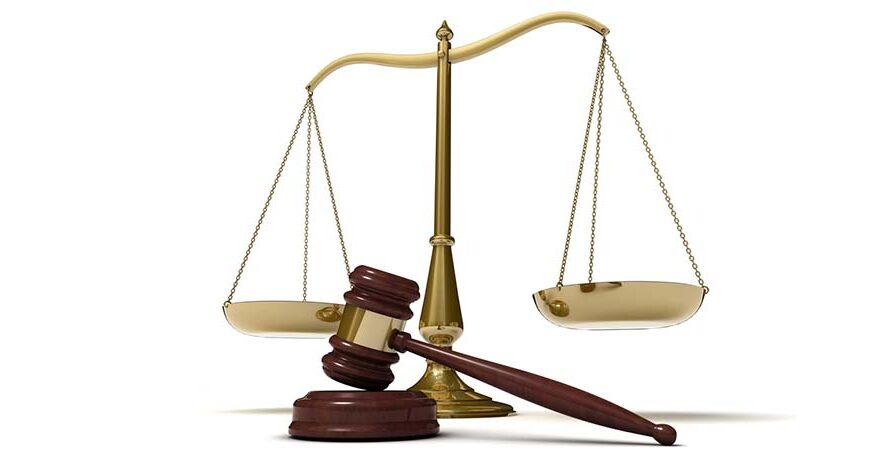
Depositphotos.com image
Minnesota appeals court rejects bias claim against trial judge
Laura Brown//December 29, 2025//


In Brief
- Defendant sought postconviction relief alleging judicial bias.
- Trial judge had previously prosecuted the defendant years earlier.
- Court found no emergent or perceived bias requiring recusal.
- Conviction and 120-month sentence for second-degree assault affirmed.
Patrick Bonga petitioned for postconviction relief after alleging that the judge overseeing his trial was biased. However, the Minnesota Court of Appeals found that the court held the trial judge’s comments and references to prior matters did not constitute emergent or perceived bias sufficient to warrant a new trial.
According to the appellate opinion, the facts leading to conviction are undisputed: In 2022, a man entered a house with an acquaintance and encountered Bonga, who soon punched and assaulted him. Bonga and others repeatedly beat and kicked the victim, wrapped a chain around his neck, and poured boiling water on him. Bonga chained the victim to a post, burned him with a propane torch, and threatened to dismember him with a skill saw. The victim was able to escape. Bonga was charged with first- and second-degree assault and false imprisonment.
Becker County District Court Judge Gretchen Thilmony, who was the judge in Bonga’s case, had previously prosecuted Bonga when working for the Becker County Attorney’s Office. In a 2022 hearing, Thilmony brought up her prior involvement with Bonga. Bonga’s attorney acknowledged that he was aware.
The state amended its notice to seek an aggravated sentence under Minn. Stat. § 609.1095, subd. 2, and the trial judge granted the motion, finding Bonga had committed 11 prior offenses and shown a long pattern of violent criminal behavior. The judge also determined the state could pursue aggravating factors at trial based on particular cruelty and that the offense was committed by a group of three or more persons.
Bonga appeared intending to plead guilty but instead requested a trial, stating he did not believe he would receive a fair trial. After the prosecutor noted the judge’s prior disclosure that she had been involved in a previous Bonga case, all parties agreed to proceed with the same judge. The judge reiterated that any request for a different judge had been waived.
He also moved to reopen the omnibus hearing. While the trial judge granted the request, she declined to recuse, noting no authority required recusal and ruling on the omnibus issues.
“In the very beginning I noted the conflict, the conflict was waived numerous times,” Thilmony stated. “[N]o challenge or no removal was filed in this case, it was discussed on the record whether I should remain, and so numerous opportunities have been given in the past with respect to this case both under the rules and otherwise to have another judge assigned and that wasn’t done.”
Thilmony denied Bonga’s motion to suppress evidence and dismiss the charges, so Bonga moved to remove Thilmony for cause. The chief judge of the district court denied Bonga’s motion after hearing arguments. The judge concluded that Bonga failed to show bias because he knew of the trial judge’s prior involvement but did not object until after the ruling on the aggravated-sentence motion.
Bonga was convicted of multiple assault charges. He was sentenced to 120 months in prison for second-degree assault. Bonga filed a petition for postconviction relief with the Court of Appeals, claiming that Thilmony was biased against him. Bonga argued he was denied a fair trial because the trial judge relied on personal knowledge of past proceedings, creating emergent bias and the appearance of partiality.
Bonga claimed that Thilmony showed emergent bias by relying on prior involvement in his other cases when allowing the state to seek an aggravated sentence. The appellate panel — Judges Louise Dovre Bjorkman, Jeanne M. Cochran and Edward J. Cleary — rejected this claim, concluding the judge only referenced a prior order to clarify which statutory subdivision the state was invoking. The record showed the judge sought clarification rather than relying on facts or arguments from earlier cases. The court held that this conduct did not demonstrate reliance on outside knowledge or create emergent bias.
Bonga also claimed that Thilmony showed perceived bias by allowing second-degree assault as a lesser-included offense and later suggesting the state amend the complaint. The court concluded the judge properly applied the law in determining that the trial evidence supported submission of both second- and third-degree assault as lesser-included offenses. It held that this did not assist the prosecution or demonstrate perceived bias.
Related Articles
Related Content




Legal Tech
- How ransomware tactics against law firms are changing
- How large language models are leveling the personal injury playing field
- Attorney Share, Lawmatics integrate to automate law firm referrals
Top News
- Court of Appeals reverses burglary with knife conviction
- Court-appointed U.S. attorney for Seattle sues over firing by Trump
- Senate Democrats demand investigation into ouster of IRS lawyer
- White House lawyer confirmed to judgeship after bashing senators
- Administration pauses $1B in Medicaid payments to Minnesota, California






Expert Testimony
- Legally Speaking: How communication failures turn disputes into lawsuits
- Perspectives: Umpire’s death recalls case law in Minnesota
- Perspectives: It’s not ‘football’ here, but soccer cases abound
- AI prompts used by experts may be discoverable


