


 Free Newsletter

Suit seeks info on third-country deportations
By Kris Olson, BridgeTower Media Newswires//July 7, 2025//
Depositphotos.com image
Suit seeks info on third-country deportations
By Kris Olson, BridgeTower Media Newswires//July 7, 2025//


 Listen to this article
In Brief
- Refugees International and NILA file FOIA lawsuit over U.S. deportation deals.
- U.S. using ad hoc agreements to deport migrants to third countries.
- Supreme Court ruling allows deportations without due process safeguards.
- Legal experts question compliance with U.S. and international refugee law.
Contrary to a common misconception, there is a right way for the United States to deport people to countries other than their country of origin or the ones designated in their removal proceedings, says Yael Schacher, director for the Americas and Europe at Refugees International.
“Safe Third Country Agreements are legal under international refugee law, and they’re legal under U.S. law,” she says.
However, the United States technically only has one such agreement that passes muster under the Immigration and Nationality Act — with Canada — and even that may be on thin ice, Schacher notes.
“There’s actually a challenge in the Canadian courts whether we should get rid of it now, since the U.S. is arguably not safe anymore from their perspective,” she says.
Meanwhile, the third-country deportations grabbing headlines and that the U.S. Supreme Court has at least temporarily sanctioned are an entirely different animal, Schacher says.
The second Trump administration seems not even to be trying to sign Safe Third Country Agreements, instead making ad hoc arrangements with other countries, according to Schacher.
In addition, in a June 14 cable, the State Department dangled agreeing to take in applicants for asylum in the U.S. as a way that 36 countries, most of them in Africa, could get out from under the threat of a travel ban.
“We’re in totally uncharted territory here,” Schacher says.
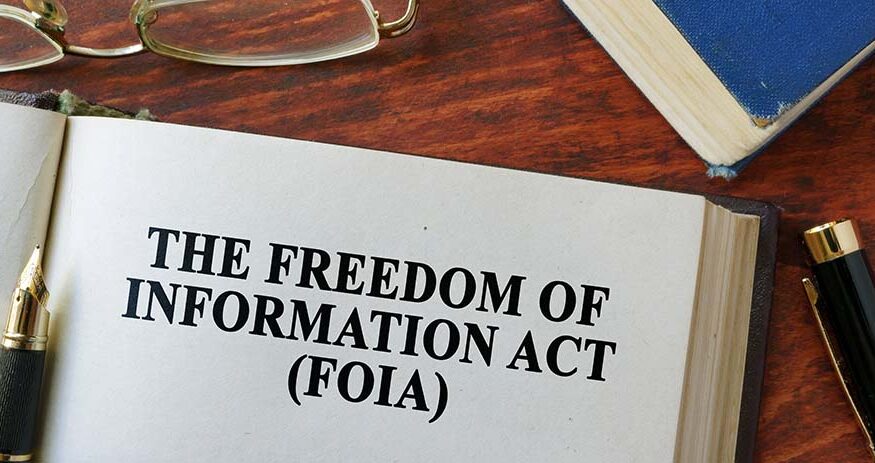
To try to peel back the curtain on the country’s arrangements with foreign nations, Refugees International recently joined with the National Immigration Litigation Alliance to file an action in U.S. District Court in Boston under the Freedom of Information Act.
They hope to get a judge to grant an order compelling the State Department to release immediately records relating to the country’s arrangements with seven countries — Panama, Costa Rica, Guatemala, El Salvador, Honduras and Mexico — including contracts with the countries themselves and with the International Organization for Migration.
Before resorting to the federal court, the plaintiffs tried to get the information through an April 5 FOIA request. That the State Department did not respond was hardly a surprise, according to Schacher.
A substantive response could have shed some light on any number of aspects of the current program, including how many people could be sent to a particular country, the conditions the deportees will experience in those third countries, and what, if any, compensation the U.S. government is providing, says Kristin Macleod-Ball, NILA senior staff attorney.
Macleod-Ball is hopeful that the court will agree that action is warranted, especially given how much the scope of third-country deportations has expanded in recent months.
“There is the public interest, the media interest, but also the human impact of having these deportations take place in a way that no one is able to understand what is happening and why it’s happening,” she says. “Some sunlight on the policies governing the expansion of third-country deportations would be enormously helpful to a broad audience.”
That sunlight may be even more vital now that the U.S. Supreme Court ruled on June 23 in the case Department of Homeland Security, et al. v. D.V.D., et al. that the Trump administration could move forward with deporting immigrants to countries not specifically identified in their removal orders.
The court’s brief, unsigned order put on hold a process that U.S. District Court Judge Brian E. Murphy in Massachusetts had instituted, which required the government to take a series of steps to ensure that the immigrants would not face torture in the third-party countries.
In her dissent, which Justices Elena Kagan and Ketanji Brown Jackson joined, Justice Sonia Sotomayor wrote that the court’s majority, “by rewarding lawlessness,” had violated the principle in the Due Process Clause that “ours is a government of laws, not of men.”
“Apparently, the Court finds the idea that thousands will suffer violence in far-flung locales more palatable than the remote possibility that a District Court exceeded its remedial powers when it ordered the Government to provide notice and process to which the plaintiffs are constitutionally and statutorily entitled,” she wrote.
In a press release, NILA’s executive director, Trina Realmuto, says the ramifications of the Supreme Court’s order “will be horrifying; it strips away critical due process protections that have been protecting our class members from torture and death.”
NILA and the other organizations representing the noncitizens in D.V.D. were quick to note that the court’s ruling does not address the merits of their clients’ claims.
“Importantly, however, the Court’s ruling only takes issue with the court’s authority to afford these protections at this intermediate stage of the case — we now need to move as swiftly as possible to conclude the case and restore these protections,” Realmuto says.
That the U.S. government claimed in the context of D.V.D. that, in making deportation agreements with third countries, it asks the countries for assurances that it will not torture deportees it receives offers cold comfort, Schacher says.
“I’ll believe it when I see it in an agreement,” she says.
Indeed, the dissent in D.V.D. highlights the fact that Libya or South Sudan seemed to have offered no such assurances.
“That assurance still won’t meet the requirements of the Convention Against Torture, which requires individualized assessments,” Schacher notes.
Even more broadly, the way the U.S. is operating is threatening to upset a global arrangement under which countries share the burden of keeping refugees safe, Schacher says.
“The Safe Third Country concept has been sanctioned, but there are legal considerations,” she says, pointing to guidance from the Office of the United Nations High Commissioner for Refugees.
The basic concept is that a person cannot just be sent to a country to which they have no ties or any real prospect of gaining safety and security, according to Schacher.
“The United States is basically just now bullying countries that don’t have adequate systems and adequate resources or laws to protect people and to provide them with stability and security to agree to take back third-country nationals,” she says.
Using migrants and asylum seekers as pawns presents a fundamental challenge to the refugee system worldwide, Schacher believes.
“We can’t let this happen,” she says. “Otherwise, the whole system just seems like a huge sham.”
The fact that Refugee International and NILA focused first on the Americas is mainly a function of timing. Schacher says she sees additional FOIA requests in her organization’s future, now that arrangements with Kosovo, Uzbekistan, Rwanda and South Sudan, among other countries, have become known.
Even if they succeed in prying documents loose from the government, Schacher acknowledges that the documents they receive may be heavily redacted. The plaintiffs will cross that bridge when they get there, she says.
The administration could, at any time, end the FOIA litigation, Macleod-Ball notes.
“We hope that, under FOIA, the government will simply release the records the public’s entitled to see,” she says. “We think that it’s a shame that that didn’t happen just as the basis of a FOIA request.”
NILA will post to its website any documents to which it gains access, Macleod-Ball says.
Related Articles
Related Content





Top News
- $3M wrongful death settlement in Minnesota bicycle crash
- Supreme Court restores conviction in 1979 Etan Patz missing-child case
- Perspectives: NIL flaws cause concerns here after five years
- How using AI can improve client communication
- Recent wage theft settlement highlights contractors’ risk
- Supreme Court limits gun ban for marijuana users
- Court of Appeals reinstates malpractice suit in child’s death








Expert Testimony
- Perspectives: NIL flaws cause concerns here after five years
- How using AI can improve client communication
- Legally Speaking: What spring can teach us about active listening
- Perspectives: Key figure’s recent death recalls Watergate here


