


 Free Newsletter

U.S. judge: Target’s motion to dismiss suit over beauty products premature
Laura Brown//October 3, 2024//
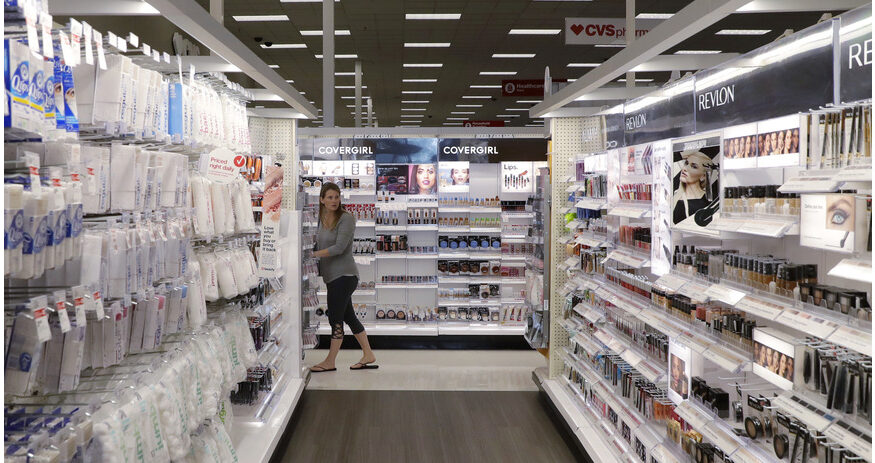
A shopper looks through the cosmetics department at a Target store in San Antonio in this May 30, 2018, photo. (AP File Photo: Eric Gay)
U.S. judge: Target’s motion to dismiss suit over beauty products premature
Laura Brown//October 3, 2024//


 Listen to this article
Target will continue to defend against a consumer-fraud action against it regarding the labeling of certain beauty products. On Sept. 25, Judge Katherine Menendez of the U.S. District Court for the District of Minnesota denied Target’s motions to dismiss and strike, finding that, while some of Target’s arguments present a close call, dismissal was inappropriate.
In 2019, Target launched a program called “Target Clean.” The “Target Clean” label was used to designate certain beauty products to help consumers distinguish them from other beauty products that are not free from unwanted chemicals or ingredients. These products apparently have a bright green hexagon within Target’s bullseye logo with the word “clean.” Labels can be found on individual shelf labels or larger displays.
Thirteen ingredients are banned from Target Clean Beauty Products, according to Target. Plaintiffs assert that some of the products have the banned ingredients. For instance, plaintiffs claim that “Physicians Formula Magic Mosaic Bronzer” contains propylparabens, one of the 13 ingredients that are apparently banned from Target Clean beauty products.
Additionally, the plaintiffs argued that Target’s labeling lacks proper explanation, leading to consumer confusion. Target also allegedly ignored other harmful ingredients not on its banned list, which plaintiffs assert misled consumers into believing these products were safe.
Plaintiffs assert that the Target Clean program misleads customers. They allege that Target, through the Target Clean program, is engaged in “greenwashing,” or the practice of creating a false impression that a product is environmentally friendly to get consumers who are eco-conscious to purchase it.
Plaintiffs filed suit in August 2023, asserting common law breach of warranty, express and implied, common law fraud, negligent misrepresentation, unjust enrichment, and violations of the Minnesota Consumer Fraud Act and the Minnesota Uniform Deceptive Trade Practices Act. The claims are alleged on behalf of a putative nationwide class.
Target did not answer the complaint, but filed two motions: a motion to dismiss and a motion to strike. In the motion to dismiss, Target asserted that plaintiffs failed to state a claim. Additionally, Target moved the court to strike plaintiffs’ class allegations, as well as request for injunctive relief, from the complaint.
The key disagreement between plaintiffs and Target is what the “clean” label signifies. While Target suggested that the court could decide whether a reasonable consumer would be misled by the “Target Clean” language, Menendez was clear that the court was unable to appropriately decide the question at this stage. “[B]oth parties stake out polarized positions of the meaning of “Target Clean” that somewhat strain credulity and that would necessarily be refined through factual development,” Menendez wrote.
Plaintiffs asserted that for consumers, “clean” beauty meant that “consumers can use a product without risking their health and the ingredients list is transparent and only contains safe, non-toxic ingredients.” Menendez asserted that this is an “unmistakably broad framing.” Conversely, Menendez asserted that Target “insists that Target Clean can only be understood as a kind of proprietary representation, embodying only its own exact terms and conditions and communicating nothing more.”
The court also raised the point that the “Target Clean” label suggests that Target has done some work on the consumer’s behalf, which pushes against dismissing consumer deception cases under Rule 12 by arguing that a reasonable consumer should have known better and independently clarified the claims.
“This caveat emptor logic does not squarely apply here. It is one thing to assume that a consumer expects a manufacturer to promote its own products by any means necessary, and therefore require that consumer, as a matter of law, to verify package labeling for abject dishonesty before claiming to have been deceived,” Menendez explained. “But it is another thing to assume what a consumer reasonably expects when Target positions itself between the manufacturer’s label and the consumer, promoting certain products on its shelves over others as embodying certain standards.”
At this stage, Menendez found it premature to dismiss. “The contours of this litigation will certainly narrow through the course of discovery, as theories adapt to the facts that are developed and the evidence that accrues. But in seeking to dismiss the lion’s share of Plaintiff’s case on the pleadings alone, Target asks too much,” Menendez maintained.
Related Content






Top News
- Perspectives: Taxing issues: Court addresses property issues
- Ramsey County study examines why prosecutors reject cases
- Judge rules DOGE’s cuts to humanities grants were unconstitutional
- Divided appellate panel revives golf ball home damage lawsuit
- Roberts laments perception of Supreme Court as ‘political actors’
- How Minnesota immigration blitz hobbled federal crime fighting
- Breaking the Ice: Wrongful death verdict ‘fulfilling on different level’








Expert Testimony
- Perspectives: Taxing issues: Court addresses property issues
- Perspectives: Daily’s 125th at ‘U’ recalls varied cases
- Commentary: Will SCOTUS rule on general warrants and 4th Amendment?
- Perspectives: Law Day: Notable Supreme Court quotes


