


 Free Newsletter

Breaking the Ice: Supporting Mitchell Hamline students’ ‘boldest ambitions’
Todd Nelson//August 15, 2024//

Rick Petry
Breaking the Ice: Supporting Mitchell Hamline students’ ‘boldest ambitions’
Todd Nelson//August 15, 2024//


 Listen to this article
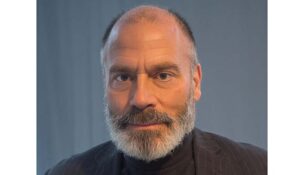
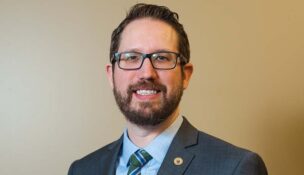
Rick Petry, director of Diversity, Equity, and Inclusion at Mitchell Hamline School of Law, has earned national recognition for his efforts to help diverse students succeed in law school.
As the education honoree, Petry was one of four recipients of a 2024 Council on Legal Education Opportunity Education (CLEO) Education, Diversity, and Greater Equality (EDGE) award.
He helped coordinate CLEO’s annual Pre-Law Summer Institute, which Mitchell Hamline hosted last year.
“The biggest thing for me is to meet the students where they are and create the support and the environment that allows them to grow and to go on and realize some of their biggest, boldest ambitions,” Petry said.
Petry has more than two decades of experience as a trial lawyer and educator. He also is an adjunct professor at Mitchell Hamline and an executive coach who focuses on leadership development and neuro-health.
Name: Rick Petry
Title: Director of Diversity, Equity, and Inclusion, adjunct professor, Mitchell Hamline School of Law
Education: B.A., political science, Eastern Washington University; J.D., Hamline University School of Law
Q: Best way to start a conversation with you?
A: Ask me about these students, because I can tell you a bunch of stories about the amazing things that they’ve done.
Q: Why law school?
A: I went to law school because where I grew up, there was only one Black attorney. I thought people in my community needed to have their voices heard. At first, it was a big dream for a little kid. I met Raymond Krause, the Hamline Law School dean, when I came out here as an undergraduate for a mock trial program. We just clicked, and we’re still friends. He gave me an opportunity and I jumped on it. I came to Minnesota. Didn’t know anybody out here, but I had an opportunity, and that’s how I wound up in law school.
Q: What are you reading?
A: “Noise” by Daniel Kahneman. I got into neuroscience to try to understand why people do what they do. It talks about errors in human thinking and human decision-making, and uses a lot of examples from the legal industry in how a lot of those show up.
Q: Pet peeve?
A: Seeing people needlessly suffer. I don’t like bullying, people treating each other harshly.
Q: Best part of your work?
A: When you can put people in a room, a classroom in particular, with varying opinions, beliefs, different values and create an opportunity for them to explore that and land in a place where they don’t wind up in a big fight.
Q: Most challenging?
A: When people just are not willing to explore the possibility that there’s a different way that we could do things.
Q: Favorite activity away from work?
A: I love playing pickleball. I started doing, I was having so much fun and I got into better shape, too.
Q: Where would you take someone visiting your hometown?
A: I love the water, so the lakes around here, Lake Minnetonka, the lakes and the falls. Paisley Park. I watched Prince perform a number of times and represented him in a little matter. I’d also take them up to the Brainerd Lakes area to see rural Minnesota and the great cabins, golf courses and resorts up there.
Q: Legal figure you admire?
A: The late Justice Thurgood Marshall. A pioneer, a trailblazer. On the local level, Judge Jerry Blackwell. He came here from North Carolina and built a very good practice. During the [George] Floyd situation, he represented the state on a pro bono basis and put everything on the line, potentially personally and for sure professionally, to help in that case. He’s a great person, a phenomenal lawyer, and now a great U.S. District Court judge.
Q: Misconception about your work?
A: If you’re a lawyer, you’ve got to be superhuman and can’t deal with the human things that show up. As a legal industry, if we did a better job of providing support for people, mental health support, all the other things that people need, we would have better lawyers.
Related Articles
Related Content

Top News
- Roberts laments perception of Supreme Court as ‘political actors’
- How Minnesota immigration blitz hobbled federal crime fighting
- Breaking the Ice: Wrongful death verdict ‘fulfilling on different level’
- Minnesota social media warning law faces First Amendment suit
- Wausau attorney accused of intimidating victim pleads not guilty
- How a Wisconsin law created a hidden deadline for lead poisoning lawsuits
- Justices: Hearsay doesn’t derail murder conviction





Expert Testimony
- Perspectives: Daily’s 125th at ‘U’ recalls varied cases
- Commentary: Will SCOTUS rule on general warrants and 4th Amendment?
- Perspectives: Law Day: Notable Supreme Court quotes
- Commentary: What can we learn from a secret act of judicial tyranny?


