


 Free Newsletter


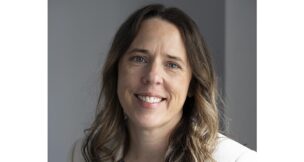
Haley-Rose Severson
Breaking the Ice: Trial experience adds edge in new Maslon role
Todd Nelson//May 23, 2024//


Haley-Rose Severson sees her extensive trial experience as a significant advantage in her new role with Maslon’s Litigation Group.
Severson previously managed more than 100 concurrent cases, including conducting jury trials, as an assistant attorney in the Hennepin County Attorney’s Office.
“In civil litigation, less so at Maslon but at some larger firms especially, trial experience is very limited and sometimes nonexistent,” Severson said.
As a result, she’s well-versed in procedural rules, specifically evidentiary rules, which apply to the products liability cases on which she now focuses. She also handles estate litigation.
A first-generation college graduate and law student, Severson co-founded and was co-president of the Native American Law Students’ Association at the University of Minnesota Law School. She did so to “make sure that Native students or prospective students knew that there was a place for them in the law and at the university.”
She chose to work as a prosecutor “to do something that helped people, that helped effect change within the community.”
Name: Haley-Rose Severson
Title: Associate, Maslon
Education: B.A., sociology, University of Minnesota; J.D., University of Minnesota Law School
Q: Best way to start a conversation with you?
A: Talk to me about food or any restaurant in the city. I am a big foodie, and I’ve been to essentially every restaurant in Minneapolis. If anyone ever needs a recommendation, I’m happy to provide it.
Q: Why law school?
A: I majored in sociology, which gave me an insight into societal constraints, and how those can have an effect on people’s lives and even on my own. I had gotten myself into a position where I could really make a change, and law school seemed like the best way to do that.
Q: What are you reading?
A: “Mountains Beyond Mountains” by Tracy Kidder. I enjoy books that offer an insight into something I typically wouldn’t have experienced or understood.
Q: Pet peeve?
A: People who aren’t considerate of others’ time or resources or understanding that we all come from a very unique perspective.
Q: Best part of your work?
A: Helping people. Working in an environment that’s very client-focused, hearing their perspective and addressing their needs and wants.
Q: Most challenging?
A: Balancing work and life. Finding that balance between “I need to get this work done,” but I also want to enjoy the little things.
Q: Favorite activity away from work?
A: I enjoy traveling. I’ve traveled quite a bit in the U.S. and in other countries as well. It’s something I’m passionate about and try to do it as much as possible.
Q: Where would you take someone visiting your hometown?
A: I grew up mostly in Nisswa, Minnesota, which is up north. They do turtle racing in the summer. If someone has never been to Nisswa, I’d probably take them to that because it’s very cute.
Q: Legal figure you admire?
A: Stacy Leeds, the first woman to serve as a Cherokee Nation Supreme Court justice and the first Indigenous woman to serve as a law school dean, at the University of Arkansas School of Law. To be the first in anything requires a great deal of tenacity.
Q: Misconception about your work?
A: The assumption that prosecutors didn’t care about what we were working on, that we were just following the letter of the law. With civil litigation, there’s an assumed discretion. But with my work as a prosecutor, I felt that the discretion was even more so. I cared immensely about the cases I was working on, and working with the victims.
Q: Favorite book, movie or TV show about lawyers?
A: “Erin Brockovich.” She’s not an attorney but is this woman that everyone is unassuming of. If anything, they’re very judgmental of her because of her background, the way she speaks, the way she dresses, and she ends up being a total force of nature. It’s a good reminder that we shouldn’t judge people based on these arbitrary things. We should open our eyes and ears and learn from all of those around us.
Related Content





Top News
- Justices fault closing argument, overturn fentanyl conviction
- This federal judge ruled against Trump. Then the threats began.
- Judge’s gift-giving attempt leads to sex-trafficking sentence being tossed
- Breaking the Ice: Attorney steps up to plate for HCBA Softball League
- Groups ask Court of Appeals to review dairy expansion decision






Expert Testimony
- Perspectives: Taylor-Travis marriage recalls prenup laws here
- Quandaries & Quagmires: Fast-Tracking Temporary Lawyer Suspensions
- Perspectives: ‘Slam’ suits: Recalling wrestling cases as WWE arrives
- Best At Work Insights: We tore out the workforce backup generator
Legal Tech
- Criminal defense lawyers have duty to use AI, paper argues
- AI is reshaping family law practice, but attorneys worry about DIY research
- Massachusetts court rejects work product protection for AI documents by girlfriend

.png)


