


 Free Newsletter


Conservative vs. semi-conservative in House District 25B
Kevin Featherly//October 27, 2016//


 Listen to this article
Editor’s note: This is the fifth installment of a series examining key legislative races in the Minnesota House and Senate.

One is, at age 67, a Democrat making his first foray into politics. The other is a longtime former Rochester legislator with strong name recognition and an existing network of allies and donors — but also Tea Party connections in a district that is trending blue.
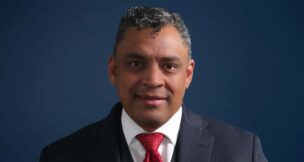
DFLer Duane Sauke and Republican Fran Bradley are competing for the open House District 25B seat being vacated by popular incumbent Rep. Kim Norton, DFL-Rochester, who served in the House since 2006 but declined to run for re-election.
It is a race Democrats say they are confident they can win, even as their independent groups have reportedly spent close to $100,000 to retain the seat. Republicans, likewise, proclaim District 25B ripe for the picking.
“Clearly it is a seat that the Democrats are worried about losing,” said Ben Golnik, director of independent expenditures for the House Republican caucus. “We think it is a good time to be able to put a seat like that in play.”
Getting a gauge
Determining how much is being spent on the District 25B race is no mean feat. The most recent filings from the Campaign Finance and Public Disclosure Board were Sept. 27. The next disclosures are due Monday.

GOP candidate Bradley said his best information suggests that independent groups have spent at least $119,000 on the race so far. Of that, he said, he has heard that about $88,000 was spent in support of his opponent.
A query of one major local media organization produced updated information only in dribs and drabs, and only with regard to non-independent direct spending by the two campaigns.
Terry Lee is regional account manager for Townsquare Media, which owns several Rochester-area radio stations. Since Sept. 27, she said this week that Bradley’s campaign had spent $7,300 on self-generated radio spots on three regional radio stations in her group, KROC-AM, KWWK-FM and KYBA-FM. Sauke’s campaign, meanwhile, spent $6,482 on KROC-AM and KYBA-FM.
Lee confirmed that the House DFL Caucus has purchased radio ads via independent expenditures since the last filing deadline, but she had no information on how much was spent. She referred a query to Townsquare’s national ad sales representatives, New York-based Mundy Katowitz. The person who answered the phone there refused to comment and immediately hung up the phone.
Beyond the campaigns’ recent direct expenditures with that single radio group, only independent expenditures made in the district before Sept. 27 can be confirmed.
At that time, both sides had spent $84,400, according to Campaign Finance and Disclosure Board data. Of that, the Minnesota DFL State Central Committee, the Minnesota Homeowners Alliance Independent Expenditure Fund, Planned Parenthood and the Education Minnesota PAC spent $52,700 in support of Sauke. The Minnesota Chamber of Commerce’s Pro Jobs Majority group and the Northstar Leadership Fund spent the rest — $31,700 — supporting Bradley.
Zach Rodvold, Golnik’s counterpart in the DFL House Caucus, said that retaining the open seat will be challenging for Democrats, even though the Olmsted County district that spans Rochester’s northern tier is more urban, youthful and ethnically diverse these days — trends that favor the DFL.
“I think the challenge here is that we have got a first-time candidate,” Rodvold said. Sauke has been a teacher and small business owner in the area and has been working hard going door to door in the district, Rodvold said, so his name recognition is growing.
To counter Bradley’s advantage, the DFL caucus’s independent expenditures are designed to pull a jujitsu move on the Republican’s familiarity. Rodvold said the caucus’s messaging uses Bradley’s conservative legislative voting record and his status as a local Tea Party group founder against him.
“In a year like this,” Rodvold said, “I am not sure that profile is going to be particularly compelling.”
Joseph Kunkel, a professor emeritus in political science at Minnesota State University, Mankato, thinks that, despite Sauke’s newbie status, it will be hard for a Republican to take back the seat. Kunkel wonders if the Republicans are actually serious about it.
“They may be making a feint there,” Kunkel said. “It could be like Hillary Clinton competing in Utah — maybe not expecting to win it, but to draw in some of the opponent’s resources.”
On the other hand, experts have indicated that Republican interest in the 2016 race, particularly among the donor class, has been suppressed by the flame-throwing, foundering Donald Trump presidential campaign. Given that, GOP backers would be unlikely to throw $32,000 or more into a race they truly think they can’t win, Kunkel said.
Candidates’ priorities
GOP candidate Bradley served in the state House from 1995 until his retirement — for family reasons — in 2006. During his tenure at the Capitol, he developed a reputation as a health policy expert, chairing the Health and Human Services Policy and Finance committee in his final term.
Like many other political candidates this cycle, Bradley rails against the outsider influence in the post-Citizens United era. He finds it galling when his constituents receive independently financed mailings that accuse him of wanting to arm domestic abusers and de-fund education. “Absolutely false,” he said.
But Bradley took his objections further than most, publicly calling on both campaigns to reject outsider money. It was a symbolic move since campaigns have no control over independent spending. His opponent called the request “superfluous.”
If he gets elected, Bradley plans to prioritize health care reform.
Job one would be seeking a federal waiver so the state could revive the Minnesota Comprehensive Health Association program. MCHA provided subsidized coverage to Minnesotans with pre-existing conditions but was dismantled as redundant after MNsure was introduced. Bradley would change the old program, however, by basing subsidies not on tax revenue but on federal block grants.
Bradley also would cut health costs by phasing out MinnesotaCare, a low-income state health insurance program financed by a 2 percent state “sick tax” on all health services. That plan’s enrollees would be moved to subsidized Affordable Care Act or Medicaid insurance coverage instead, he said.
DFLer Sauke would, like his opponent, prioritize health care reform. But part of his agenda, arguably, falls to the right of his opponent’s.
Sauke, a self-described conservative Democrat, blames the Affordable Care Act’s struggles, in part, on provisions that forbid insurance companies to cap patients’ lifetime benefits. “It doesn’t take a genius to figure out that when we remove lifetime caps, we create an animal that eats premiums for lunch,” Sauke said.
“They have proved a false fantasy,” he said. Asked if he would work to reinstate the caps, he replied, “We have to have the discussion.”
For the loquacious Sauke, discussion generally might be said to top his legislative agenda. If elected, he insisted, he will be heard. “The goal is to talk, to visit and participate in ways that bring us toward solutions,” he said.
Sauke acknowledges he has never before participated in organized politics. Still, he is unconcerned that his inexperience is a liability. In fact, he doesn’t consider himself inexperienced given his status as a six-year National Guard veteran, former teacher and retired real estate agent.
“That probably does give me some preparation to be able to make the transition into one of the hottest dynamics in the state — the political policymaking body,” Sauke said.
Fran Bradley
Age: 74
Party: Republican
Served in House: 1995-2006
Lives in: Rochester
Occupation: Retired IBM manager and engineer
Family: Wife, Mary; four children, five grandchildren
Duane Sauke
Age: 67
Party: DFL
Lives in: Rochester
Occupation: Former teacher and real estate broker
Family: Wife, Debra; two children, five grandchildren
RELATED CONTENT
- A tough rematch in House District 14B
- Big guns, big money in Senate District 44
- GOP has high hopes for House District 5B
- District 4 rivals agree race is disagreeable
Related Content


Top News
- Commentary: Will SCOTUS rule on general warrants and 4th Amendment?
- Attorney faces felony charges in beagle farm break-in
- Mendota Heights lawyer disbarred for client neglect, misconduct
- Group seeks to fast-track redistricting case to Wisconsin Supreme Court
- Prosecution of ex-FBI chief Comey over seashell post is flawed, experts say
- Minnesota justices to decide Amazon liability for battery fire
- Supreme Court decision could deliver GOP a host of House seats in 2028


Expert Testimony
- Commentary: Will SCOTUS rule on general warrants and 4th Amendment?
- Perspectives: Law Day: Notable Supreme Court quotes
- Commentary: What can we learn from a secret act of judicial tyranny?
- Perspectives: Actor’s death recalls key defamation case here


