


 Free Newsletter


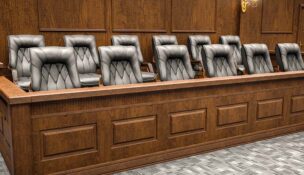
Depositphotos.com image
Justices reject double jeopardy claim after mistrial
Laura Brown//September 2, 2025//


In Brief
- Defendant argued that double jeopardy barred retrial on charges.
- Had previously requested mistrial after juror reported COVID-19 exposure.
- Court held that retrial is constitutionally permissible since he personally requested the mistrial.
A defendant requested and received a mistrial during jury deliberations, and then argued that the Double Jeopardy Clause barred retrial. The Minnesota Supreme Court concluded that, because the defendant was not induced into requesting the mistrial, he can be retried.
Johnnie Lerma faced multiple charges, including two counts of first-degree criminal sexual conduct, third-degree criminal sexual conduct, domestic assault, and threats of violence. A trial was held, and the jury held its deliberations. However, the jury was not in agreement on each charge. The next day of jury deliberations, a juror informed the court that they had been exposed to COVID-19.
The court and attorneys discussed the issue of COVID-19 exposure. The judge expressed concern that having a COVID-exposed juror could pressure the jurors to reach a unanimous decision simply to avoid getting the virus. Therefore, the court decided to end deliberations. It said it would take verdicts that the jury had reached, and asserted that it would declare a mistrial on deadlocked counts.
Neither party had a problem with the plan. Lerma’s attorney stated that Lerma sought a mistrial for the entire case. However, the court responded that it would declare a complete mistrial if there was no verdict on any counts; otherwise, it stated that it would take verdicts over Lerma’s objection, in the event that there were any.
The jury returned and explained that it had reached unanimous verdicts on three of the five counts but noted that the forms were not signed. The court discussed the plan with the jury, and the jury foreperson asked what a mistrial entailed. The court explained the definition and consequences. A different juror asked the court, since the verdict was not final, whether it was possible to change, and the judge said it was possible.
The jury adjourned to sign the verdict forms, reentered less than 20 minutes after being dismissed, and announced no unanimous verdicts. A mistrial on all counts was declared, and the jury was dismissed.
Subsequently, Lerma moved to dismiss the refiled complaint, alleging that retrial would violate the Double Jeopardy clauses of the U.S. and Minnesota constitutions. Lerma argued that the court’s discussion with the jury created a deadlock on all counts, and, consequently, the “manifest necessity” for the mistrial. The district court denied the motion, and the Court of Appeals affirmed.
The Minnesota Supreme Court asserted that, for Lerma to invoke double jeopardy, he was required to show that the district court intentionally provoked his request. The court found that the district court did not goad Lerma into requesting the mistrial.
Lerma maintained that the district court’s conversation with the jury regarding the definition and implication of the mistrial was the relevant error. However, the court noted that this occurred after Lerma had requested the mistrial on all counts.
“It is difficult to understand how conduct following a request for a mistrial could have provoked the request,” wrote Justice Paul Thissen. “Second, the district court’s comments were directly responsive to jurors’ questions and we discern nothing to suggest that the district court’s purpose in answering these questions was to intentionally goad Lerma into requesting a mistrial.”
Lerma also claimed that he was not required to show that he was intentionally provoked to request a mistrial because he either withdrew his request for the mistrial or later events made his request meaningless. Specifically, Lerma argued that he requested a mistrial before knowing that the jury unanimously agreed on three of the counts, asserting that this implicitly voided his request for a mistrial.
“Appellant wanted a mistrial on all counts,” said Nicholas Kimball, assistant Hennepin County attorney. He argued that it was a stretch to read the conversation occurring while the jurors were deliberating as Lerma objecting to the mistrial. “The defendant’s counsel is confirming the plan, is confirming with the court what he is going to do when he comes back. My read of it, frankly, is that he was sensing, ‘I’ve got a shot at the mistrial that I wanted, and I want to lock him in.”
The court was not persuaded by Lerma’s argument. “When Lerma made his request for a mistrial on all five counts, he did not know whether the jury had reached a verdict on none, some, or all of the counts. He made his request knowing there was a possibility that the jury had reached a verdict on some or all of them,” Thissen responded.
Lerma also argued that the district court committed structural error when it discussed what a mistrial was before the verdict forms were complete. “This prompted this jury, when they were told to go and sign three verdict forms for the unanimous decisions they had reached on three of five counts, to go in, and within the space of 20 minutes, come back and report total deadlock,” Paul Maravigli, special assistant state public defender, argued. “This is an error, apparently, without precedent in Minnesota case law, and it constitutes interference with juror deliberation and their decision-making process, which amounts to structural error.”
But the court noted that it did not need to reach this issue. “Consistent with the relief granted in those cases, Lerma will receive a new trial. In other words, even if the district court’s conduct in informing the jurors about a potential mistrial and its consequences constituted structural error, Lerma is already getting the remedy available for that error,” Thissen asserted.
“We observe, however, that the district court’s express communication to the jury during deliberations about the potential for, and implications of, a mistrial raises potential concerns about the fairness of the trial.” Thissen affirmed. “We caution district courts to avoid such communications in future cases.”
Related Articles
Related Content





Legal Tech
- New dedicated coverage of tech challenges facing law firms and legal departments
- Gemini Legal launches DraftEngine for civil litigation forms
- Lawyers continue to grapple with AI ethical issues
Top News
- Trump fired U.S. attorney an hour after he was sworn in
- Justices reverse sexual assault conviction over jury instruction
- Applications sought for 5th District judgeships
- Federal judge denies online casino’s arbitration bid
- Legal group warns abortion opponents to stop ‘twisting’ mom’s story







Expert Testimony
- Perspectives: It’s not ‘football’ here, but soccer cases abound
- AI prompts used by experts may be discoverable
- Perspectives: 250th anniversary recalls Declaration decisions
- Perspectives: ‘Pentagon Papers’ case at 55 not far from Near


