


 Free Newsletter


Depositphotos.com image
Supreme Court upholds dismissal of sleeping juror
Laura Brown//August 5, 2025//


In Brief
- A Minnesota district court dismissed a juror for repeatedly falling asleep during a criminal trial.
- Juror continued to fall asleep during witness testimony despite multiple interventions.
- Minnesota Supreme Court held that, while falling asleep is not juror misconduct, a juror can be dismissed for sleeping.
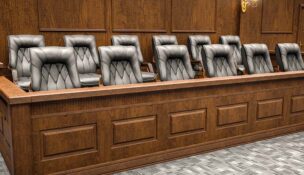
A district court dismissed a seated juror after he repeatedly fell asleep during trial. The Minnesota Supreme Court confirmed that the lower court did not abuse its discretion by doing so.
James Nyonteh was on trial for a variety of serious criminal offenses. Nyonteh married P.Y., who had three children. P.Y. notified authorities that Nyonteh had been molesting her daughter, S.Y.. After P.Y. reported the sexual abuse, Nyonteh killed P.Y. with a hatchet and knife.
Nyonteh had a jury trial. About a week into the jury trial, one of the jurors was dismissed. The reason: sleeping.
Juror 18 had arrived late to court twice. On the second day of the trial, the juror arrived more than 90 minutes late. This delayed the start of the proceedings. The juror reported that he had been in traffic, but also that he was not normally awake when the court had its morning session.
The reason that the juror was dismissed, however, was sleeping through trial testimony on multiple days. The police officer who took the initial report of alleged sexual abuse of S.Y., as well as the forensic interviewer of S.Y., testified. Juror 18 fell asleep three times. While the court was initially able to wake the juror up by coughing loudly, the juror proceeded to fall asleep twice more. While the forensic interviewer was testifying, the district court had a “five-minute stretch break.”
The prosecutor moved to dismiss the juror, arguing that, by sleeping, the juror was unable to fulfill his obligations. The defense objected, noting that the juror was the only Black juror on the panel. The motion was denied, and the juror was given a cup of coffee.
But on the fifth day of trial, the juror fell asleep again during testimony by the pediatric nurse practitioner who examined S.Y., and a crime scene investigator who processed Nyonteh’s car. Once again, the court gave a “five-minute stretch break.” The juror was given another cup of coffee. While the prosecutor again asked to dismiss the juror, the court did not, although it noted concern about the situation.
The next day, the juror fell asleep yet again. Once again, the prosecutor renewed the motion to excuse the juror. Both parties presented arguments regarding the dismissal of the juror.
At that point, Judge Paul Scoggin dismissed Juror 18. “It is difficult for me to dismiss a juror over the defense’s objection,” Scoggin stated. “I think that it is my job to ensure … justice and fairness for both sides of this case and, frankly, more importantly, the integrity of the system.”
Scoggin also noted the amount of detail in the trial, admitting that not everyone would remember every single detail of what they had witnessed. “But I do expect that … in that notion of full and fair attention that we expect of jurors, and that’s just not happening with this juror,” Scoggin said.
Nyonteh was ultimately convicted of first-degree premediated murder, first-degree domestic abuse murder, and second-degree intentional murder for killing his wife, as well as first-degree criminal sexual conduct for sexually abusing his minor stepdaughter. Nyonteh was sentence to life imprisonment without the possibility of release, as well as a consecutive prison term of 144 months. He is currently incarcerated at Minnesota Correctional Facility – Oak Park Heights.
Nyonteh appealed directly to the Supreme Court, arguing that the district court erred when it dismissed the juror over his objection.
“None of the portions that juror purportedly missed by sleeping were ‘critical’ to the state’s case because the evidence was either redundant or foundational,” Chang Lau, assistant state public defender, said at oral arguments.
Lau also noted that, “It is impossible to know how the erroneous dismissal of the only Black juror affected the outcome of this case.”
Nicole Cornale, assistant Hennepin County attorney, argued, “Appellant is asking this court to recognize a constitutional right to a sleeping juror.”
She also pointed to the remedies Scoggin attempted.
“Judge Scoggin’s analysis here was not shooting from the hip,” Cornale said. “This occurred over days. There were many interventions that Judge Scoggin put into place to keep this juror on the jury.”
The Minnesota Supreme Court held that “falling asleep is not juror misconduct.” However, it affirmed that falling asleep during trial could impact that juror’s ability to serve fairly. It concluded that a judge must exercise its discretion in deciding whether to excuse a sleeping juror. In Nyonteh’s case, the court found no abuse of discretion.
“The district court made diligent efforts to keep Juror 18 awake and engaged, including coughing loudly, bringing Juror 18 to the bench to encourage him to stay awake, repeatedly calling for mid-trial stretch breaks, and offering Juror 18 coffee,” wrote Justice Theodora Gaïtas.
“The district court made an extensive record of its concerns,” Gaïtas wrote. “It tried to change Juror 18’s behavior. It weighed the benefits and harms of excusing Juror 18 multiple times. And it ultimately made a well-reasoned decision to excuse the juror in the interest of a fair trial.”
Related Content





Legal Tech
- New dedicated coverage of tech challenges facing law firms and legal departments
- Gemini Legal launches DraftEngine for civil litigation forms
- Lawyers continue to grapple with AI ethical issues
Top News
- Trump fired U.S. attorney an hour after he was sworn in
- Justices reverse sexual assault conviction over jury instruction
- Applications sought for 5th District judgeships
- Federal judge denies online casino’s arbitration bid
- Legal group warns abortion opponents to stop ‘twisting’ mom’s story






Expert Testimony
- Perspectives: It’s not ‘football’ here, but soccer cases abound
- AI prompts used by experts may be discoverable
- Perspectives: 250th anniversary recalls Declaration decisions
- Perspectives: ‘Pentagon Papers’ case at 55 not far from Near


