


 Free Newsletter

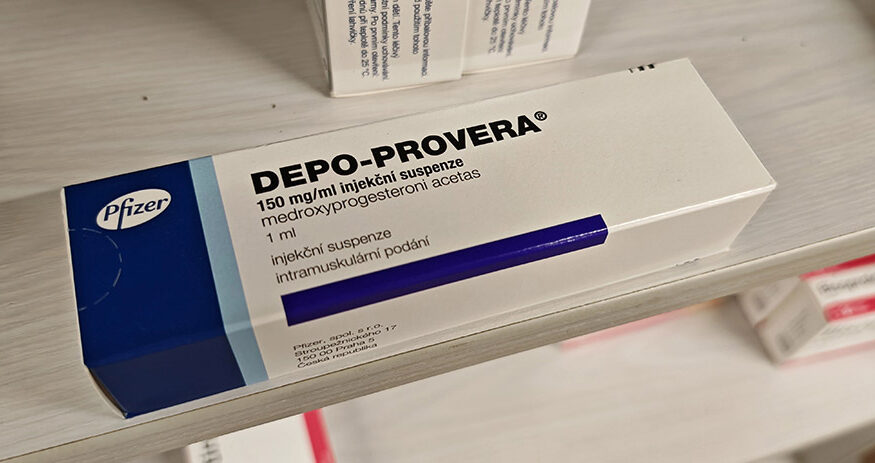
Used by women across the globe, Depo-Provera has been promoted as a simple way for women to control their reproductive health. This photo shows Depo-Provera at a Prague, Czech Republic, pharmacy. (Deposit Photos)
Lawsuit links Depo-Provera contraceptive to brain tumor
Laura Brown//February 19, 2025//


A woman who developed a brain tumor after using a common form of birth control, Depo-Provera, has sued its manufacturer, Pfizer, and other companies in U.S. District Court in Minnesota.
Represented by Robins Kaplan, the plaintiff alleges wrongful conduct in the advertising, design, development, distribution, labeling, manufacturing, marketing, packaging, promoting, selling, and testing of depot medroxyprogesterone acetate, sold under the brand name Depo-Provera.
Robins Kaplan says this is the first lawsuit filed in Minnesota on behalf of a user who developed a brain tumor after using Depo-Provera, while similar suits have been filed in other states since October 2024. Pfizer, in a statement, says it will “vigorously defend these lawsuits.”
Depo-Provera is an injection given four times a year that prevents pregnancy by stopping the egg’s release through progestin, a synthetic hormone that inhibits ovulation. Used by women across the globe, it has been promoted as a simple way for women to control their reproductive health. However, this medication apparently has an unfortunate but, according to plaintiffs, known side effect: slow-growing brain tumors.
Christina Scherbenski, the plaintiff in the lawsuit who used Depo-Provera, suffered serious injuries after a meningioma developed. Meningiomas are tumors that form in the meninges, which are the brain and spinal cord’s protective layers. Although they are benign much of the time, the tumors can cause issues such as vision loss and seizures, and some of those health challenges are permanent. Women might require invasive surgeries, including craniotomies, to address the brain tumor.
According to the complaint, Scherbenski continues to suffer from severe and permanent pain, disability, impairment, and loss of enjoyment of life. She started suffering issues such as poor balance, facial numbness, slow speech, and tongue spasms.
After she sought medical attention, the MRI revealed a walnut-sized tumor. Scherbenski needed a craniotomy to remove the tumor; however, she continues to have difficulty speaking, and her right arm cannot feel temperature or wetness. Scherbenski has been diagnosed with epilepsy, aphasia and apraxia.
Scherbenski alleges that there are several scientific studies that have shown that progesterone, progestin, and particularly Depo-Provera, can cause or substantially contribute to the development of intracranial meningioma. The lawsuit claims that, as early as 1989, researchers knew about the link between progesterone-inhibiting agents and meningioma’s growth rate. A study in the British Medical Journal published in March 2024 revealed that women who use Depo-Provera have a 555% increased risk of developing meningiomas as compared to non-users.
The lawsuit argues that the defendants knew or should have known that Depo-Provera can cause or substantially contribute to the development of meningiomas. Scherbenski also argues that the defendants should have warned, instructed, advised, educated, or informed users and prescribers about the risk of intracranial meningioma, something the lawsuit alleges has not happened, despite there being at least 14 iterations of the Depo-Provera label.
Scherbenski claims that she was unaware that there might be a link between Depo-Provera and her medical issues until November 2024. Her husband, perusing Facebook, saw an advertisement there that suggested the connection between Depo-Provera and meningiomas.
“This lawsuit represents the growing concern over the risks posed by Depo-Provera, a drug that many women used for years without full knowledge of the dangers it could cause,” said Robins Kaplan National Mass Tort Group Chair Tara Sutton. “Our client’s case highlights the need for pharmaceutical companies to be transparent and proactive in warning patients about the risks of their products, especially when serious conditions, like brain tumors, are involved.”
The lawsuit brings counts including strict liability (design defect and failure to warn), as well as negligence, negligent failure to warn, negligent design defect, negligent misrepresentation, fraudulent misrepresentation, and breach of express and implied warranty.
Robins Kaplan also says that the lawsuit is significant because of how Depo-Provera was marketed to women of color and lower-income women. Between 2015 and 2019, 41.2% of Black women and 27.2% of Hispanic women reported using Depo-Provera, compared with 24.5% of the general population. Lower-income women also were apparently targeted as users, with marketers touting the drug’s affordability and accessibility.
“The disproportionate use of Depo-Provera in marginalized communities highlights the intersection of race, class, and healthcare inequities,” Robins Kaplan Mass Tort Group Attorney Rashanda Bruce stated. “We allege that many women of color and low-income women were not given the full picture about the serious risks associated with Depo-Provera, leaving them more vulnerable to developing meningiomas.”
Pfizer, in an email to Minnesota Lawyer on Tuesday, said, “Depo-Provera has been an FDA-approved medication for more than 30 years and has been a safe and effective treatment option for millions of patients during that time. The company will vigorously defend these lawsuits.”
Also:
$8.5 million settlement reached in construction worker’s death
Related Content






Top News
- Trump’s go-to attorneys take unusual steps for a sitting president
- Ex-Mayo director alleges retaliation over AI clash
- Up & Coming Attorneys, Unsung Legal Heroes announced
- Trump says he will ask Supreme Court to rehear birthright citizenship case
- Arbitration exemption ruling may burden driver employers
- Breaking the Ice: New lawyer focuses on ‘happiness and joy’ in practice
- Milwaukee man gets probation for Facebook death threat against judge








Expert Testimony
- AI prompts used by experts may be discoverable
- Perspectives: 250th anniversary recalls Declaration decisions
- Perspectives: ‘Pentagon Papers’ case at 55 not far from Near
- Best at Work Insights: Workplace growth beats burnout and boreout


