


 Free Newsletter


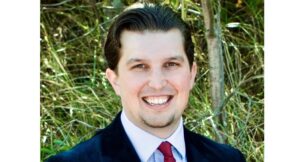
Sgt. Chris Stroner (submitted image)
Patriot Games
Mike Mosedale//July 2, 2015//


After the Hopkins Police Department tried to fire Sgt. Chris Stroner over alleged improprieties in his purchase of $1500 worth of firearms from the department’s evidence room, Stroner decided to fight back with one of the tools availed him as an honorably discharged veteran — the state’s Veterans Preference Act.
With statutory origins that stretch back to 1887, the VPA provides a host of benefits for veterans who are employed in the public sector, including the strict – some say too strict — prohibition against termination for reasons other than misconduct or incompetence.
As dictated by the VPA, Stroner, an Army veteran and National Guardsman with five overseas deployments to his credit, presented his case before a special three member Veterans Preference Panel. The panel consisted of one member selected by the city, one by Stroner and a neutral third agreed to by both parties.
Following 11 days of testimony over the summer of 2013, the panel delivered arrived at a verdict: Stroner deserved a 30-day suspension over the questionable aspects of the firearms transaction but he did not deserve to be sacked.
In the written decision, the panel pointed out that top city officials had signed off on the sale of the 44 “surplus” firearms to Stroner, who had submitted the high bid. It also noted that the Hopkins Police Department, in its prior history, had never meted out any discipline harsher than a one-day suspension before dropping the hammer on Stroner.
“The city’s theory is essentially that Sgt. Stroner engaged in a decade long conspiracy to purchase the firearms,” it wrote. “One needs to ponder whether Sgt. Stroner, a highly decorated sergeant and a highly decorated veteran, who has been working at the Hopkins Police Department longer than all but one police officer, has been systematically plotting and planning since 2001 to purchase firearms in 2010 in the shroud of secrecy, thereby jeopardizing his livelihood, character and reputation in the law enforcement and military communities.”
Finally, the panel noted that the city had referred the matter to both the Hennepin County Attorney and the Burnsville City Attorney and neither agency saw cause to press charges.
Whatever relief Stroner derived from that vindication was short-lived.
Shortly after his reinstatement, the city served him with a lawsuit demanding $66,524, asserting that Stroner should foot some of the costs for the veterans preference hearing. Specifically, the city wanted him to pay the $37,312 bill for the services of the panel member he selected (attorney Terry Bartz), as well as half of the $58,425 bill submitted by the neutral panelist, arbitrator Richard Miller.
Joe Kelly, the St. Paul attorney who represented Stroner (and himself a veteran), was incensed.
Not only did he move for dismissal, he wanted sanctions against the city’s attorney, Marylee Abrams, for bringing the suit in the first place.
Anoka County District Court Judge Sean Gibbs didn’t bite on the sanctions but he was quick to raise an eyebrow at the city’s effort to stick the veteran with the bill for the hearing.
“Is it due process that he pays $65,000 when the board ruled in his favor to get his job back?” Gibbs asked one of the city’s attorneys during oral arguments.
However, Gibbs noted that the VPA is, in fact, silent on the particular issue of who pays for hearings. That was one of the factors he cited for his decision to reject Kelly’s sanctions motion.
For his part, Kelly argued that the VPA is silent because it was clear to everyone that the Legislature never intended for veterans to pay. In his memorandum, Kelly also pointed out that most county and municipal governments have historically picked up the hearing tab without any fuss.
In an affidavit, Miller, the neutral arbitrator in Stroner’s case, provided confirmation. In more than 100 VPA cases he handled over the years, Miller said it had never been an issue “as the employer without protest or even discussion has paid my fees and expenses.” That observation was echoed in an affidavit from another attorney versed in VPA, Isaac Kaufman, the general counsel for Law Enforcement Legal Services.
Richard Fowler, the counsel for the Minnesota Fraternal Order of Police, said he recalled only case in which a government agency balked at paying. According to Fowler, that employer backed off after he produced a memorandum from the League of Minnesota Cities outlining its position: the employer shoulders the costs of the hearing.
Finally, Kelly pointed to a series of opinions from administrative law judges who had weighed the issue over the years and come to the same conclusion: the government should pay.
After Gibbs dismissed the lawsuit, the city turned to the Court of Appeals. In an unpublished decision from last November, the court affirmed Gibbs’ ruling but not on the merits. Instead, the court dismissed the city’s suit – without prejudice – because of a fatal defect: the city had failed to include Bartz and Miller as defendants.
Law is now ‘prohibitively expensive’
As Rep. Jeff Howe saw it, Stroner’s saga perfectly illustrated the need to clean up the language in the VPA. During the 2014 legislative session, Howe took a first run at the issue but failed to make much headway. That wasn’t a surprising, given that the Rockford Republican was in his first term and, at the time, the DFL enjoyed majorities in both the House and Senate.
With a newly crowned Republican majority in the House this session, Howe thought 2015 would be different. As it turned out, he was right– just not in the way he hoped.
Howe introduced his proposed fix – House File 745 – in February. In addition to an explicit mandate that the government foot the bill for VPA hearings, he added two other provisions: Veterans who prevail would be entitled to reasonable attorney fees and, in instances where the city or county government has an established civil service commission, the veteran would still retain the option of taking the case to the three-member panel.
In Howe’s view, the latter provision was critical because civil service commissions might have a bias in favor of the government they serve; a three-member panel, he figured, removes the home field advantage. While the larger cities and counties that have civil service commissions say that hasn’t been an issue, Howe is unpersuaded.
“They don’t have a problem because the vet gets the short end of the stick. I’m more concerned with whether the vet has a problem,” Howe said.
In March, Howe recruited Chris Stroner and his attorney, Joe Kelly, to testify about Stroner’s saga before two house committees.
After recounting his military experiences and a thumbnail version of his fight with the city, Stroner explained that he racked up nearly $41,000 in attorney fees – at “a deeply discounted veterans rate” – in his effort to win his job back and fight the city’s lawsuit.
“I can tell you, it’s a surreal experience having to take vacation time to defend yourself in court against a lawsuit from your employer,” Stroner said.
In her testimony, Patricia Beety, an employment law attorney with the League of Minnesota Cities, told lawmakers that the league was okay with one provision of Howe’s proposed reform – the requirement that the government entity foot the bill for the veterans preference hearing. Most already did so, she pointed out.
But Betty said the league opposed the requirements that government pay veterans attorney fees and provide the option of the three-member veteran prefenece panel in cases where the government entity has an established civil service commission.
Jim Thoreen, the Pope County coordinator, also testified that he found the attorney fees provision problematic, saying that the “county is not required to pay attorney fees for other public employees and there’s no compelling reason to treat these employees differently.”
While Howe’s bill steadily progressed through the House committee process, it never gained traction in the Senate, where the chair of the State and Local Government Committee – Sen. Patricia Torres Ray, DFL-Minneapolis –declined to hear it.
Still, Howe remained optimistic because, as vice-chair of the State Government Finance Committee, he figured he would be able to squeeze the legislation into a House omnibus bill and then into conference committee.
The prospects looked good until the final day of session, May 18, when the DFL-controlled Senate and GOP-controlled House were busily hammering out compromises in conference committees and a single sentence slipped into Howe’s bill.
The new language did not address the objections that had been aired by Beety or Thoreen during the House hearings. To the contrary, the veterans would still be awarded attorney fees if they prevail.
But the statute now explicitly mandated what nobody had openly advocated for during session: Veterans like Chris Stroner would henceforth be required to pay half the costs of veterans preference panel hearings, win or lose.
By the time he caught wind of the change, Howe said it was too late to do anything. The experience was an object lesson in end-of-session dynamics.
“What it really impressed upon me is that, just because you’ve got something an omnibus bill and you have agreements from a few folks, you really have to watch it,” Howe said. “But it’s extremely difficult to track stuff when it’s in conference committee.”
Policy considerations aside, Howe said the VPA will need more legislative attention next year because it is not entirely clear from whether or not veterans retain the option of appealing termination to the three-member panel if the employer has an established civil service commission.
“Basically, the revisor screwed up and inserted my language, which gave the choice, and left in the old language, which didn’t give the choice,” Howe said. “Either way you look at it, it was a mistake.”
Attorney John Baker, a former Marine who figures he handles 10 to 15 veteran preference cases per year, said the new VPA will probably make it prohibitively expensive for some veterans to contest termination proceedings.
“Ninety-percent of the clients I’ve represented are low level workers – HVAC specialists, bus drivers — maybe making $35,000 to $50,000 a year,” Baker said. “I may take a case on contingency but I’m not going to fund half the costs for the hearing.”
Baker said he hopes to push for a broad overhaul of the VPA at the legislature next session, one that will go beyond the relatively narrow issues of who pays for termination proceedings.
“I think the whole Veterans Preference Act needs to be redone and I’m trying to get folks convinced of that,” said Baker.
While virtually everyone pays some lip service to helping vets, Baker said he suspects many managers are reluctant to hire veterans because the VPA can make it difficult to fire those that under-perform.
“I sometimes wonder whether the whole Veterans Preference Act does more harm than good,” Baker said.
That’s hard to determine, he added, because there is a limited amount of hard data on the hiring and firing of veterans in the public sector– and virtually no information collected on the termination of vets who work for county and municipal governments.
Mike McElhiney, the Legislative Director for the Minnesota Department of Veterans Affairs, agrees that the absence of reporting requirements makes it hard to get a clear picture of VPA’s effectiveness.
“It’s the million dollar question. We just don’t know how many of these cases occur – at least at the political subdivision level — because there’s nothing in statute that requires an accounting,” he said
Whether such requirement will be included in any future reforms to the VPA is impossible to say.
For his part, Joe Kelly – Stroner’s attorney – contends that lawmakers have made the VPA vulnerable to a constitutional challenge on due process grounds. After all, he asked, what other government employees are required to shoulder the costs of termination proceedings?
There’s some precedent for such a challenge, Kelly said. He pointed to a 1989 case out of the 10th circuit– Rankin v ISD 1-3 – in which an Oklahoma teacher sued over the statutory requirement that he pay half the cost of his due process hearing. The court ruled the statute facially unconstitutional.
In another case — California Teachers Assn v. State of California (1999) – the state court ruled that requiring teachers to pay half the cost of such hearings only when they lose still “impermissibly chills” due process rights.
Those same principles are at play with the VPA, Kelly said. “We’re gonna try to find somebody to challenge it,” he added.
A Brief History of the Veterans Preference in Minnesota
1887: The Legislature passes “An Act giving preference in appointment and employment to honorably discharged Union soldiers and sailors.” The law states that “age, loss of limb or other impairment, which does not in fact incapacitate, shall not be deemed to disqualify provided they possess the other requisite qualifications.”
1896: In a decision authored by Justice William Mitchell, the Minnesota Supreme Court upholds the constitutionality of the 1887 act.
1907: The Legislature passes forbearer of the current Veterans Preference Act, providing for an absolute preference to veterans applying for all jobs public sector jobs in the state.
1939: A point system is created for veterans seeking state jobs.
1943: The Legislature provides mechanism for veterans to contest termination proceedings, through a civil service commission or a three-member panel.
1951: Veterans Preference in Public Employment Commission calls for establishment of uniform standards across state and local government.
1974: A modified point system for hiring decisions is applied to political subdivisions.
2010: The Legislature removes teachers from VPA termination protections.
2015: Legislature mandates that veterans and government “shall bear equally all costs” associated with termination hearing that are conducted by three-member veterans preference panel. If the veteran prevails, the governmental subdivision pays attorney fees.
Related Content






Legal Tech
- Gemini Legal launches DraftEngine for civil litigation forms
- Lawyers continue to grapple with AI ethical issues
- Are AI prompts privileged? Time will tell
Top News
- Blanche to face skeptics in GOP after judge’s scathing criticism
- U.S. Supreme Court justices testify on Capitol Hill as threats to judges surge
- Minnesota to receive $850,000 in CVS billing settlement
- DOJ shares Metro Surge shooting evidence with state
- Milwaukee judges banning AI glasses in court as privacy concerns grow







Expert Testimony
- Perspectives: It’s not ‘football’ here, but soccer cases abound
- AI prompts used by experts may be discoverable
- Perspectives: 250th anniversary recalls Declaration decisions
- Perspectives: ‘Pentagon Papers’ case at 55 not far from Near


